HP CM Office Pays Tribute to Tagore on Death Anniversary
Synopsis
The Chief Minister's Office of Himachal Pradesh honoured Rabindranath Tagore on his death anniversary on 7 August 2026, describing the Nobel laureate and national anthem composer's life as an unparalleled confluence of knowledge, art, culture and human values.
Key Takeaways
The Chief Minister's Office of Himachal Pradesh posted a tribute to Rabindranath Tagore on 7 August 2026 , his death anniversary.
Tagore died on 7 August 1941 , making this the 85th anniversary of his passing.
He won the Nobel Prize in Literature in 1913 — the first non-European to do so — for his collection Gitanjali .
Tagore composed Jana Gana Mana , adopted as India's national anthem after independence.
Annual tributes to Tagore by central and state governments have been a standard practice since independence.
The HP CMO described his life as 'an unparalleled confluence of knowledge, art, culture and human values.'
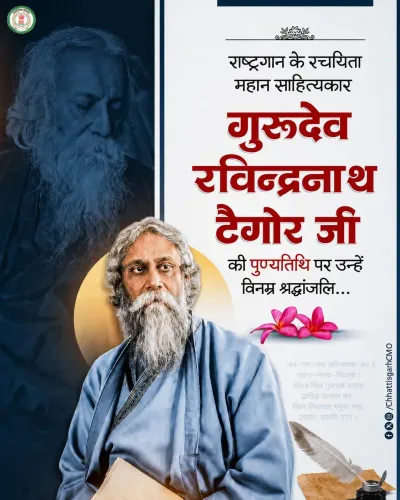
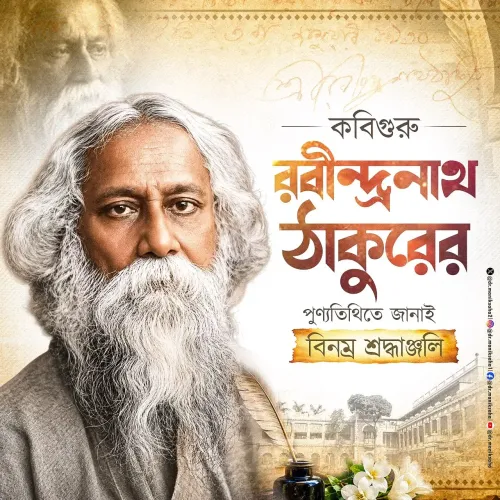
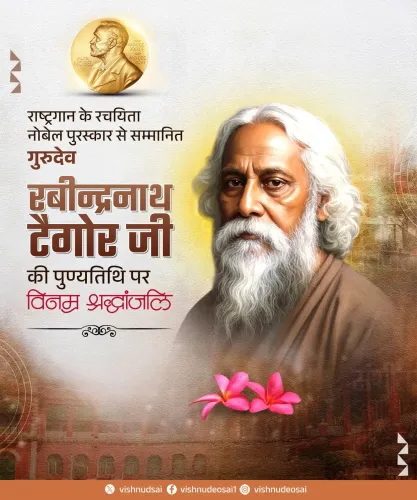
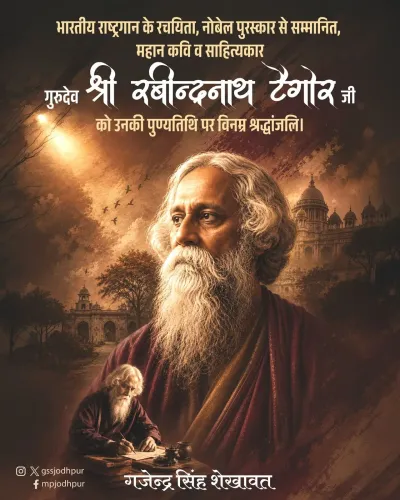
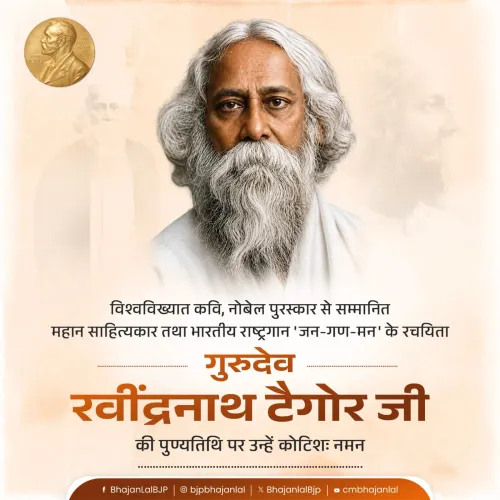
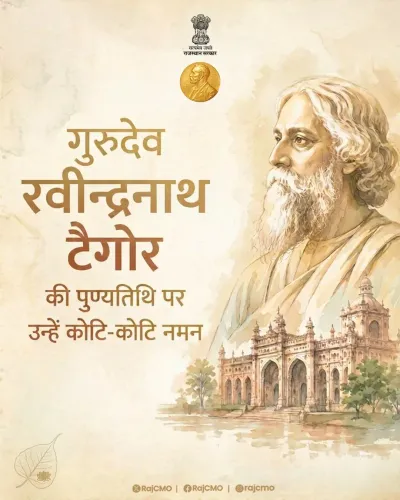
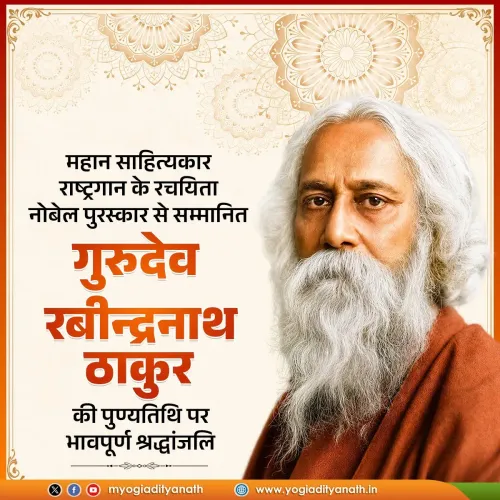
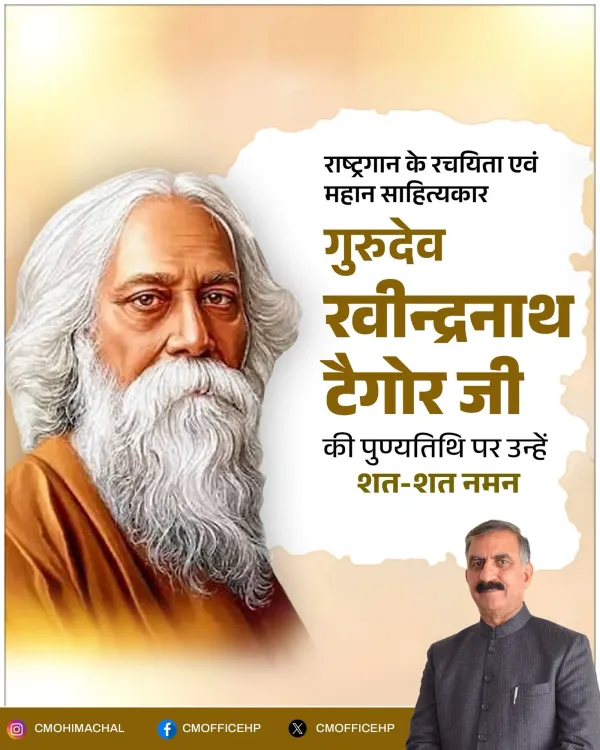
Eighty-five years after his passing, Rabindranath Tagore — Nobel laureate, composer of Jana Gana Mana, and one of the most towering figures in world literature — was remembered on 7 August 2026 as governments across India marked his death anniversary. The Chief Minister's Office of Himachal Pradesh joined the national chorus of remembrance, honouring Tagore's legacy with a tribute on X.
The post, in Hindi, offered a heartfelt salutation: 'Shat-shat naman' — a hundred-fold bow of reverence — describing Tagore's life as 'an unparalleled confluence of knowledge, art, culture and human values.' It is the kind of phrase that carries weight in the Indian commemorative tradition, and for Tagore, it is not an overstatement.
The man who gave India its voice — literally
Rabindranath Tagore was born on 7 May 1861 in Calcutta and died on 7 August 1941 — the date now observed annually as his death anniversary across the country. He became the first non-European to win the Nobel Prize in Literature, awarded in 1913 for his collection Gitanjali. His composition Jana Gana Mana was adopted as India's national anthem after independence, cementing his place not merely in literary history but in the daily civic life of every Indian.
Beyond the anthem, Tagore was a poet, novelist, playwright, philosopher, painter and educator. He founded Visva-Bharati University at Shantiniketan in West Bengal — an institution that embodied his belief in learning rooted in nature and human connection. His influence stretched from Bengal's literary renaissance to the global conversation on colonialism, humanism and spiritual freedom.
A ritual of remembrance that spans every state
Since independence, annual tributes to Tagore on 7 August have become a standard practice for central and state governments alike. The gesture is less about politics and more about institutional memory — a shared acknowledgement that Tagore's ideas about culture, nationhood and the human spirit remain unfinished business for a democracy still working out its identity.
Himachal Pradesh's tribute fits that pattern: a state far from Tagore's Bengali heartland, yet one whose government finds it natural to claim him as a national inheritance. That reach — from the plains of Bengal to the hills of Himachal — is itself a measure of how thoroughly Tagore became everyone's poet.
On a day when India pauses to remember him, the words feel less ceremonial than they might appear. Tagore wrote once that 'faith is the bird that feels the light and sings when the dawn is still dark.' Eighty-five years on, the singing continues.
Point of View
Regardless of geography or ruling party, routinely anchor their public identity to towering national cultural figures. Tagore occupies a unique position in this tradition — his authorship of the national anthem makes honouring him an act of civic identity, not merely literary appreciation. For a hill state like Himachal Pradesh, invoking a Bengali polymath underscores the constitutional idea of a shared national culture that transcends regional boundaries. The gesture also signals that soft cultural diplomacy — through commemorations — remains a low-cost, high-visibility tool in state-level political communication.
NationPress
7 Aug 2026
Frequently Asked Questions
When did Rabindranath Tagore die?
Rabindranath Tagore died on 7 August 1941 , and his death anniversary is observed annually across India on this date.
Why is Rabindranath Tagore important to India?
Tagore composed Jana Gana Mana , India's national anthem, and was the first non-European to win the Nobel Prize in Literature, in 1913 . He is regarded as one of the greatest literary and cultural figures of modern India.
What did the Himachal Pradesh CM Office say about Tagore?
The Chief Minister's Office of Himachal Pradesh described Tagore's life as 'an unparalleled confluence of knowledge, art, culture and human values' and offered a tribute of shat-shat naman — a hundred-fold bow of reverence.
What is Visva-Bharati University and who founded it?
Visva-Bharati University in Shantiniketan, West Bengal was founded by Rabindranath Tagore. It embodies his philosophy of education rooted in nature, creativity and human connection.
Do Indian state governments regularly pay tribute to Tagore?
Yes. Since independence, annual tributes to Tagore on 7 August have been standard practice for both central and state governments across India, reflecting his enduring role in the country's cultural and national identity.