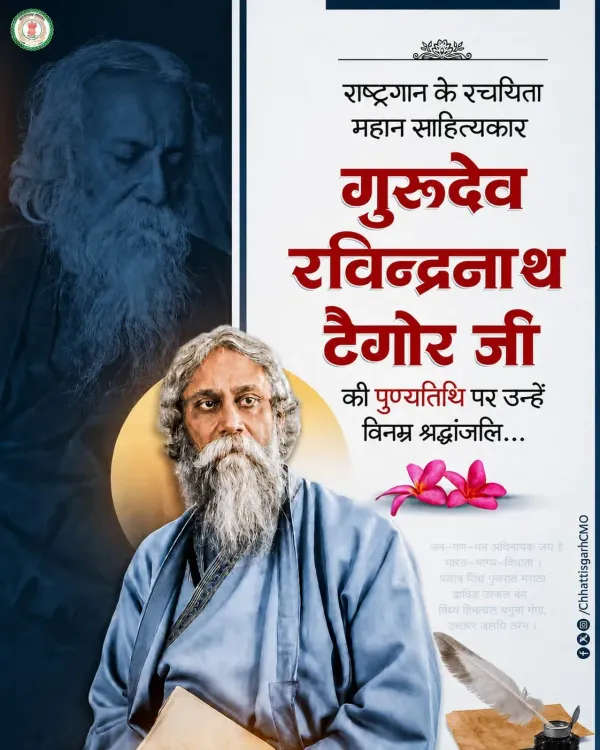
Chhattisgarh CMO pays tribute to Rabindranath Tagore on death anniversary
Synopsis
The Chief Minister's Office of Chhattisgarh offered a solemn tribute to Rabindranath Tagore on his death anniversary, honouring the Nobel laureate poet who composed India's national anthem Jana Gana Mana and won the 1913 Nobel Prize in Literature for Gitanjali.
Key Takeaways
The Chief Minister's Office of Chhattisgarh posted a tribute to Rabindranath Tagore on his death anniversary.
Tagore composed Jana Gana Mana , adopted as India's national anthem .
He was awarded the Nobel Prize in Literature in 1913 for his poetry collection Gitanjali , becoming the first non-European Nobel laureate in literature.
Tagore founded Visva-Bharati University in Santiniketan, West Bengal.
Indian state governments routinely observe Tagore's birth and death anniversaries with official tributes and cultural programmes.
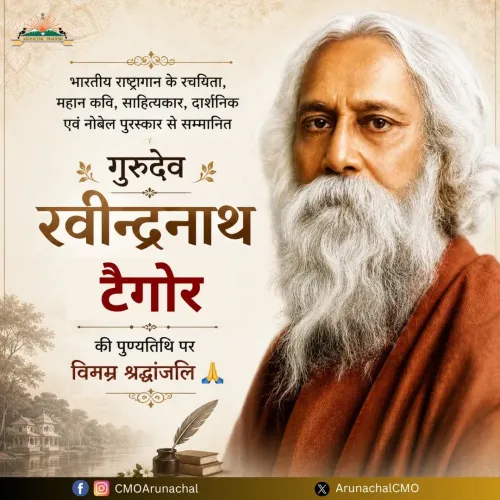
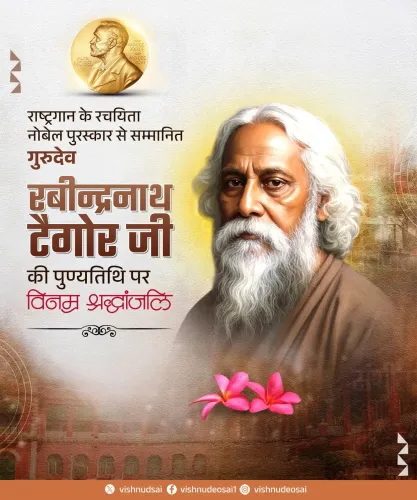
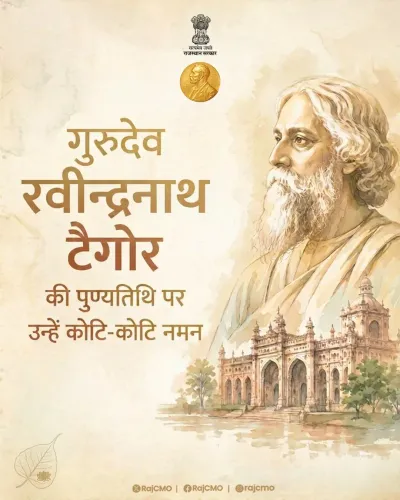
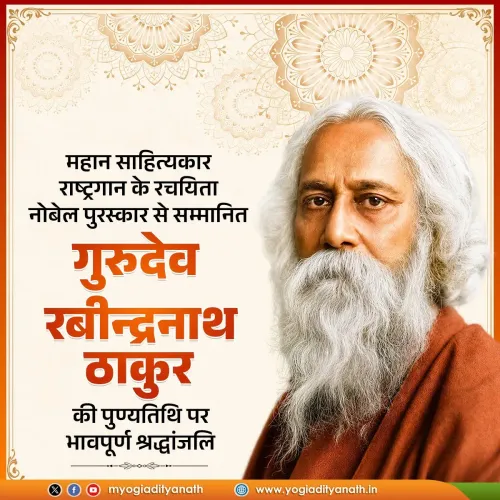
On the death anniversary of Rabindranath Tagore — Nobel laureate, composer of Jana Gana Mana, and one of the most towering figures in world literature — the Chief Minister's Office of Chhattisgarh offered a solemn tribute, joining a nationwide moment of remembrance for the poet who shaped India's cultural and national identity.
The CMO's post paid homage to Tagore as the 'composer of India's national anthem, Nobel Prize-winning great poet and litterateur,' offering what it called a 'humble tribute' (vinamra shraddhanjali) on his death anniversary.
The man behind Jana Gana Mana
Rabindranath Tagore was born on 7 May 1861 in Calcutta and went on to become the first non-European to win the Nobel Prize in Literature, awarded in 1913 for his collection Gitanjali. He composed Jana Gana Mana, which was later adopted as India's national anthem. A polymath in the truest sense, Tagore wrote poetry, novels, short stories, plays, and essays, and also founded Visva-Bharati University in Santiniketan, West Bengal — an institution that embodied his vision of blending Indian tradition with global thought.A ritual of remembrance Indian states observe every year
State governments across India routinely mark Tagore's birth and death anniversaries with official tributes, cultural events, and literary programmes. These observances reflect the enduring place Tagore holds not merely in Bengal's heritage but in the shared cultural memory of the entire nation. Chhattisgarh's CMO joining that chorus underscores how Tagore's legacy transcends regional boundaries — a poet claimed equally by every corner of the country. For a figure who wrote in Bengali yet gave India its national anthem, who won the world's highest literary honour yet remained rooted in rural Bengal, Tagore's relevance has never needed a government reminder. But the reminder, offered year after year, keeps the flame visible for younger generations. The legacy of Gitanjali does not age. Neither does the anthem.Point of View
But they also signal something deliberate: a ruling establishment aligning itself with the broad, non-partisan consensus around India's cultural founding figures. For the Chhattisgarh CMO, invoking Tagore — composer of the national anthem and a Nobel laureate — carries no political risk and considerable symbolic capital. The pattern reflects how India's states use literary heritage as soft governance, reinforcing national identity through cultural memory. What matters more than the tribute itself is whether accompanying policy investment in arts education and cultural institutions matches the rhetoric.
NationPress
21 Sept 2026
Frequently Asked Questions
When did Rabindranath Tagore die?
Rabindranath Tagore died on 7 August 1941 in Calcutta (now Kolkata), at the age of 80.
Why did Rabindranath Tagore win the Nobel Prize?
Tagore was awarded the Nobel Prize in Literature in 1913 for his poetry collection Gitanjali , which was praised for its profoundly sensitive, fresh and beautiful verse.
Who composed India's national anthem Jana Gana Mana?
Rabindranath Tagore composed Jana Gana Mana . It was adopted as India's national anthem on 24 January 1950 .
What is Visva-Bharati University?
Visva-Bharati University is a central university in Santiniketan, West Bengal , founded by Rabindranath Tagore in 1921 to blend Indian tradition with global learning.
Why do Indian state governments tribute Tagore every year?
Indian state governments observe Tagore's birth and death anniversaries as part of standard commemorations of national cultural heritage, reflecting his status as a founding figure of modern Indian identity.