HP CM Office Unveils 'Sukhi Parivar' Scheme With Cash, Free Power
Synopsis
The Chief Minister's Office of Himachal Pradesh has announced the 'Mukhyamantri Ka Apna Parivar Sukhi Parivar Yojana', offering ₹1,500 monthly cash aid, 300 free electricity units, health insurance and a tiered interest subvention — 5% for tribal areas and 4% for non-tribal areas.
Key Takeaways
₹1,500 per month in direct economic assistance will be provided to enrolled families under the proposed scheme.
300 units of free electricity per month will be extended to beneficiaries, easing a major household cost in Himachal's hilly terrain.
A health insurance card is included in the benefit bundle, extending formal health coverage to eligible households.
Tribal area households will receive a 5 per cent interest subvention , one percentage point higher than the 4 per cent offered in non-tribal areas.
The scheme, formally titled 'Mukhyamantri Ka Apna Parivar Sukhi Parivar Yojana' , is 'set to be launched' — eligibility norms and rollout timelines are yet to be formally notified.
Key tribal districts in Himachal Pradesh such as Kinnaur , Lahaul-Spiti and parts of Chamba stand to benefit from the higher subvention tier.
A monthly cash transfer, free electricity, health insurance, and differentiated interest subvention for tribal households — the Chief Minister's Office of Himachal Pradesh has announced a sweeping composite welfare package under the proposed 'Mukhyamantri Ka Apna Parivar Sukhi Parivar Yojana', signalling the state government's most structured household-support initiative in recent years.
What the scheme offers: cash, power and credit relief
The scheme, as outlined in the post, promises ₹1,500 per month in direct economic assistance to enrolled families. Alongside that, beneficiaries will receive 300 units of free electricity — a meaningful relief in a hill state where winters drive up power consumption and where domestic electricity bills can be a significant household burden.
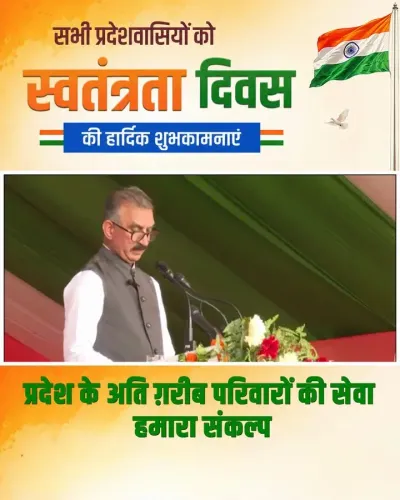
A health insurance card is also part of the bundle, extending coverage to families who may otherwise fall outside formal safety nets. The post, mixing Hindi detail with a broader policy announcement, states: 'राज्य सरकार मुख्यमंत्री का अपना परिवार सुखी परिवार योजना शुरू करने जा रही है' — the state government is set to launch the Mukhyamantri Ka Apna Parivar Sukhi Parivar Yojana.
Tribal households get a sharper edge on interest subvention
Perhaps the most distinctive feature is the tiered interest subvention structure built into the scheme. Families in tribal areas — which in Himachal Pradesh includes remote districts such as Kinnaur, Lahaul-Spiti and parts of Chamba — will receive a 5 per cent interest subvention on loans. Those in non-tribal areas will get 4 per cent. The one-percentage-point differential is a deliberate calibration: tribal belts in Himachal face steeper terrain, thinner credit penetration, and weaker market access, making formal borrowing costlier in real terms even before interest rates are applied.
That design choice matters. It acknowledges that a flat subsidy treats unequal conditions equally — and opts instead for a pro-tribal correction built into the scheme architecture itself.
Where this fits in Himachal's welfare tradition
Himachal Pradesh has a long track record of layered welfare delivery — combining power subsidies, direct benefit transfers, and credit support — aimed at its dispersed, often high-altitude rural population. The proposed Sukhi Parivar Yojana follows that playbook but consolidates multiple benefit streams under a single branded scheme, which makes targeting, monitoring and political communication more coherent.
Composite packages of this kind — bundling cash, utilities relief and financial access in one envelope — have become a standard instrument across Indian state governments trying to lift household floor consumption while keeping social sector spending visible and attributable. What sets this announcement apart is the tribal-specific subvention tier and the explicit health card component, both of which address gaps that cash transfers alone cannot close.
Eligibility norms, the budgetary envelope, and the formal rollout timeline have not yet been specified in the announcement. Those details will determine how many households actually convert the scheme's promise into monthly benefit — and that is the number to watch once the state government issues the formal notification.
Point of View
Which is comparatively rare at announcement stage. For Himachal Pradesh's ruling dispensation, the scheme is simultaneously a welfare instrument and a political consolidation tool heading into a period where rural and tribal household sentiment will be closely contested. The real test, however, will be in the implementation notice — until eligibility criteria and budget allocation are formalised, the announcement remains a promise, not a programme.
NationPress
5 Nov 2026
Frequently Asked Questions
What is the Mukhyamantri Ka Apna Parivar Sukhi Parivar Yojana in Himachal Pradesh?
It is a proposed composite welfare scheme announced by the Himachal Pradesh government that provides ₹1,500 per month in cash assistance, 300 units of free electricity, a health insurance card, and an interest subvention on loans to enrolled families.
What is the interest subvention rate for tribal areas under the HP welfare scheme?
Families in tribal areas of Himachal Pradesh will receive a 5 per cent interest subvention, while those in non-tribal areas will get a 4 per cent subvention under the proposed scheme.
How much free electricity will families get under the Sukhi Parivar Yojana?
Beneficiaries will receive 300 units of free electricity per month under the 'Mukhyamantri Ka Apna Parivar Sukhi Parivar Yojana'.
Which tribal districts in Himachal Pradesh will benefit from the higher subvention?
Districts classified as tribal areas — including Kinnaur, Lahaul-Spiti, and parts of Chamba — are expected to benefit from the 5 per cent interest subvention tier under the scheme.
When will the Sukhi Parivar Yojana launch and who is eligible?
The state government has announced that the scheme is 'set to be launched' but formal eligibility norms, the budgetary allocation, and the rollout timeline have not yet been notified as of the announcement.