Haldwani's Nirmala Joshi Puts Homemade Sweets on Uttarakhand's Map
Synopsis
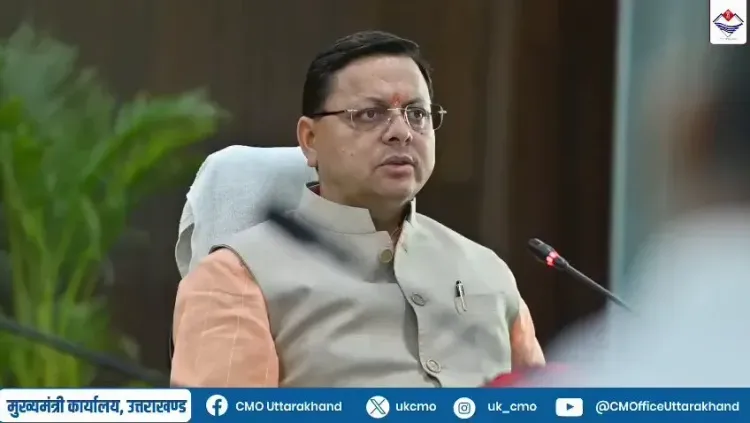
The Uttarakhand CMO has spotlighted Nirmala Joshi of Haldwani, whose homemade sweet business exemplifies CM Pushkar Singh Dhami's Aatmanirbhar Uttarakhand drive, linking a micro-enterprise success story to the national self-reliance framework and the state's focus on women-led food ventures.
Key Takeaways
Nirmala Joshi of Haldwani, Nainital district was highlighted by the Uttarakhand CMO on November 5, 2026 for building a recognised homemade sweet business.
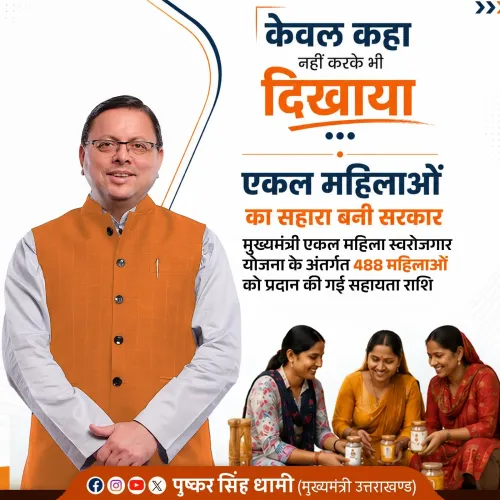
Her story is framed as part of CM Pushkar Singh Dhami's Aatmanirbhar Uttarakhand agenda, with women entrepreneurs at its centre.
The spotlight connects to the national Aatmanirbhar Bharat programme launched in May 2020 to promote local enterprise and manufacturing.
Uttarakhand has increasingly used individual women-led food-processing success stories to encourage micro-enterprise in hill communities.
Haldwani's dual role as a commercial hub and gateway to Nainital's tourist economy provides a natural market for artisanal food products.
Structured support — credit access, marketing linkages, and digital platforms — remains the critical next step for such micro-enterprises to scale.
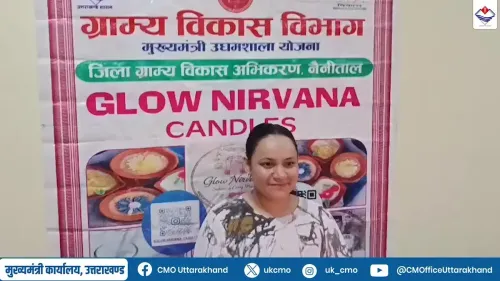
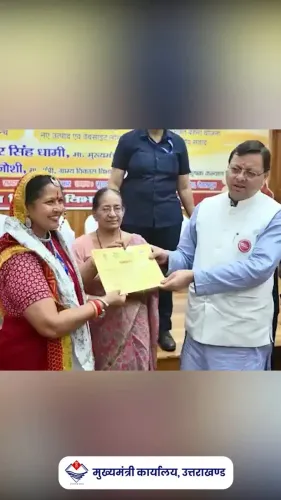
A sweet-maker from Haldwani is quietly rewriting what women-led enterprise looks like in the hills of Uttarakhand. The Chief Minister's Office of Uttarakhand on Thursday, November 5, 2026 spotlighted Nirmala Joshi of Nainital district as a living example of Aatmanirbhar Uttarakhand — a woman who has carved out a distinct identity for homemade sweets in a competitive local market.
From home kitchen to recognised brand in Nainital
The CMO's post, shared in Hindi, describes Nirmala Joshi as giving 'a new identity' to homemade confectionery — a phrase that signals more than a hobby turned income stream. In hill economies where formal employment options are limited and migration to the plains is a persistent pressure, a food micro-enterprise rooted at home carries real economic weight for a household and a signal for neighbours watching.
Nainital district, anchored by the tourism town of the same name and its commercial hub Haldwani, offers a ready consumer base in visiting tourists and a dense local population — conditions that can lift a homemade product from word-of-mouth to a recognised name, if quality and consistency hold.
CM Dhami's Aatmanirbhar push and women at its centre
Chief Minister Pushkar Singh Dhami, who has helmed Uttarakhand since 2021, has consistently framed women-led enterprise as central to his administration's self-reliance agenda. The post links Nirmala Joshi's story explicitly to Dhami ke Aatmanirbhar Uttarakhand ke sankalp — 'CM Dhami's resolve for a self-reliant Uttarakhand' — situating one woman's kitchen venture inside the state's broader economic narrative.
That framing connects upward to the national Aatmanirbhar Bharat programme, launched by the central government in May 2020, which encouraged local manufacturing, reduced import dependence, and created an umbrella brand for domestic enterprise. State governments in hill regions, Uttarakhand among them, have channelled that framework into ground-level stories — particularly in food processing, where women entrepreneurs dominate the micro-enterprise space.
Why these stories matter beyond the headline
Individual success spotlights from official accounts do real policy work: they signal to other potential entrepreneurs that the state is watching, celebrating, and — by implication — willing to support. Uttarakhand has been building out schemes for women-led micro-enterprises in food products, and tie-ups with national e-commerce and marketing platforms for local artisanal goods remain an active frontier to watch.
For Nirmala Joshi, the government's amplification is itself a form of market access — a name that was local yesterday reaching a statewide audience today.
The next measure of this initiative's seriousness will be whether recognition translates into structured support: easier credit, cold-chain linkages, and a shelf — physical or digital — beyond Haldwani.
Point of View
Micro-enterprise spotlights serve as retention signals. The real test, however, lies downstream — whether Nirmala Joshi and others like her receive structural support such as MUDRA credit, GI-tag pathways, or e-commerce onboarding, or whether official recognition remains the beginning and the end of the state's engagement.
NationPress
6 Nov 2026
Frequently Asked Questions
Who is Nirmala Joshi from Haldwani?
Nirmala Joshi is a woman entrepreneur from Haldwani in Nainital district, Uttarakhand , who has built a recognised business selling homemade sweets and has been highlighted by the Chief Minister's Office as a model of self-reliant enterprise.
What is Aatmanirbhar Uttarakhand?
Aatmanirbhar Uttarakhand is CM Pushkar Singh Dhami's state-level drive to promote local enterprise and reduce economic dependence, aligned with the central government's Aatmanirbhar Bharat programme launched in May 2020 .
What is the Aatmanirbhar Bharat scheme?
The Aatmanirbhar Bharat programme was announced by the central government in May 2020 to encourage domestic manufacturing, local entrepreneurship, and reduced reliance on imports across India.
How does the Uttarakhand government support women entrepreneurs?
Uttarakhand has been promoting women-led micro-enterprises — especially in food processing and local products — through official recognition, alignment with national schemes, and ongoing efforts to link entrepreneurs with marketing and credit platforms.
Why is Haldwani important for small food businesses in Uttarakhand?
Haldwani serves as the main commercial and transit hub for the Kumaon region and is the gateway to Nainital's tourism belt, giving local food entrepreneurs access to both a large resident consumer base and visiting tourists.