HP CM Office Plans to Raise Raw Turmeric Price to ₹170/kg
Synopsis
The Himachal Pradesh CM's Office has announced a plan to raise raw turmeric procurement prices from ₹150 to ₹170 per kg next year, aiming to lift rural incomes and reduce migration of hill farmers to cities for low-wage jobs.
Key Takeaways
The Himachal Pradesh government plans to raise the raw turmeric procurement price from ₹150 to ₹170 per kilogram next season.
The move is explicitly aimed at reducing rural out-migration to cities like Delhi, Mumbai, and Chandigarh where migrants typically earn ₹15,000–20,000 per month .
The government argues hill farmers can earn 'lakhs of rupees annually' by growing turmeric using natural farming methods on their own land.
Himachal Pradesh's hilly terrain makes low-input, high-value crop cultivation — such as natural turmeric farming — particularly well-suited to the state's agricultural profile.
Formal notification of the price revision through the state agriculture department or budget is still awaited.
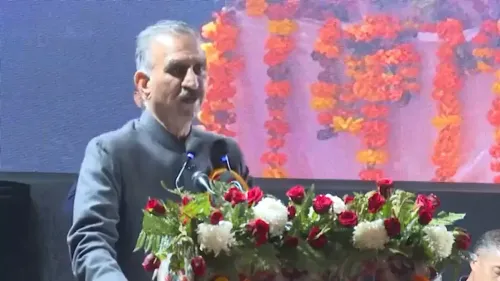
Himachal Pradesh's hill farmers may soon have a compelling reason to stay home. The Chief Minister's Office of Himachal Pradesh announced on Wednesday, November 18, 2026, that the state government intends to raise the procurement price of raw turmeric from ₹150 per kilogram to ₹170 per kilogram next year — a move framed explicitly as a tool to curb rural out-migration to cities like Delhi, Mumbai, and Chandigarh.
The post, shared in Hindi, made the government's intent sharply clear: 'हम चाहते हैं कि लोगों को 15-20 हजार रुपये की नौकरी के लिए दिल्ली, मुंबई या चंडीगढ़ न जाना पड़े' — 'We do not want people to have to leave for Delhi, Mumbai or Chandigarh for jobs paying ₹15,000–20,000 a month. They can grow raw turmeric naturally on their own land and earn lakhs of rupees annually.'Why Turmeric, and Why Now
Himachal Pradesh is a hilly, terrain-constrained state where conventional large-scale farming is difficult. Natural or low-input farming of high-value crops like turmeric is well-suited to its climate and topography. For small and marginal farmers — the backbone of the state's rural economy — turmeric cultivation offers a path to meaningful income without the capital demands of mechanised agriculture. The government's framing is deliberate: a ₹170/kg procurement floor converts raw farmland output into a reliable revenue anchor, potentially placing annual earnings 'in the lakhs' within reach of a household cultivating even a modest plot.Migration as the Real Target
The statement is as much a migration-policy announcement as an agricultural one. Hundreds of thousands of young Himachalis leave the state each year chasing urban wages — often in the ₹15,000–20,000 monthly bracket that the CM's Office explicitly names. That income, earned far from home, rarely feeds back into the local economy with the same multiplier effect as farm-based earnings. By anchoring a competitive price floor to a crop Himachali soil can produce naturally, the state is essentially trying to make staying home more financially rational than leaving. That calculation is what the ₹170 figure is designed to shift.What Follows the Announcement
The procurement price revision still awaits formal notification through the state agriculture department or the upcoming budget cycle. Farmers and rural households will be watching for the precise implementation mechanism — whether procurement happens through state agencies, cooperatives, or open-market price support — and for any accompanying extension services to help scale turmeric cultivation. The numbers are ambitious; the execution detail is what will determine whether hill farmers actually pocket those lakhs.Point of View
The state is trying to close the wage gap between farm earnings and urban salaries without creating large public-sector jobs. The ₹20 per kg increase is modest in absolute terms, but its signal value — that the state will progressively reward farmers who stay and cultivate — could matter more than the number itself. Whether it moves the needle on migration will depend entirely on how credibly and transparently the procurement mechanism is implemented in the season ahead.
NationPress
18 Nov 2026
Frequently Asked Questions
What is the new turmeric procurement price announced by Himachal Pradesh?
The Himachal Pradesh government has announced plans to raise the raw turmeric procurement price from ₹150 per kg to ₹170 per kg for the next season, as stated by the Chief Minister's Office on November 18, 2026.
Why is Himachal Pradesh raising the turmeric procurement price?
The government says the price hike is intended to make natural turmeric farming on local land financially competitive with urban wages, reducing the need for hill farmers to migrate to cities like Delhi, Mumbai, or Chandigarh for jobs paying ₹15,000–20,000 per month.
Can Himachal Pradesh farmers really earn lakhs from turmeric farming?
The CM's Office claims farmers cultivating raw turmeric using natural methods on their own land can earn annual incomes in the lakhs. The hilly terrain and climate of Himachal Pradesh are considered suitable for low-input turmeric cultivation, though actual income depends on plot size and yield.
When will the new turmeric price be implemented in Himachal Pradesh?
The CM's Office has indicated the revised price of ₹170/kg is planned for 'next year.' Formal implementation details — including the notification mechanism and procurement agency — are yet to be announced.
What is natural farming and why is Himachal Pradesh promoting it for turmeric?
Natural farming refers to low-external-input cultivation methods that avoid synthetic chemicals, relying instead on locally available inputs. Himachal Pradesh has been promoting it as suited to its hilly terrain, lower costs for farmers, and growing market demand for naturally grown produce.