CM Sukhu Backs Turmeric at Rs 150/kg to Boost HP Farmers
Synopsis
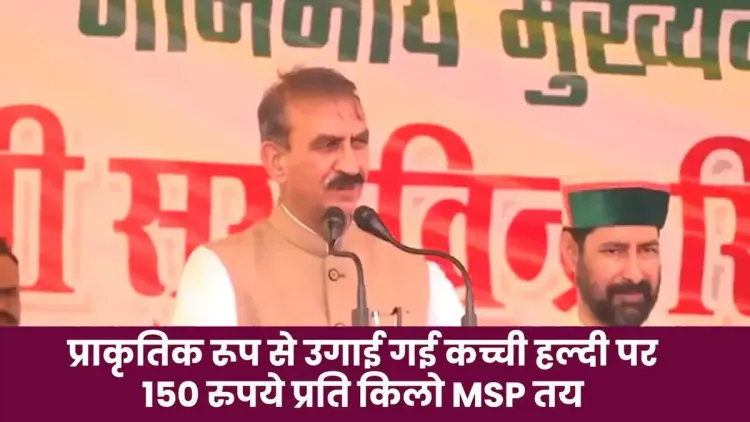
Himachal Pradesh Chief Minister Sukhvinder Singh Sukhu announced on 25 June 2026 that the state is procuring raw turmeric from farmers at Rs 150 per kg, highlighting the crop's resilience to stray animal damage and its low-labour, high-return profile as part of broader farmer welfare efforts.
Key Takeaways
Himachal Pradesh CM Sukhvinder Singh Sukhu announced state procurement of raw turmeric at Rs 150 per kilogram on 25 June 2026 .
Turmeric was highlighted as a crop not damaged by stray animals, a major concern for hill-state farmers.
The scheme is part of the Congress government's broader farmer-centric welfare agenda since taking office in December 2022 .
Fixed-price state procurement supplements central MSP mechanisms, which do not cover all regional crops.
The initiative aims to diversify Himachal Pradesh's agricultural base and raise rural incomes.
Future expansion to other resilient, low-labour crops will indicate the depth of the government's crop-diversification strategy.
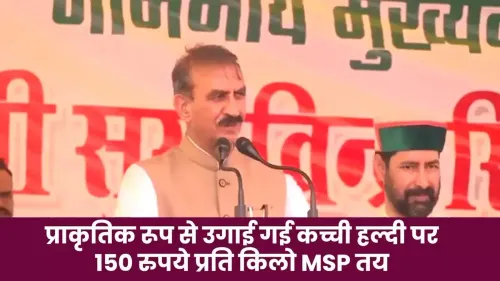
Himachal Pradesh Chief Minister Sukhvinder Singh Sukhu on Thursday, 25 June 2026, reaffirmed his government's commitment to farmer welfare, announcing that the state is procuring raw turmeric from growers at Rs 150 per kilogram — positioning the crop as a low-labour, high-return alternative suited to the hill state's unique agricultural challenges.
Context
Posting in Hindi on X, CM Sukhu said: 'हमारी सरकार का पूरा प्रयास है कि जन-कल्याणकारी योजनाओं का लाभ हर जरूरतमंद तक पहुँचे' ['Our government's full effort is to ensure that the benefits of welfare schemes reach every person in need']. He highlighted that farmer-centric schemes are being implemented on the ground, with raw turmeric being purchased directly from cultivators at a fixed rate of Rs 150 per kg.
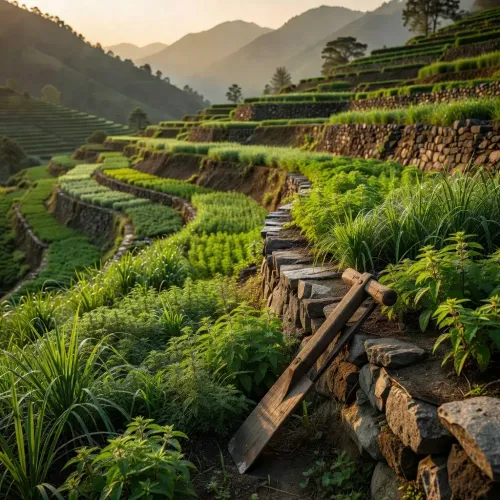
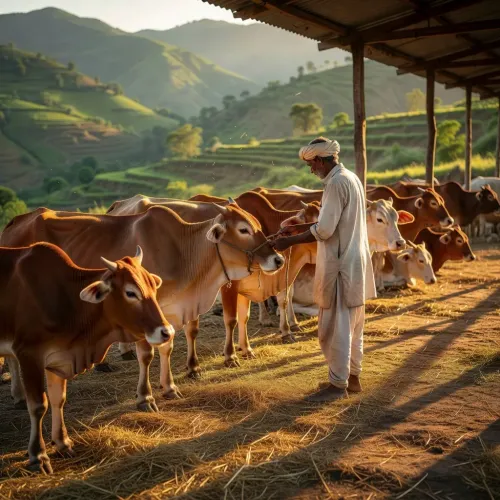
The Chief Minister also drew attention to a practical advantage of turmeric cultivation in Himachal Pradesh: the crop is not damaged by stray animals — a persistent concern for hill farmers — while requiring comparatively less labour and offering better returns.
Policy Backdrop
The Indian National Congress government in Himachal Pradesh, which came to power after the December 2022 state assembly elections, has consistently emphasised direct procurement and income-support programmes for the farming community. Fixed-price state procurement is designed to supplement central Minimum Support Price (MSP) mechanisms, which do not always cover niche or regional crops such as turmeric.
Across Indian hill states, governments periodically introduce assured-price purchase models for crops that are resilient to local constraints — including wildlife and stray animal damage — and that require lower labour inputs. Turmeric fits this profile well, making it an attractive crop for diversification in a state where arable land is limited and labour costs are rising.
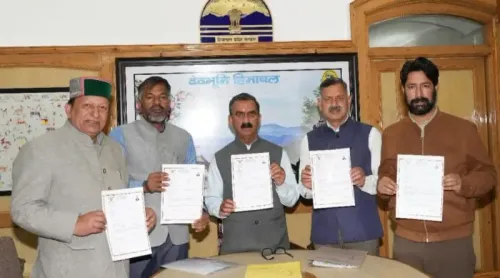
CM Sukhu framed the initiative within a broader welfare philosophy, stating the government wants 'money to go into farmers' pockets, their income to grow, and for them to become economically stronger.'
Stakeholders and Impact
The primary beneficiaries are Himachal Pradesh's turmeric growers, particularly smallholders in areas where stray cattle have historically caused crop losses. By offering a fixed procurement price, the state removes price uncertainty at the point of sale — a key risk factor that discourages farmers from shifting away from traditional staples.
The announcement also signals a push to diversify the state's agricultural base beyond apples and other traditional horticulture produce. If uptake is strong, the model could be replicated for other crops with similar resilience and market potential, strengthening rural incomes across the state.
What's Next
Attention will now turn to the scale of procurement operations — how many farmers are enrolled, the total volume being purchased, and the logistics of collection across Himachal Pradesh's dispersed hill terrain. State budget allocations for agricultural procurement in the next fiscal cycle will be a key indicator of how deeply the government intends to institutionalise this fixed-price model.
Any expansion of the scheme to additional crops with similar characteristics — low stray-animal vulnerability, manageable labour requirements — will signal whether this is a standalone intervention or the beginning of a broader crop-diversification strategy for the hill state's farming sector.
Point of View
Particularly for niche crops. The deliberate framing around stray animal resilience is politically astute — it addresses one of the most visceral grievances of hill farmers without requiring a direct confrontation with the stray cattle issue. For the Congress government, which faces the perennial challenge of demonstrating welfare delivery in a fiscally constrained state, crop-specific procurement offers a visible, tangible benefit that can be communicated directly to a key voter base. The real test will be whether the scheme scales beyond an announcement into a sustained, budgeted operation across the state's dispersed terrain.
NationPress
24 Sept 2026
Frequently Asked Questions
What is the price at which Himachal Pradesh is buying turmeric from farmers?
The Himachal Pradesh government is procuring raw turmeric from farmers at Rs 150 per kilogram , as announced by Chief Minister Sukhvinder Singh Sukhu on 25 June 2026.
Why is turmeric being promoted for farmers in Himachal Pradesh?
CM Sukhu highlighted that turmeric is not damaged by stray animals, requires comparatively less labour, and offers better returns — making it well-suited to Himachal Pradesh's hill terrain and farming conditions.
Who is Sukhvinder Singh Sukhu?
Sukhvinder Singh Sukhu is the Chief Minister of Himachal Pradesh and an Indian National Congress leader who assumed office in December 2022 following the state assembly elections.
How does state turmeric procurement differ from central MSP?
Central MSP schemes cover a fixed list of crops and do not always include niche or regional produce like turmeric. State governments can introduce their own fixed-price procurement to fill this gap and provide price certainty to local growers.
What is the Congress government's broader plan for Himachal Pradesh farmers?
The Congress government has emphasised direct procurement, income-support programmes, and crop diversification since December 2022, aiming to raise rural incomes and make farmers 'economically stronger,' as stated by CM Sukhu.