HP CM Office Voices Fishers' Livelihood Struggles
Synopsis
The Chief Minister's Office of Himachal Pradesh highlighted the daily livelihood uncertainty of inland fishing families — who set out at 4 a.m. with no guarantee of a fair catch or price — signalling political attention to a structural gap in rural fisheries welfare.
Key Takeaways
The CMO Himachal Pradesh publicly acknowledged the income precarity of inland fishing households on 12 August 2026 .
Fishing families leave for work as early as 4 a.m. , with no assurance of catch volume or fair market price.
If fish go unsold, the financial loss falls entirely on the fishing household — with no institutional buffer.
Pong Dam Lake and Gobind Sagar (Bhakra) are among HP's major inland fishery reservoirs supporting thousands of such families.
The Pradhan Mantri Matsya Sampada Yojana (2020) targets exactly these structural gaps, but last-mile delivery remains a concern.
Follow-up policy action — cooperatives, cold-chain, price support — will determine whether this acknowledgement translates into change.
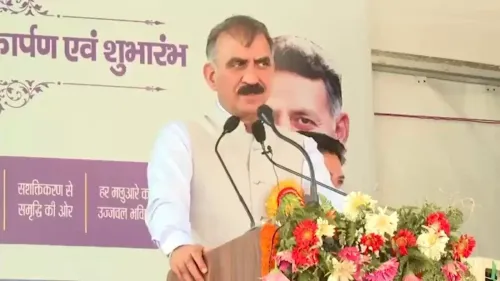
Before the sun rises over Himachal Pradesh's reservoirs, fishing families are already on the water — with no guarantee of a catch, no certainty of a fair price, and no safety net if the fish don't sell. The Chief Minister's Office of Himachal Pradesh gave voice to that precarity on Wednesday, 12 August 2026, sharing a candid reflection on the daily uncertainty faced by the state's inland fishing communities.
The post, a reply from the CMO's official account, translated directly: 'Maine unki sthiti ko samjha' — 'I understood their situation.' It described families who set out at 4 a.m. to fish, uncertain how much they will catch and whether they will get a fair price for it. The post noted bluntly: if the fish go unsold, these households bear the loss themselves.
The Quiet Crisis in HP's Inland Fisheries
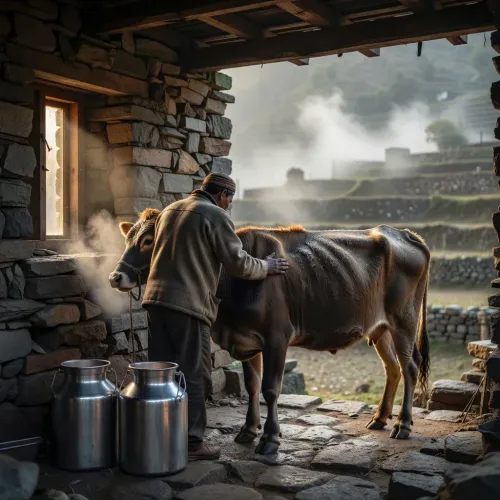
Himachal Pradesh is a landlocked state, but its fisheries sector is far from marginal. Vast reservoirs — including Pong Dam Lake and Gobind Sagar (Bhakra) — support thousands of traditional fishing families whose livelihoods hinge on unpredictable catches and volatile local markets. These are not industrial operators; they are small households absorbing price risk with no buffer. The twin vulnerabilities the CMO named — uncertain catch volumes and unreliable price realisation — are structural. A fisher who returns with a large haul but finds no buyers that morning has no cold storage to fall back on, no cooperative to absorb the surplus, and no minimum support price to cushion the loss. The fish spoils. The income disappears.Central Scheme, Local Gaps
The Pradhan Mantri Matsya Sampada Yojana, launched in 2020, was designed precisely to address these gaps — modernising fisheries infrastructure, building market linkages, and improving income stability for small fishers across India. State governments, including Himachal Pradesh, are expected to channel and supplement this support at the ground level. The CMO's acknowledgement of the problem signals that, for many families in the hills, the ground-level delivery still has distance to travel. State governments in non-coastal regions have periodically spotlighted the livelihood challenges of inland fishing communities as part of rural welfare outreach — but public acknowledgement from the executive office carries a different weight. It signals political attention, and with it, the possibility of follow-through. The question now is whether this empathy translates into action: fisheries cooperatives, cold-chain infrastructure, or a price-support mechanism that reaches the family heading out at 4 a.m. before the rest of the state wakes up.Point of View
Not generic. Whether it precedes a concrete policy announcement — a cooperative, a price-support window, cold-chain investment — will determine its real political weight. For now, it places fisheries welfare on the state's visible agenda, which is itself a step that advocates in the sector have long pushed for.
NationPress
12 Aug 2026
Frequently Asked Questions
Why are Himachal Pradesh fishing families facing income uncertainty?
Inland fishing families in HP depend on unpredictable catches from reservoirs like Pong Dam and Bhakra. With no minimum price support or cold-storage infrastructure, unsold fish means a direct financial loss for the household.
What is the Pradhan Mantri Matsya Sampada Yojana and does it help HP fishers?
The Pradhan Mantri Matsya Sampada Yojana, launched in 2020, aims to modernise fisheries infrastructure and improve market linkages for small fishers across India, including inland states like Himachal Pradesh. Last-mile implementation gaps remain a concern.
Which reservoirs support inland fisheries in Himachal Pradesh?
Pong Dam Lake and Gobind Sagar (Bhakra) are among the largest inland water bodies in Himachal Pradesh supporting traditional fishing communities.
What did the HP Chief Minister's Office say about fishermen?
The CMO's post, shared on 12 August 2026, described families who head out to fish at 4 a.m. with no certainty of catch or fair price, and who bear the full financial loss if the fish go unsold.
What policy steps could improve the situation for HP's inland fishers?
Analysts point to fisheries cooperatives, cold-chain storage infrastructure, and price-support mechanisms as the most direct interventions that could reduce income volatility for small fishing households in Himachal Pradesh.