HP CM Sukhu: ₹3,500 aid for every eligible family
Synopsis
Chief Minister Sukhvinder Singh Sukhu has announced ₹3,500 cash assistance for every eligible family in Himachal Pradesh, with District Commissioners and SDMs designated as grievance officers for any household that does not receive the benefit.
Key Takeaways
₹3,500 in cash assistance will be provided to each eligible family in Himachal Pradesh.
Families who do not receive the amount can file a complaint with their District Commissioner (DC) or Sub-Divisional Magistrate (SDM) .
CM Thakur Sukhvinder Singh Sukhu has personally assured that no eligible family will be excluded.
The specific eligibility criteria for 'eligible families' has not yet been publicly detailed.
The announcement follows a broader pattern of household-level welfare transfers under the Sukhu-led Congress government since December 2022 .
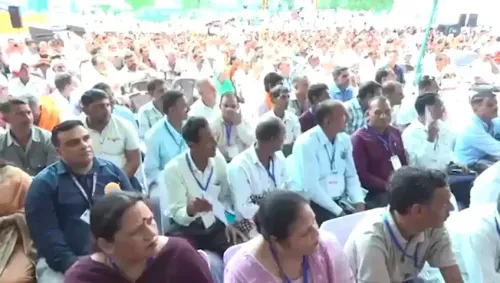
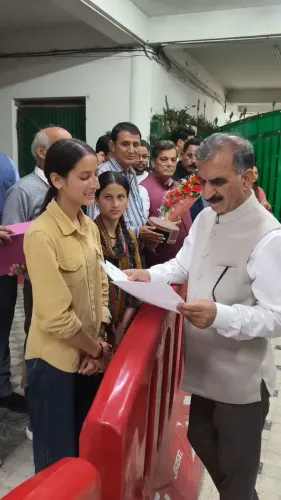
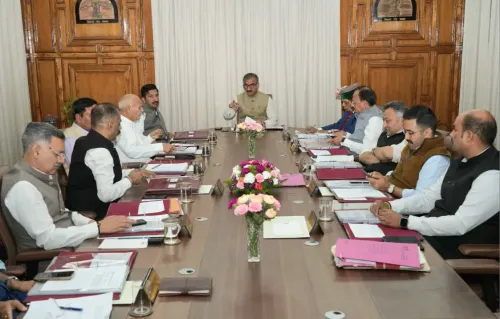
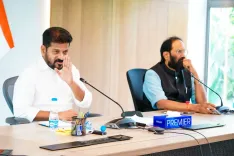
No eligible family will be left behind — that is the direct promise Chief Minister Thakur Sukhvinder Singh Sukhu of Himachal Pradesh has put on record. On Wednesday, 12 August 2026, the Chief Minister's Office of Himachal Pradesh posted a statement from CM Sukhu affirming that a cash assistance of ₹3,500 will be provided to each qualifying household, and that the government will stand accountable if even one slips through the cracks.
In the statement, CM Sukhu said: 'Each eligible family will be given an assistance amount of ₹3,500. If any eligible family does not receive the amount, they can file a complaint with the District Commissioner (DC) or the Sub-Divisional Magistrate (SDM). The government will ensure that no eligible family is deprived of this benefit.'
A grievance window built into the promise
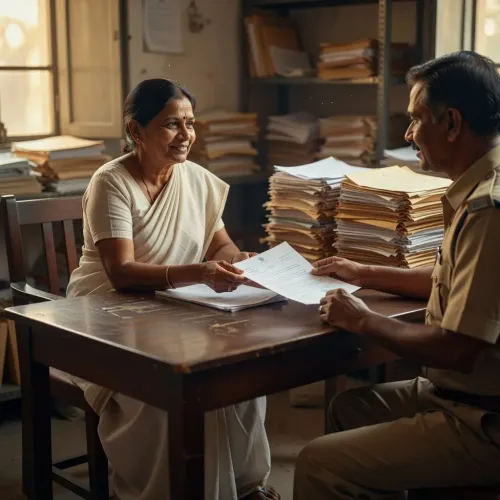
What makes the announcement notable is the explicit complaint mechanism named alongside the benefit itself. By directing aggrieved families to the DC or SDM — the two most accessible rungs of district administration in Himachal Pradesh — the government is effectively creating a last-mile accountability layer. Families do not need to navigate state-level bureaucracy; the redressal point is local and reachable.
State governments across India have increasingly paired cash-transfer schemes with such grievance channels, recognising that exclusion errors — eligible households missed due to data gaps or administrative delays — are the most politically and socially damaging failure mode of welfare delivery.
Sukhu's Congress government and the welfare track record
Chief Minister Sukhu, who has led the Himachal Pradesh Congress government since December 2022, has pursued a series of household-level welfare transfers as a signature of his administration. The ₹3,500 assistance fits that pattern — a direct, per-family cash amount with a clear quantum, designed to be verifiable at the ground level.
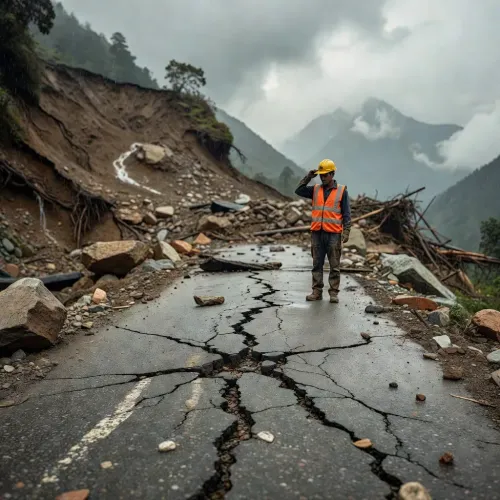
The specific category of 'eligible families' — whether defined by income, occupation, disaster impact, or another criterion — has not been detailed in the official statement. What the government has committed to is universality within that eligibility boundary: every family that qualifies must receive the money.
The publication of full eligibility norms and a disbursement timeline will be the next test of how this promise translates into delivery on the ground.
Point of View
CM Sukhu is publicly staking his government's credibility on last-mile delivery, not just announcement. For a Congress administration heading into a politically competitive period, visible welfare universality is a core differentiator. The absence of published eligibility criteria, however, leaves the scheme's scope ambiguous, which could either be a deliberate sequencing choice or a gap that invites scrutiny as disbursement begins.
NationPress
12 Aug 2026
Frequently Asked Questions
Who will get the ₹3,500 assistance in Himachal Pradesh?
Every family that meets the government's eligibility criteria will receive ₹3,500. The specific definition of 'eligible families' has not yet been officially detailed in the announcement.
What should I do if I don't receive the ₹3,500 welfare amount in HP?
CM Sukhu has directed that families who do not receive the assistance can file a complaint directly with their District Commissioner (DC) or Sub-Divisional Magistrate (SDM).
Who is CM Sukhvinder Singh Sukhu?
Thakur Sukhvinder Singh Sukhu is the Chief Minister of Himachal Pradesh, heading the state Congress government since December 2022.
Is the ₹3,500 Himachal Pradesh welfare scheme a new announcement?
The statement was posted by the Chief Minister's Office on 12 August 2026. Full eligibility norms and the disbursement timeline are yet to be published.
What is the role of DC and SDM in the HP welfare scheme?
The District Commissioner and Sub-Divisional Magistrate serve as the local grievance redressal officers — eligible families who miss out on the ₹3,500 payment can approach them directly for a complaint.