Rajasthan CM Bhajan Lal Sharma Salutes Emergency-Era Democracy Fighters
Synopsis
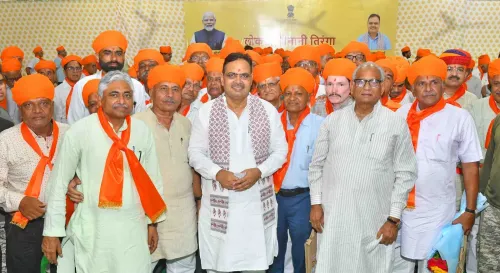
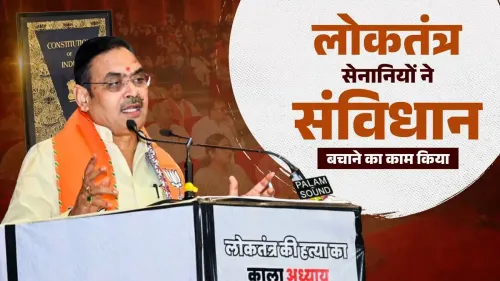
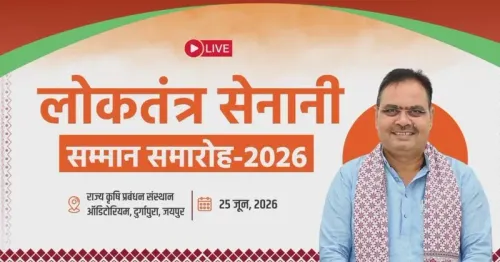
The Chief Minister's Office of Rajasthan on 12 August 2026 paid tribute to democracy fighters of the 1975–1977 Emergency, calling their resistance a 'historic saga of the defence of democracy' and tagging CM Bhajan Lal Sharma in the post.
Key Takeaways
The Rajasthan CMO posted a tribute on 12 August 2026 honouring Emergency-era democracy fighters.
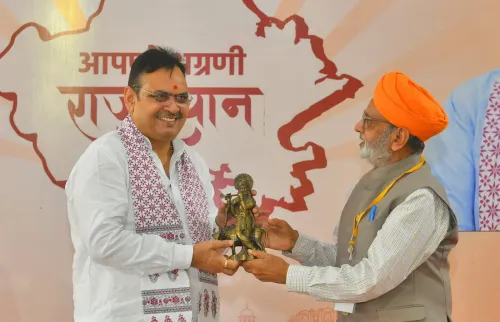
The post tagged Chief Minister Bhajan Lal Sharma and used the hashtag #आपणो_अग्रणी_राजस्थान .
India's Emergency lasted 21 months , from June 1975 to March 1977 , during which fundamental rights were suspended.
The 1977 general elections ended the Emergency period and brought the Janata Party to power at the centre.
BJP-ruled states including Rajasthan routinely invoke Emergency-era resistance as part of a broader democratic-values narrative.
The specific occasion for the August 2026 timing has not been confirmed.
Fifty-one years after Indira Gandhi's government suspended India's constitutional order, the struggle of those who resisted is still being written into political memory. The Chief Minister's Office of Rajasthan posted a tribute on Wednesday, 12 August 2026, invoking the sacrifice of democracy fighters during the Emergency (1975–1977) and tagging Chief Minister Bhajan Lal Sharma directly in the message.
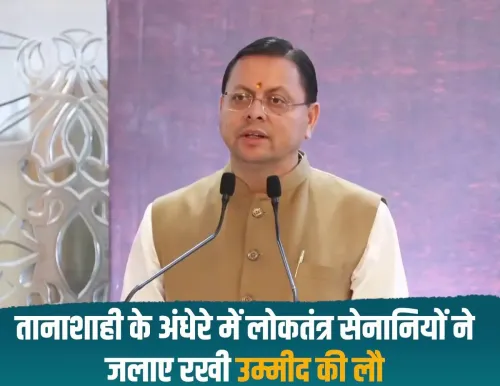
The post, shared under the hashtag #आपणो_अग्रणी_राजस्थान ('Our Pioneering Rajasthan'), declared: 'During the Emergency, the struggle of democracy fighters is a historic saga of the defence of democracy.' The language is deliberate — not a routine anniversary note, but a framing of that 21-month period as a foundational test of Indian democratic values.
The Emergency: 21 Months That Reshaped Indian Politics
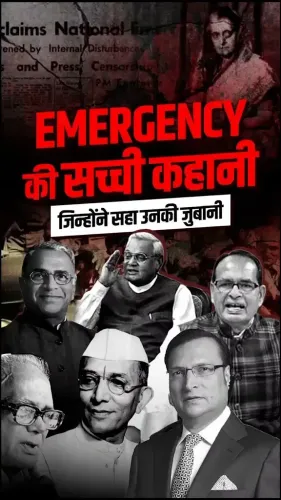
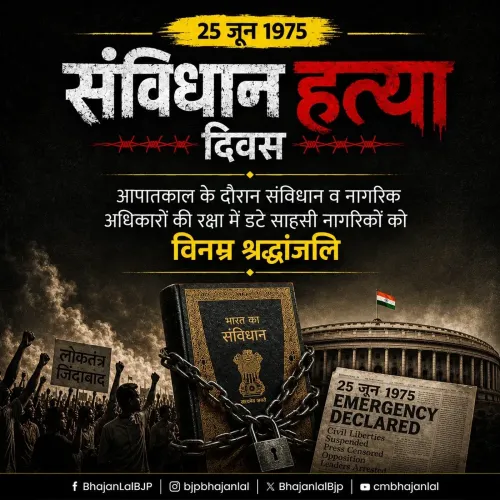
The Emergency, declared on 25 June 1975 and lifted in March 1977, remains one of the most contested chapters in modern Indian history. For 21 months, fundamental rights were suspended, the press was censored, and tens of thousands of political opponents were detained without trial. The period ended only when the 1977 general elections — widely seen as a referendum on the Emergency itself — swept the Janata Party to power and ended Congress rule at the centre.
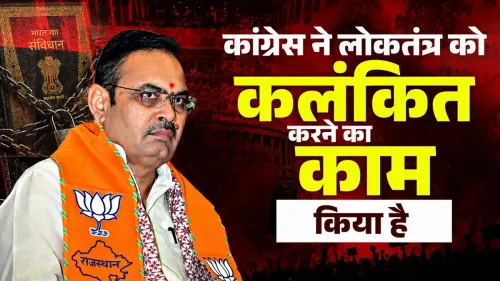
Those who resisted — underground organisers, lawyers, journalists, and ordinary citizens who refused to comply — are remembered across party lines as democracy fighters. BJP governments have consistently foregrounded their legacy as a counter-narrative to what they describe as the Congress's authoritarian inheritance.
Bhajan Lal Sharma and Rajasthan's Political Messaging
Bhajan Lal Sharma has served as Chief Minister of Rajasthan since December 2023, when the BJP returned to power in the state. Invoking Emergency-era resistance is a recurring instrument in BJP state communications — a way of anchoring present-day governance in the language of democratic vigilance and positioning the party as heir to those who fought authoritarian overreach.
The August timing of this particular post falls outside the traditional June 25 anniversary window, suggesting the tribute may be tied to a state-level event or civic programme, though the specific occasion has not been confirmed.
More than four decades on, the Emergency continues to function as a live political fault line — not a settled chapter of history, but an argument still being made about who owns India's democratic story.
Point of View
The Emergency is not history — it is a usable present, a recurring argument about who can be trusted with power. The consistency of this messaging across BJP-ruled states suggests central coordination, even when delivered through state channels.
NationPress
12 Aug 2026
Frequently Asked Questions
What was the Emergency in India?
The Emergency was a 21-month period from June 1975 to March 1977 when Prime Minister Indira Gandhi's government suspended fundamental rights, censored the press, and detained political opponents without trial. It ended after the 1977 general elections returned a Janata Party government.
Who are Emergency-era democracy fighters?
Democracy fighters refers to individuals — activists, lawyers, politicians, and ordinary citizens — who resisted the Emergency's suspension of civil liberties, often at personal cost including imprisonment. They are honoured across party lines as defenders of India's constitutional order.
Why did the Rajasthan CMO post a tribute to Emergency fighters?
The post honours the legacy of those who resisted the 1975–1977 Emergency . BJP governments routinely issue such tributes to underscore a democratic-values narrative and contrast their governance with what they describe as Congress-era authoritarianism.
Who is Bhajan Lal Sharma?
Bhajan Lal Sharma is a Bharatiya Janata Party leader who has served as Chief Minister of Rajasthan since December 2023 , when the BJP won the state assembly elections.
What does the hashtag Aapno Agrani Rajasthan mean?
The hashtag #आपणो_अग्रणी_राजस्थान translates from Rajasthani as 'Our Pioneering Rajasthan' — a branding phrase used by the Rajasthan state government to project the state's progress and identity under the current administration.