HP CM Sukhu: State Budget Funding AI Tech Now Reaching AIIMS Delhi
Synopsis
Chief Minister Sukhvinder Singh Sukhu says Himachal Pradesh is funding AI-based modern health technology through its own state budget, and that the same technology is now being extended to AIIMS Delhi — signalling a state-led push into national health infrastructure.
Key Takeaways
CM Sukhvinder Singh Sukhu stated on 19 June 2026 that Himachal Pradesh is bringing AI-based modern technology using its own state budget.
The Chief Minister claimed the same technology is now also reaching AIIMS Delhi , a premier central government medical institute.
Himachal Pradesh has been led by the Congress government since December 2022 , with digital governance cited as a focus area.
India's National Strategy for AI (2018) and the Ayushman Bharat Digital Mission (2021) form the national policy backdrop for such state-level initiatives.
Specific technology type, budget line-item, and rollout schedule remain to be confirmed through official procurement documents.
Health department tenders and formal agreements with AIIMS Delhi will be key indicators of on-ground progress.
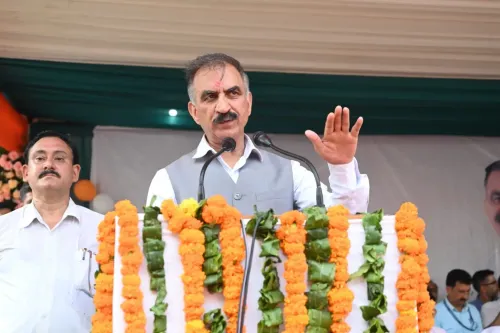
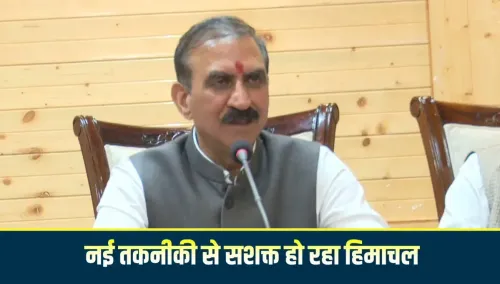
The Chief Minister's Office of Himachal Pradesh shared a statement on Friday, 19 June 2026, in which Chief Minister Thakur Sukhvinder Singh Sukhu asserted that the state is deploying AI-based modern technology through its own budget — and that the same technology is now making its way to AIIMS Delhi.
In his own words, 'हम अपने बजट से AI आधारित आधुनिक तकनीक ला रहे हैं और यही तकनीक दिल्ली एम्स में भी आ रही है' — ('We are bringing AI-based modern technology through our own budget, and this same technology is also coming to AIIMS Delhi.')
Context
CM Sukhu, who has led the Congress government in Himachal Pradesh since December 2022, has consistently positioned the state's fiscal allocations toward digital and health-technology upgrades. The statement, posted as a reply from the official @CMOFFICEHP handle, frames the AI initiative as a state-led effort rather than a centrally driven one — with Himachal Pradesh's own budget as the primary funding vehicle.
The claim that the same technology is 'also coming to AIIMS Delhi' signals a convergence between state-level procurement and central health infrastructure, a notable assertion given AIIMS Delhi's stature as the country's premier public medical institution under the Ministry of Health and Family Welfare.
Policy Backdrop
India's push for AI in public healthcare has institutional roots going back to the National Strategy for Artificial Intelligence released in 2018, which identified healthcare diagnostics and service delivery as priority sectors. The Ayushman Bharat Digital Mission, launched in 2021, subsequently built the national digital health ecosystem that has enabled state-level AI integrations across radiology, pathology, and patient triage.
Indian states have progressively incorporated AI tools within public hospitals as part of the broader Digital India and National Digital Health Mission frameworks. Central institutes such as AIIMS Delhi frequently serve as testing and scaling nodes before wider state-level or national adoption — a pattern that gives CM Sukhu's claim added policy significance.
Stakeholders and Impact
The most immediate stakeholders are patients and clinical staff at Himachal Pradesh's state hospitals and, if the technology transfer materialises, at AIIMS Delhi — which serves millions of patients annually from across the country. State health department officials and procurement agencies will be central to executing any AI deployment tied to the budget commitment.
For Himachal Pradesh, a relatively smaller hill state, the ability to fund and export technology to a national institution like AIIMS would represent a significant shift in the state's positioning within India's health-technology landscape. It also reinforces the Congress government's narrative of proactive, self-funded governance.
What's Next
Observers will look to Himachal Pradesh's budget documents and health-department tenders for specifics on the AI procurement — including the technology type, vendor, and deployment timeline. The linkage with AIIMS Delhi will require coordination with the central government, making inter-governmental alignment a key variable to watch.
Phased deployment timelines at district hospitals within Himachal Pradesh, alongside any formal agreements with AIIMS, will be the clearest indicators of whether this statement translates into on-ground implementation.
Point of View
Suggesting Himachal Pradesh is moving upstream in the policy chain. If the AIIMS linkage is formalised, it would mark a rare instance of state-level procurement influencing national institution technology choices. The statement is likely to intensify scrutiny of the state's health budget allocations and procurement transparency in the months ahead.
NationPress
18 Sept 2026
Frequently Asked Questions
What AI technology is Himachal Pradesh deploying in hospitals?
CM Sukhu has stated that Himachal Pradesh is deploying AI-based modern technology through its state budget, but the specific type of technology, vendor, and budget line-item have not been publicly detailed as of this report.
How is Himachal Pradesh's AI health tech connected to AIIMS Delhi?
CM Sukhu claimed that the same AI-based technology being funded by the Himachal Pradesh state budget is also being introduced at AIIMS Delhi, though formal agreements or timelines for this have not been announced.
Who is Sukhvinder Singh Sukhu?
Sukhvinder Singh Sukhu is the Chief Minister of Himachal Pradesh, leading the Congress government in the state since December 2022.
What is India's national policy on AI in healthcare?
India released its National Strategy for Artificial Intelligence in 2018, identifying healthcare as a priority sector. The Ayushman Bharat Digital Mission, launched in 2021, further built the digital health ecosystem enabling state-level AI integrations.
Is AIIMS Delhi a state or central government institution?
AIIMS Delhi is a central government institution under the Ministry of Health and Family Welfare and is India's premier public medical institute, serving patients from across the country.