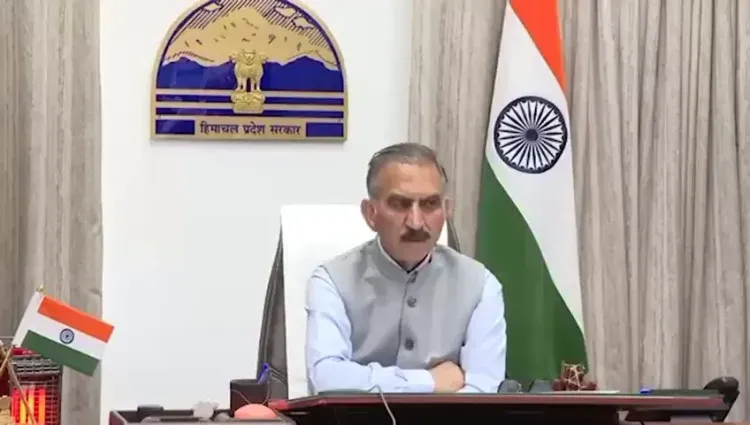
HP CM's Office: GST cost state ₹4,000 cr in VAT, excise losses
Synopsis
The Chief Minister's Office of Himachal Pradesh says GST implementation has caused a revenue loss of approximately ₹4,000 crore in VAT and excise collections, and reaffirms tourism promotion as the state government's primary economic growth lever.
Key Takeaways
₹4,000 crore is the approximate revenue loss Himachal Pradesh says it has suffered in VAT and excise collections since GST was implemented.
The Chief Minister's Office of Himachal Pradesh made the disclosure via an official post on 24 October 2026 .
The government says it took 'important steps' to promote tourism roughly three-and-a-half years ago , positioning the sector as a fiscal recovery driver.
GST , rolled out in July 2017 , subsumed state-level VAT and excise duties and included a five-year revenue-compensation guarantee for states.
Multiple hill and special-category states have highlighted post-GST revenue gaps and pushed for an extension of central compensation mechanisms.
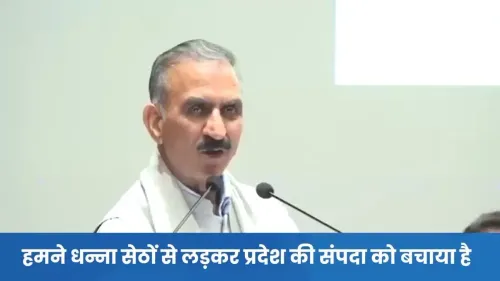
A revenue wound that has been quietly bleeding for years is back in sharp focus. The Chief Minister's Office of Himachal Pradesh stated on Saturday, 24 October 2026 that the rollout of the Goods and Services Tax (GST) has cost the hill state approximately ₹4,000 crore in lost VAT and excise revenue — and framed tourism promotion as the government's chosen path forward.
The post, shared in Hindi, declared: 'जीएसटी लागू होने के बाद वैट और एक्साइज के रूप में प्रदेश को तकरीबन 4,000 करोड़ रुपये का नुकसान हुआ है' — ('After the implementation of GST, the state has suffered a loss of approximately ₹4,000 crore in the form of VAT and excise'). It also noted that the government had taken 'important steps' in the direction of boosting tourism roughly three-and-a-half years ago.The GST fault-line between Shimla and New Delhi
When GST was rolled out in July 2017, it absorbed state-level taxes including VAT and excise duties into a unified national framework. The Centre promised states a five-year compensation guarantee for any shortfall in revenue growth below a 14 per cent annual benchmark. For a state like Himachal Pradesh — whose fiscal profile leans heavily on tourism, hydropower, and horticulture — the structural shift hit hard. The ₹4,000-crore figure cited by the CMO captures that accumulated gap, underscoring how the compensation window's closure has left a lasting dent in state finances.
Himachal Pradesh is not alone. Multiple states flagged revenue shortfalls in the post-GST era and pressed New Delhi for an extension of the compensation mechanism beyond its original five-year span. Those talks have continued at various GST Council meetings, with hill and special-category states consistently arguing that their revenue bases are structurally narrower than larger industrial states.
Tourism as the fiscal counterweight
Against that backdrop, the CMO's framing is pointed: tourism is not just a development goal but a revenue-recovery strategy. Himachal Pradesh — home to destinations from Shimla and Manali to Spiti and Dharamshala — draws millions of domestic and international visitors each year. The government's claim of 'important steps taken three-and-a-half years ago' points to an earlier policy push whose specifics were not detailed in the post; those measures now appear to be cited as the foundation for the current thrust.
The broader pattern is clear: as central transfers tighten, mountain states are doubling down on sectors where geography itself is the asset. Whether fresh tax incentives, infrastructure upgrades, or renewed central-state fiscal talks follow this public statement will be the real test of intent.
Point of View
000-crore revenue gap is a calculated political signal — it builds a fiscal grievance case against the Centre at a time when GST compensation has lapsed, while simultaneously justifying the state's tourism-first economic agenda. For a Congress-governed Himachal Pradesh navigating a tight budget, anchoring tourism promotion in a larger central-policy-failure narrative gives the state government both a developmental rationale and a political shield. The move fits a well-worn pattern among opposition-ruled states that use GST Council forums and public statements to pressure New Delhi on fiscal federalism. Whether it translates into concrete policy action — new tourism incentives, fresh compensation demands at the GST Council, or a revised state budget — will determine if this is strategy or theatre.
NationPress
24 Oct 2026
Frequently Asked Questions
How much revenue has Himachal Pradesh lost due to GST?
The Chief Minister's Office of Himachal Pradesh has stated that the state has suffered a loss of approximately ₹4,000 crore in VAT and excise revenue since GST was implemented.
Why did states lose VAT and excise revenue after GST?
GST, introduced in July 2017, subsumed state-level taxes including VAT and excise duties into a unified national framework, reducing states' autonomous tax base. The Centre guaranteed compensation for five years, but many states reported shortfalls even within that window.
What is Himachal Pradesh doing to offset the GST revenue loss?
The state government has stated its goal is to promote tourism as a key economic driver, citing steps taken approximately three-and-a-half years ago to advance that agenda.
Did other states also face revenue losses after GST?
Yes. Multiple states, particularly hill and special-category states with narrower tax bases, reported post-GST revenue shortfalls and have called for an extension of the central compensation mechanism beyond its original five-year period.
Is Himachal Pradesh demanding more GST compensation from the Centre?
The CMO's post highlights the ₹4,000-crore revenue loss, which is consistent with Himachal Pradesh's broader position in central-state fiscal discussions, though no specific demand for fresh compensation was spelled out in this statement.