HP Govt Extends MSP to Milk and Key Crops to Boost Farmer Incomes
Synopsis
The Chief Minister's Office of Himachal Pradesh says state-level MSP covering milk and major crops is delivering direct income gains to farmers, while natural farming adoption is protecting long-term soil fertility and rural economic stability.
Key Takeaways
The Himachal Pradesh government has extended MSP to milk alongside major crops to stabilise farmer incomes.
The stated dual goal is putting cash directly into farmers' hands and strengthening the broader rural economy .
Natural farming is being promoted alongside price support to maintain soil fertility over the long term.
India's central MSP system for crops dates to the 1960s ; extending similar logic to a perishable like milk is an operationally significant step.
Key future indicators include state budget procurement allocations and actual changes in farmer income and soil health data.
Money in the farmer's hand — that is the stated goal driving Himachal Pradesh's decision to extend Minimum Support Price (MSP) coverage to milk and major crops, a move the Chief Minister's Office of Himachal Pradesh highlighted on Thursday, 19 November 2026. The government argues the policy is not just about price protection — it is about rebuilding the rural economy from the ground up.
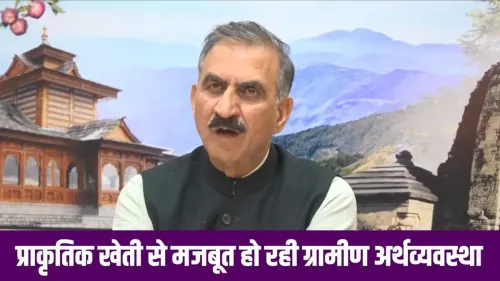
The CMO's post states plainly: 'राज्य सरकार द्वारा दूध के साथ प्रमुख फसलों में MSP देने से किसान भाइयों को लाभ मिल रहा है' — ('The state government's extension of MSP to milk along with major crops is benefiting farmer brothers.'). The objective, as articulated, is twofold: put cash directly into farmers' hands and strengthen the rural economy. A third thread runs through the announcement — the promotion of natural farming, which the government says preserves soil fertility over the long run.
Why MSP for Milk Is a Bigger Deal Than It Sounds
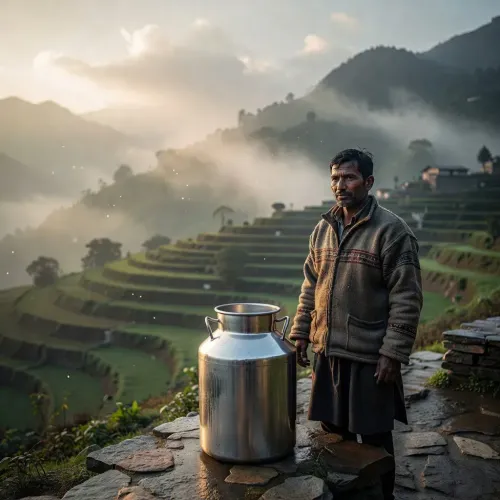
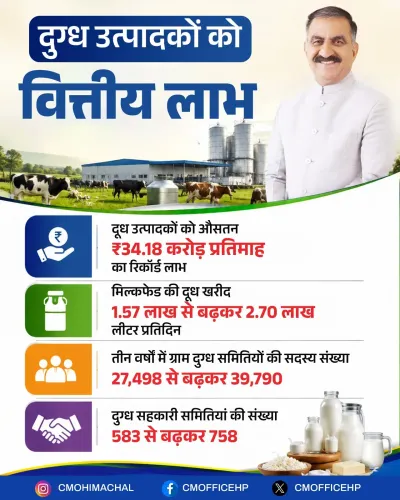
MSP as a central procurement instrument dates to the 1960s, when the Food Corporation of India began guaranteeing minimum prices for wheat and rice. Extending that logic to milk — a perishable, daily-cycle commodity — is a markedly different operational challenge and signals a deliberate push to protect dairy producers, who form a critical segment of Himachal's rural workforce alongside orchard and crop farmers.
Indian states have periodically layered state-level MSP support on top of central schemes to address local commodity gaps. Himachal's move fits that pattern, but the explicit pairing of milk with crop MSP under a single policy frame is a pointed message to both communities: the government is treating agricultural and pastoral livelihoods as one integrated rural economy, not separate silos.
Natural Farming as the Long Game for Himachal's Soil
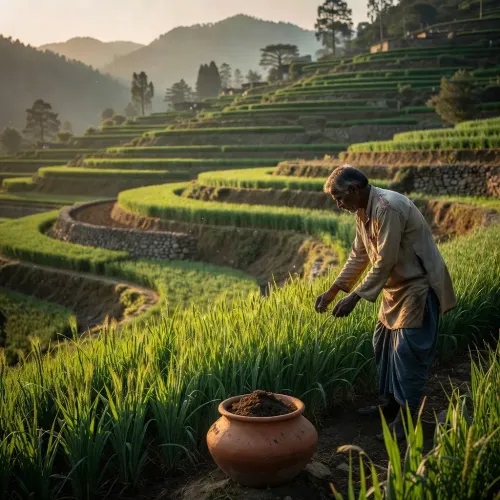
The CMO's statement connects income support with ecological stewardship — a pairing that is increasingly common in state agricultural policy. Natural farming, which reduces or eliminates synthetic chemical inputs, has been adopted by several Indian states as a response to soil degradation and rising input costs that squeeze farmer margins even when output prices are supported.
For a hill state like Himachal Pradesh, where terrain limits large-scale mechanised agriculture and soil health is directly tied to horticulture and crop quality, the pitch makes practical sense. Healthier soil today means sustainable yields — and sustainable MSP claims — tomorrow.
What Farmers and Policymakers Will Be Watching Next
The policy direction is clear; the proof will be in the procurement numbers. State budget allocations for milk and crop MSP in the next fiscal year, actual volumes procured, and verifiable changes in farmer income levels will determine whether this framework delivers on its promise or remains a headline. Soil health indicators in districts actively adopting natural farming will be the slower, but equally telling, long-term metric.
Himachal Pradesh has staked its agricultural credibility on making MSP work beyond the paddy belt. If the numbers hold, it becomes a template other hill states will study closely.
Point of View
The credibility of such frameworks almost always comes down to actual procurement volumes and timely payment, areas where state agricultural schemes have historically faced implementation gaps. If the HP government backs the stated intent with verifiable disbursement data, the model could gain traction among other hill and northeastern states with similar agrarian structures.
NationPress
19 Nov 2026
Frequently Asked Questions
What is MSP and how does Himachal Pradesh's scheme differ from the central MSP?
MSP, or Minimum Support Price, is a government-guaranteed floor price for farm produce. While the central government has provided MSP for wheat, rice, and select crops since the 1960s, Himachal Pradesh has extended similar price protection to milk and additional major crops at the state level, filling gaps the central scheme does not cover.
Which farmers benefit from Himachal Pradesh's MSP for milk?
Dairy farmers and milk producers across Himachal Pradesh are the primary beneficiaries, as the MSP guarantees them a minimum price for milk sold to state procurement agencies, insulating them from market price volatility.
What is natural farming and why is Himachal Pradesh promoting it?
Natural farming minimises or eliminates synthetic chemical inputs, relying instead on traditional and biological methods. Himachal Pradesh is promoting it to preserve soil fertility in its hill terrain, reduce input costs for farmers, and ensure sustainable agricultural yields over the long term.
How does MSP help strengthen the rural economy in Himachal Pradesh?
By guaranteeing minimum prices for milk and crops, the government ensures farmers receive predictable income, which increases spending power in rural areas, supports local trade, and reduces farmer distress — collectively strengthening the rural economic base.
What should we watch to judge if HP's MSP and natural farming policy is working?
Key indicators include state budget allocations for procurement, actual volumes of milk and crops purchased at MSP rates, timely payment records, and measurable changes in farmer income levels and soil health in districts adopting natural farming.