HP CM Office Marks Yoga Day, Invokes Nehru's Vision
Synopsis
The Chief Minister's Office of Himachal Pradesh marked International Yoga Day on 21 June 2026 by announcing a state-level yoga awareness programme, drawing on Jawaharlal Nehru's view of yoga as a means to elevate physical health and consciousness, and pledging to build a healthy, empowered society.
Key Takeaways
The Chief Minister's Office of Himachal Pradesh announced a state-level yoga programme on International Yoga Day, 21 June 2026 .
The office invoked Pandit Jawaharlal Nehru's philosophy, describing his belief that yoga elevates physical health and consciousness.
The programme is framed as a mass public-awareness initiative aimed at building a 'healthy, empowered and prosperous society.' International Yoga Day has been observed globally on 21 June every year since the UN General Assembly adopted India's resolution in 2014 .
Himachal Pradesh's initiative fits within a broader national pattern of state governments partnering with the Union Ministry of AYUSH on annual yoga outreach.
District-level rollout details and possible links to state health or school education schemes are yet to be announced.
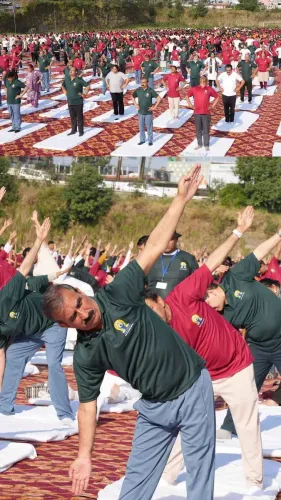
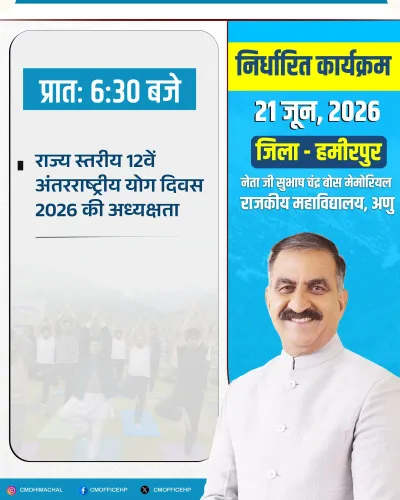
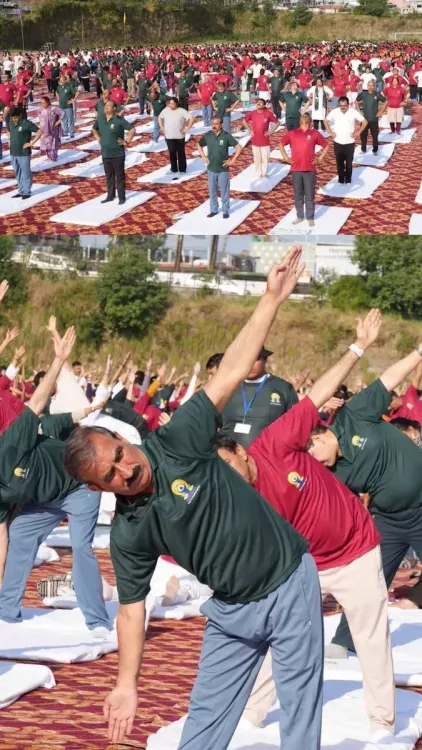
The Chief Minister's Office of Himachal Pradesh on Sunday, 21 June 2026 — International Yoga Day — announced a state-level yoga programme aimed at spreading public awareness on physical health and mental well-being, invoking the legacy of former Prime Minister Pandit Jawaharlal Nehru as an inspiration for the initiative.
Context
The post, shared in Hindi, states that 'Pandit Jawaharlal Nehru ji yoga ko sharirik swasthya aur chetna ke utkars ka madhyam maante the' — that Nehru regarded yoga as a means for the elevation of physical health and consciousness. The office declared its commitment to building a 'healthy, empowered and prosperous society' by internalising those values. It described the state-level yoga programme as a vehicle to 'bring awareness among the people.'
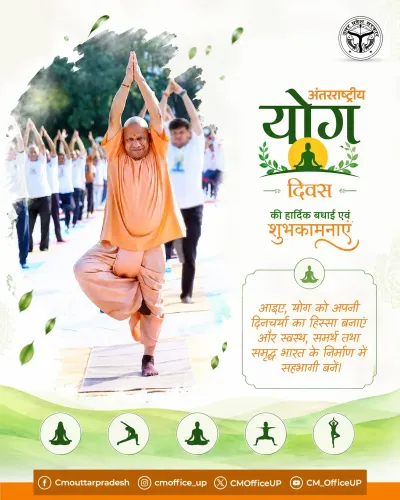
21 June is observed globally as International Yoga Day, a designation adopted by the United Nations General Assembly in 2014 following India's resolution. Himachal Pradesh's programme falls squarely within the annual cycle of state-organised events that mark the occasion across the country.
Policy Backdrop
Since 2014, the Union Ministry of AYUSH has driven a national effort to integrate yoga into school curricula, community health outreach, and public wellness campaigns. State governments have been key partners in this architecture, organising mass yoga sessions, training drives, and awareness events every June 21.
Himachal Pradesh, a northern hill state with an active AYUSH and wellness infrastructure, has participated in this broader national pattern. The Chief Minister's Office framing the programme around Nehru's philosophy of scientific temper and holistic development adds a distinct historical dimension to what is otherwise a recurring annual observance.
Stakeholders and Impact
The primary beneficiaries of the state-level programme are Himachal Pradesh's residents — from urban centres such as Shimla and Dharamsala to rural and tribal communities in the hills. Yoga practitioners, school students, and community health workers are among the groups typically engaged through such state-organised events.
By framing the initiative as a mass-awareness exercise rather than a one-time event, the Chief Minister's Office signals an intent to sustain engagement beyond a single day's observance. Any linkage with the state's health department or school education network would significantly widen the programme's reach.
What's Next
Observers will watch for district-level rollout announcements and whether the programme is formally tied to existing state health or education schemes. A connection with school physical education or AYUSH-run wellness centres in Himachal Pradesh could give the initiative a longer institutional life beyond the International Yoga Day calendar.
The broader implication is that state governments are increasingly using wellness programming not just as public health outreach but as a platform to articulate a vision of society — one that, in Himachal's framing, draws a direct line from India's founding-era leadership to contemporary governance priorities.
Point of View
The Congress-led state government signals an alternative ideological lineage for wellness governance. This positions the programme as part of a broader pattern in which opposition-governed states use national health observances to contest the cultural narrative around yoga while still participating in the policy mainstream. Whether the programme translates into durable institutional linkages with schools or health departments will determine if it is a one-day messaging exercise or a substantive policy commitment.
NationPress
20 Sept 2026
Frequently Asked Questions
Why did the Himachal Pradesh CM Office invoke Jawaharlal Nehru on Yoga Day?
The Chief Minister's Office cited Nehru's belief that yoga is a means for physical health and the elevation of consciousness, using his legacy to frame the state's commitment to building a healthy and empowered society through its yoga awareness programme.
What is the Himachal Pradesh state-level yoga programme announced on 21 June 2026?
It is a public awareness initiative announced by the Himachal Pradesh Chief Minister's Office on International Yoga Day 2026, aimed at spreading awareness of yoga for physical health and mental well-being among residents across the state.
When is International Yoga Day and why is it celebrated?
International Yoga Day is observed every year on 21 June . The United Nations General Assembly declared the date in 2014 following India's resolution, recognising yoga's universal appeal for health and well-being.
What is the Union Ministry of AYUSH's role in yoga promotion in India?
Since 2014, the Ministry of AYUSH has led national efforts to integrate yoga into school curricula, community health outreach, and public wellness campaigns, with state governments organising events on International Yoga Day as part of this framework.
What should we watch for next regarding Himachal Pradesh's yoga programme?
Key developments to track include district-level rollout announcements and whether the programme is formally linked to Himachal Pradesh's health department schemes or school physical education, which would give it a longer institutional life beyond the annual observance.