IAF C-130J airlifts critically ill Leh patient to Delhi AIIMS in night mission
Synopsis
In a late-night short-notice mission over one of India's most demanding terrains, an IAF C-130J airlifted a critically ill 30-year-old civilian from Leh to Delhi under darkness and harsh weather — a stark reminder that for remote high-altitude communities, the Air Force is often the last and only emergency lifeline.
Key Takeaways
An IAF C-130J aircraft conducted a short-notice night casualty evacuation from Leh to Palam Air Base, Delhi .
The patient, a critically ill 30-year-old civilian , was immediately transferred to AIIMS for life-saving treatment.
The Western Air Command confirmed the mission was carried out in darkness and challenging weather conditions .
The mission highlights the IAF's rapid-response humanitarian capability in high-altitude, remote regions.
Separately, Air Force Station Ambala held a capability display for the 94th Air Force Day , inviting students and NCC cadets.
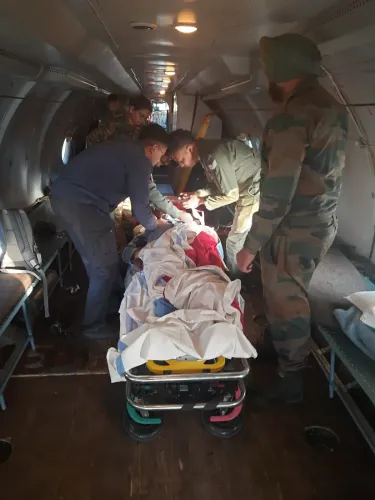
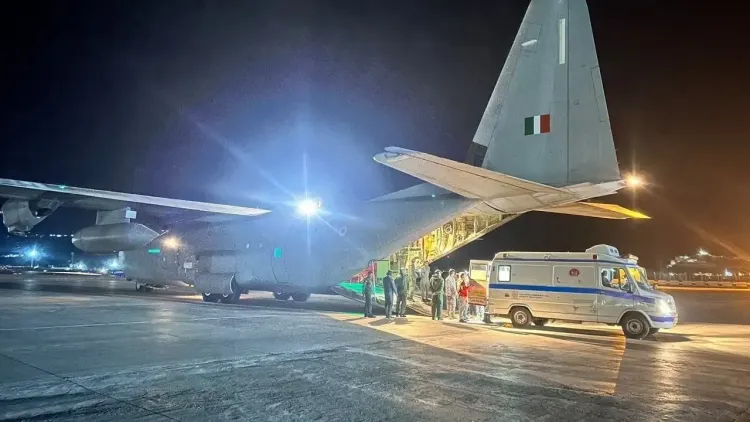
The Indian Air Force (IAF) conducted an emergency humanitarian mission, airlifting a critically ill 30-year-old civilian from Leh to Palam Air Base, Delhi aboard a C-130J aircraft late at night, an official confirmed on Sunday, 19 October 2026. The patient was subsequently transferred to the All India Institute of Medical Sciences (AIIMS) for life-saving treatment.
How the Mission Unfolded
The evacuation was carried out as a short-notice casualty evacuation, requiring rapid mobilisation over the high-altitude, harsh terrain of the Leh region under challenging weather and darkness. According to officials, a waiting ambulance received the patient immediately upon the aircraft's arrival at Palam and transported them directly to AIIMS.
The Western Air Command (WAC) noted that the mission demanded 'a high degree of operational preparedness, professional coordination and timely execution,' underscoring the complexity of conducting night operations at altitude.
What the Western Air Command Said
In a post on social media platform X, the Western Air Command shared details of the evacuation, stating: 'An Indian Air Force (IAF) C-130J aircraft undertook a short-notice casualty evacuation late at night, airlifting a critically-ill 30-year-old civilian patient from Leh to Palam for further medical care.'
The command added: 'The mission reflects the IAF's operational readiness and its ability to respond promptly to critical humanitarian requirements, including medical evacuation under challenging conditions.'
Broader Context: IAF's Humanitarian Role
Medical evacuations from high-altitude regions such as Leh — located at approximately 3,500 metres above sea level — present unique challenges, including thin air, unpredictable weather, and limited visibility at night. The C-130J Super Hercules, known for its versatility in austere conditions, is a key asset in such operations. This mission is consistent with the IAF's established track record of undertaking humanitarian evacuations across difficult terrain in Ladakh and other remote regions.
IAF Outreach Around Air Force Day
Separately, in a related outreach event, Air Force Station Ambala under Western Air Command organised a capability display to commemorate the 94th Air Force Day. Students and NCC cadets from nearby schools and colleges were invited to gain first-hand exposure to the IAF's technology and operational capabilities. Personnel from the IAF, local civil administration, Military Engineering Services (MES), police, civil medical services, and higher educational institutes also participated in the inter-services integration and outreach effort.
What This Signals
The dual developments — a high-stakes night evacuation and a structured outreach to youth — reflect the IAF's dual mandate of operational excellence and public engagement. As extreme weather events and medical emergencies in remote high-altitude areas continue to increase, the IAF's rapid-response humanitarian capability remains a critical civilian safety net in regions with limited medical infrastructure. The patient's prognosis at AIIMS was not immediately disclosed.
Point of View
The IAF is a de facto emergency health corridor. The absence of tertiary medical infrastructure at altitude means that a C-130J scramble late at night is not exceptional; it is, in effect, the system. What deserves scrutiny is whether civilian medical infrastructure in Leh is being invested in at a pace that reduces such dependency, or whether the IAF's admirable responsiveness is quietly substituting for a gap that civil health planning should be closing.
NationPress
19 Oct 2026
Frequently Asked Questions
Why did the IAF airlift a patient from Leh to Delhi?
The IAF conducted a short-notice casualty evacuation because the patient — a critically ill 30-year-old civilian — required emergency medical care unavailable at Leh. The C-130J aircraft flew the patient to Palam Air Base, Delhi, from where an ambulance transferred them to AIIMS for life-saving treatment.
What aircraft did the IAF use for the Leh evacuation?
The IAF deployed a C-130J Super Hercules transport aircraft for the mission. The C-130J is specifically suited for operations at high-altitude airfields and in adverse weather, making it the preferred choice for casualty evacuations from Leh.
What were the challenges of the mission?
The evacuation was conducted late at night over the high-altitude terrain of Leh, which sits at approximately 3,500 metres above sea level. The Western Air Command noted that the mission required 'a high degree of operational preparedness, professional coordination and timely execution' under darkness and challenging weather conditions.
Where was the patient taken after landing in Delhi?
Immediately after the C-130J landed at Palam Air Base, a waiting ambulance transported the patient to the All India Institute of Medical Sciences (AIIMS) in Delhi for further treatment.
What is the significance of the IAF's humanitarian evacuation missions?
The IAF regularly conducts casualty evacuations from remote and high-altitude areas such as Ladakh, where tertiary medical infrastructure is limited. These missions underscore the Air Force's role as a critical civilian emergency safety net in regions with difficult terrain and extreme weather.