India sends 3 tonnes of anti-TB medicines to Sri Lanka aboard IAF aircraft
Synopsis
India flew 3 tonnes of anti-TB medicines to Colombo on an IAF aircraft — the latest in a sequence of health, infrastructure, and community moves that signals New Delhi is doubling down on its 'Neighbourhood First' play in Sri Lanka, just as Colombo charts its post-crisis recovery under a new president.
Key Takeaways
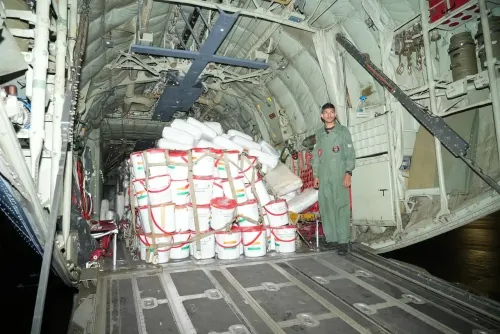
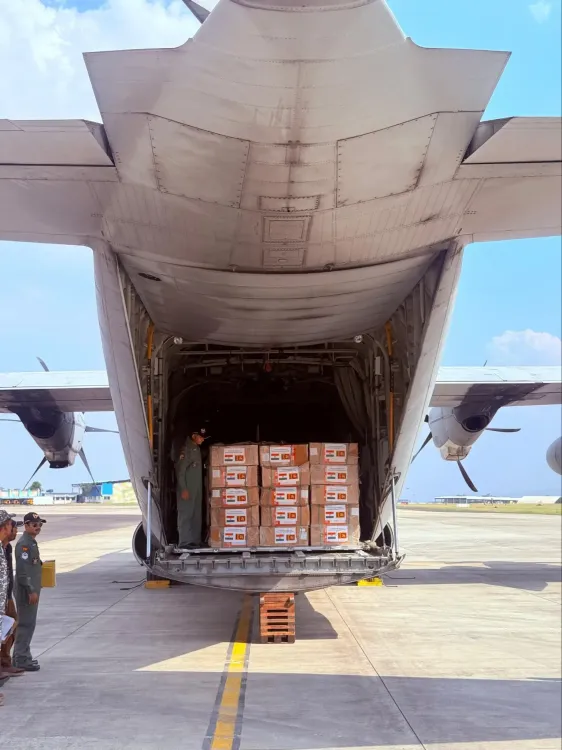
India dispatched 3 tonnes of anti-tuberculosis medicines to Colombo on 28 September 2026 aboard an IAF C-130J aircraft.
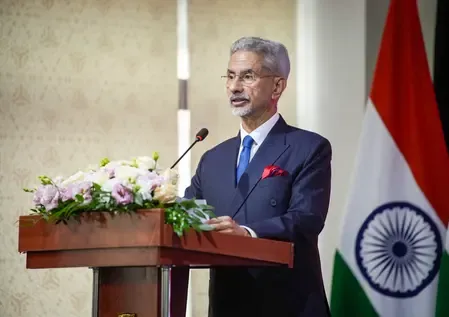
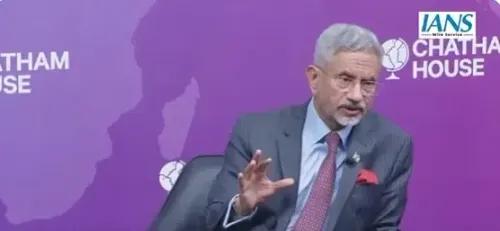
Jaishankar confirmed the shipment, stating India remains committed to supporting Sri Lanka's public health system.
Construction of a new two-storey accident and emergency unit at the District General Hospital, Mannar began on 16 September , backed by an Indian grant of SLR 600 million .
India inaugurated the 21st Model Village 'Suhadagama' in Polonnaruwa on 4 September , with the project spanning all 25 districts of Sri Lanka.
The 41st Board Meeting of the India-Sri Lanka Foundation (ISLF) was co-chaired in New Delhi on 28 August , reviewing new proposals across education, culture, and science.
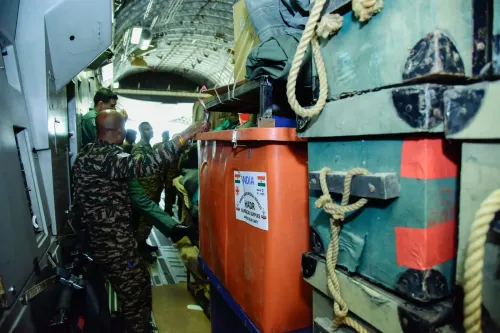
India on Monday, 28 September 2026, dispatched approximately 3 tonnes of anti-tuberculosis medicines to Colombo aboard an Indian Air Force (IAF) C-130J aircraft, reinforcing New Delhi's sustained commitment to bolstering Sri Lanka's public health infrastructure. The shipment was confirmed by External Affairs Minister (EAM) S. Jaishankar in a post on X.
What Jaishankar Said
'India remains committed to supporting Sri Lanka's public health system. About 3 tonnes of anti-tuberculosis medicines were dispatched to Colombo today aboard an IAF C130J,' EAM Jaishankar stated. The use of a military transport aircraft underscores the priority New Delhi placed on the delivery, signalling that the aid was treated as a strategic humanitarian gesture rather than routine bilateral trade.
Hospital Project in Mannar
The medicines dispatch comes on the heels of another healthcare initiative. On 16 September, construction began on a new two-storey accident and emergency unit at the District General Hospital in Mannar, backed by an Indian grant of Sri Lankan Rupees (SLR) 600 million. The foundation stone laying ceremony was attended by Sri Lankan President Anura Kumara Dissanayake, Minister of Health and Mass Media Nalinda Jayatissa, and India's High Commissioner to Sri Lanka Santosh Jha.
High Commissioner Jha described the Mannar project as ensuring 'timely emergency care during the critical golden hour' and called it a 'true testament' to the enduring partnership between the two nations. The grant will also supply the unit with essential medical equipment.
Model Villages and Grassroots Outreach
Beyond healthcare, India's engagement with Sri Lanka spans community development. On 4 September, High Commissioner Jha inaugurated 'Suhadagama', the 21st Model Village, in Polonnaruwa, alongside Sri Lankan Parliament Speaker Jagath Wickramaratne and Deputy Minister of Housing, Construction and Water Supply T.B. Sarath. Supported by Indian grant assistance, the model village project now covers all 25 districts of Sri Lanka — a scale that reflects a deliberate push for grassroots visibility.
India-Sri Lanka Foundation Deepens Ties
On 28 August, High Commissioner Jha and Sri Lanka's High Commissioner to India Mahishini Colonne co-chaired the 41st Board Meeting of the India-Sri Lanka Foundation (ISLF) in New Delhi, reviewing ongoing initiatives and examining new project proposals across education, culture, science, and technology. The ISLF, established in 1998 through a Memorandum of Understanding (MoU), functions as a bilateral trust fund designed to foster people-to-people and institutional ties. This cluster of health, infrastructure, and institutional actions reflects a deliberate Indian strategy of 'Neighbourhood First' — particularly as Sri Lanka navigates its post-economic-crisis recovery under President Dissanayake's administration.
Point of View
Hospital construction, model villages, and institutional frameworks in Sri Lanka precisely when Colombo is recalibrating its foreign alignments post-crisis. The choice of an IAF transport aircraft, rather than commercial freight, ensures the optics land as loudly as the medicines themselves. The real question is whether this sustained 'Neighbourhood First' investment translates into durable strategic goodwill, or whether it remains vulnerable to the same domestic political volatility that has historically complicated India-Sri Lanka ties.
NationPress
29 Sept 2026
Frequently Asked Questions
What medicines did India send to Sri Lanka on 28 September 2026?
India dispatched approximately 3 tonnes of anti-tuberculosis medicines to Colombo on 28 September 2026, transported aboard an Indian Air Force C-130J aircraft. The shipment was confirmed by External Affairs Minister S. Jaishankar in a post on X.
Why is India providing healthcare support to Sri Lanka?
India has consistently supported Sri Lanka's public health system as part of its broader 'Neighbourhood First' foreign policy, which prioritises strengthening ties with South Asian neighbours. The aid also reflects India's strategic interest in reinforcing goodwill as Sri Lanka recovers from a severe economic crisis under President Anura Kumara Dissanayake's new administration.
What is the hospital project India is funding in Sri Lanka's Mannar?
India is funding the construction of a new two-storey accident and emergency unit at the District General Hospital in Mannar, with a grant of SLR 600 million. The project, which began on 16 September, will also supply essential medical equipment to ensure timely care during the critical 'golden hour'.
What is the India-Sri Lanka Foundation (ISLF)?
The India-Sri Lanka Foundation (ISLF) is a bilateral trust fund established in 1998 through a Memorandum of Understanding between the two governments. It funds projects fostering economic, scientific, educational, technical, and cultural cooperation between India and Sri Lanka.
How many model villages has India built across Sri Lanka?
India has supported 21 model villages in Sri Lanka, with the most recent — 'Suhadagama' in Polonnaruwa — inaugurated on 4 September 2026. The model village project, backed by Indian grant assistance, now spans all 25 districts of Sri Lanka.