CM Himanta Mobilises IAF Choppers for Assam Flood Rescue
Synopsis
Assam Chief Minister Himanta Biswa Sarma on 20 July 2026 announced multi-agency rescue operations, including IAF helicopter deployments, to aid residents stranded by a cloud burst-triggered flood — the latest episode in Assam's recurring monsoon disaster cycle.
Key Takeaways
CM Himanta Biswa Sarma confirmed multi-agency rescue operations are underway across flood-hit Assam as of 20 July 2026 .
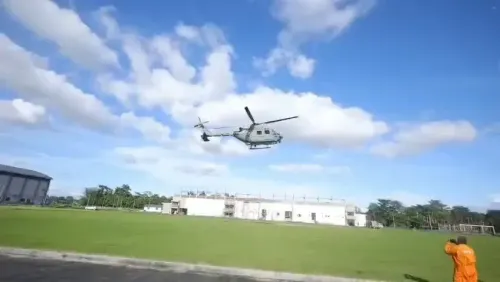
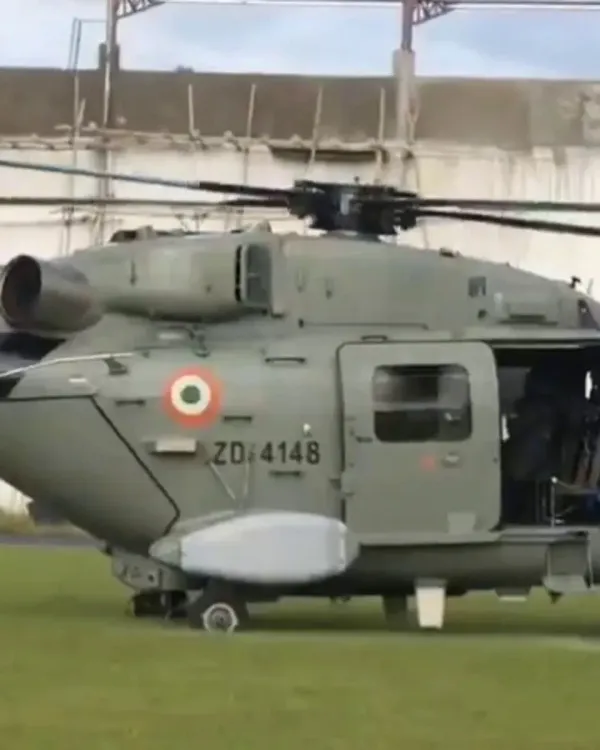
Indian Air Force MCC helicopters have been pressed into service to assist civil authorities in rescue and rehabilitation.
The flooding was triggered by a cloud burst , leaving an unspecified number of residents stranded.
Operations span both immediate rescue and longer-term relief and rehabilitation work.
The response draws on protocols established under the National Disaster Management Act, 2005 , enabling state-central coordination.
Assam faces annual monsoon flooding linked to its Brahmaputra and Barak river systems, making such deployments a recurring necessity.
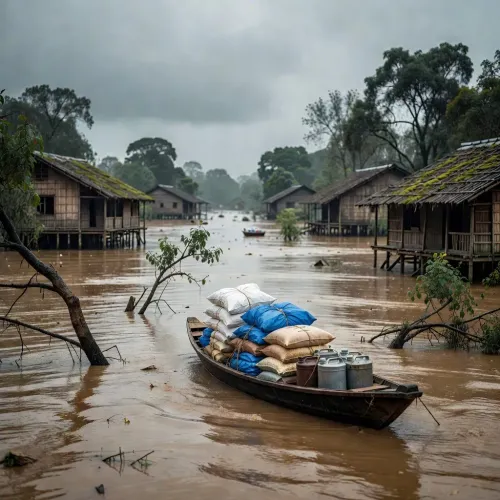
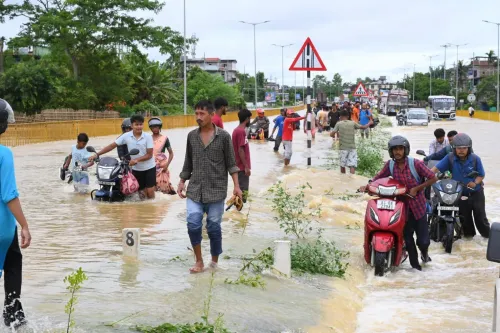
Assam Chief Minister Himanta Biswa Sarma on Monday, 20 July 2026, confirmed that extensive multi-agency rescue operations are underway across Assam following a cloud burst that has left residents stranded in flood-affected areas. Indian Air Force (IAF) helicopters have been deployed to assist civil authorities in relief and rehabilitation efforts.
Context
Posting on social media, CM Sarma stated that 'extensive multi-agency efforts are underway to rescue those stranded in #AssamFloods due to the unfortunate cloud burst in the region.' He confirmed that IAF Mountain Rescue and Casualty Care (MCC) choppers have been 'pressed into service' and are actively assisting civil authorities. A video accompanying the post showed relief operations in progress.
Assam is among India's most flood-prone states, with its vast riverine network — including the Brahmaputra and Barak rivers — making it particularly vulnerable during the monsoon season. Cloud bursts, which deliver intense rainfall over a short period, can trigger flash floods even in areas not directly on major river channels.
Policy Backdrop
The deployment of IAF assets for state-level disaster relief is governed by the National Disaster Management Act, 2005, which established the framework for coordination between state governments and central agencies, including the armed forces. Under this framework, states can formally request central assistance when local capacity is overwhelmed.
Assam has maintained standing inter-agency relief protocols since the early 2000s, routinely coordinating between the National Disaster Response Force (NDRF), state disaster management teams, and the IAF. Successive state governments have relied on this architecture during annual flood emergencies, and helicopter-assisted rescues have become a standard component of the response playbook.
Stakeholders and Impact
The most immediate stakeholders are flood-affected residents stranded in inundated areas, who depend on aerial rescue when road and boat access is cut off. Civil authorities — including district administrations and the Assam State Disaster Management Authority (ASDMA) — are coordinating ground-level relief alongside the IAF crews.
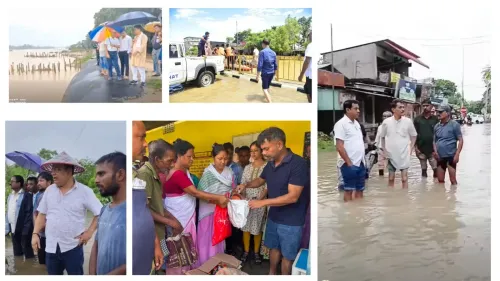
The scale of the current operation reflects the severity of the cloud burst event. IAF helicopter deployments are typically reserved for situations where the volume of stranded persons or the inaccessibility of terrain exceeds what ground-based teams can manage alone. Rehabilitation works, as mentioned by CM Sarma, suggest the operation has moved beyond immediate rescue to include shelter, food, and medical assistance for displaced populations.
What's Next
Observers will watch for announcements on the scale of additional central force deployments, including further NDRF battalions, as the full extent of the cloud burst's impact becomes clearer. Any government assessment of damage to embankments, drainage infrastructure, or agricultural land will shape the medium-term rehabilitation agenda.
Assam's recurring flood vulnerability has long prompted calls for structural interventions — upgraded embankments, improved river dredging, and early-warning systems — and each major flood event tends to renew that policy conversation at both the state and central levels.
Point of View
And it underscores the Centre-state coordination that the BJP-led government in Assam has consistently highlighted as a governance strength. The invocation of multi-agency efforts — rather than crediting a single force — reflects the standard disaster-communication playbook that distributes accountability across institutions. Structurally, however, each cloud burst and flood cycle renews the unresolved question of whether Assam's embankment and drainage infrastructure is receiving the long-term investment needed to reduce dependence on emergency aerial rescue. Until that gap closes, IAF helicopter deployments will remain a headline feature of every monsoon season in the state.
NationPress
20 Oct 2026
Frequently Asked Questions
What caused the Assam floods in July 2026?
A cloud burst in the region triggered the flooding, leaving residents stranded across flood-affected areas of Assam , according to CM Himanta Biswa Sarma's post on 20 July 2026 .
Is the Indian Air Force helping in Assam flood rescue?
Yes. IAF Mountain Rescue and Casualty Care (MCC) helicopters have been pressed into service and are assisting civil authorities in both rescue and rehabilitation operations.
What is the government doing for Assam flood victims?
Extensive multi-agency operations are underway, combining IAF aerial support with civil authority ground teams for rescue, relief, and rehabilitation of stranded and displaced residents.
Why does Assam flood every year?
Assam's geography — dominated by the Brahmaputra and Barak river systems — makes it inherently flood-prone during the monsoon. Cloud bursts and heavy upstream rainfall regularly cause flash floods and inundation across the state.
What law governs IAF deployment for flood relief in India?
The National Disaster Management Act, 2005 provides the legal framework for coordination between state governments and central agencies, including the armed forces, during disasters such as floods.