CM Himanta Reviews Upper Assam Flood Relief, Orders IAF Aid
Synopsis
Chief Minister Himanta Biswa Sarma on 24 July 2026 chaired a virtual review with District Commissioners of flood-hit Upper Assam districts, directing IAF helicopter deployment, micro-level food supply planning, road clearance and mobile medical reinforcement for cut-off areas in Charaideo and Sivasagar.
Key Takeaways
Himanta Biswa Sarma chaired a virtual review meeting with District Commissioners of flood-affected districts on 24 July 2026 .
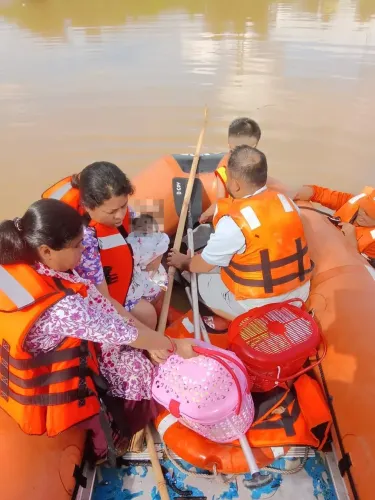
The CM directed priority rescue of stranded persons in cut-off areas of Charaideo and Sivasagar , with special focus on Nazira subdivision .
IAF helicopters are to be deployed wherever required to reach inaccessible flood-hit communities.
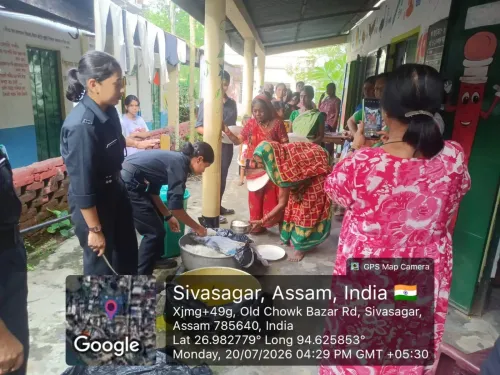
District administrations were instructed to implement micro-level planning for timely food supply delivery to every affected family.
Officials were directed to clear mud-clogged roads to restore connectivity and strengthen mobile medical services in flood-hit areas.
The response follows Assam's established protocol of CM-level monsoon review meetings integrating district and central agencies.
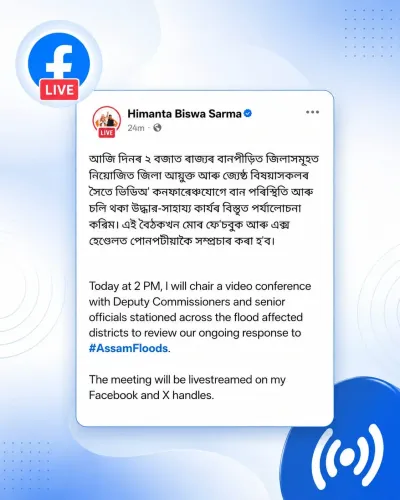
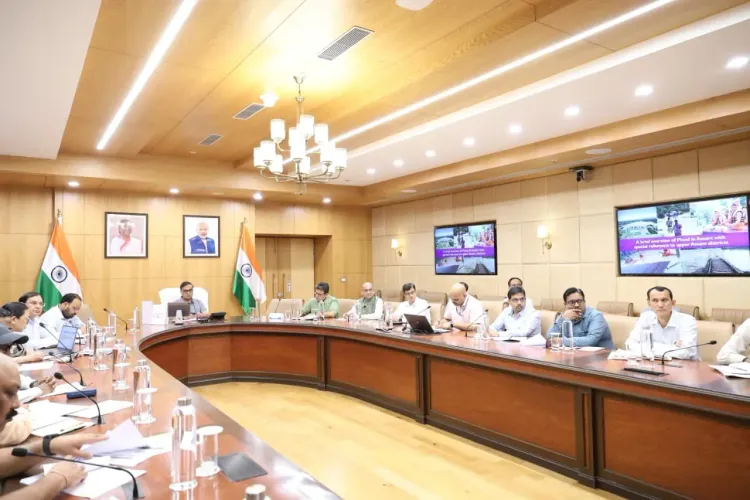
The Chief Minister's Office of Assam announced on Friday, 24 July 2026 that Chief Minister Dr. Himanta Biswa Sarma chaired a virtual review meeting with District Commissioners of flood-affected districts to assess the latest flood situation in Upper Assam, with a special focus on accelerating rescue and relief operations.
Context
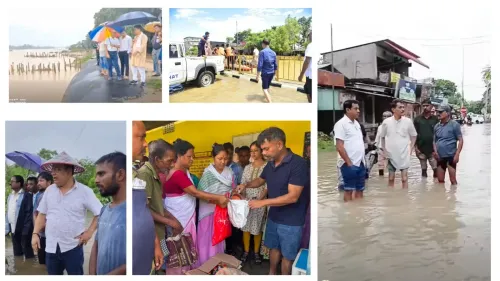
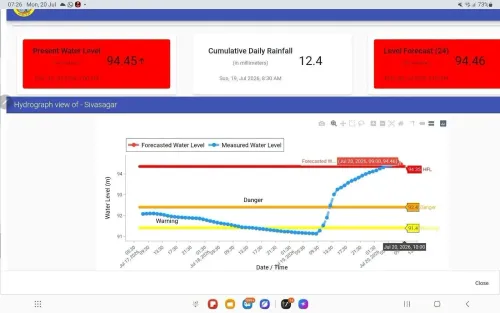
The CM directed district administrations to prioritise the rescue of stranded people in cut-off areas of Charaideo and Sivasagar, particularly in the Nazira subdivision. These districts in Upper Assam lie within the Brahmaputra basin and are among the most flood-prone zones in the state, frequently facing prolonged isolation during the monsoon season.
The virtual format of the review meeting allowed Dr. Sarma to simultaneously coordinate with multiple district heads, a model the state government has used in prior monsoon seasons to ensure rapid administrative response without logistical delays.
Policy Backdrop
Assam has institutionalised CM-level monsoon flood review meetings as a standing governance practice, integrating district administrations and central agencies into a unified command structure during emergencies. The involvement of the Indian Air Force (IAF) — instructed by the CM to provide helicopter support wherever required — reflects the state's established protocol for reaching communities cut off by floodwaters.
The CM's instructions covered four key operational pillars: rescue of stranded persons, micro-level planning for food supply delivery to every affected family, clearance of mud-clogged roads to restore connectivity, and strengthening of mobile medical services in flood-hit areas. This multi-pronged directive mirrors the state's standard disaster-response framework activated each monsoon cycle.
Stakeholders and Impact
Flood-affected families across Charaideo and Sivasagar districts stand as the most immediate stakeholders. The Nazira subdivision within Sivasagar has been specifically flagged as a priority zone, indicating that connectivity and supply chains in that area remain severely disrupted.
District Commissioners have been placed at the centre of execution, tasked with implementing micro-level planning — a deliberate push to move relief operations beyond broad directives toward household-level delivery of food and medical support. IAF helicopters are positioned as a critical bridge for areas where road access remains blocked.
Mobile medical units are being reinforced to address health risks that typically accompany prolonged flooding, including waterborne diseases and injuries sustained during displacement — a concern that grows more acute the longer communities remain isolated.
What's Next
The immediate operational focus will be on road clearance in Nazira and other cut-off pockets of Upper Assam to restore ground-level access for relief convoys. Progress on food distribution and medical outreach in these subdivisions will be the key indicator of whether the CM's directives translate into timely relief on the ground.
With the monsoon season still active, further review meetings are likely as the flood situation evolves. The integration of IAF assets into district-level planning signals that the state is treating the current situation as one requiring sustained central support, not a short-term emergency response.
Point of View
Where broad relief mandates failed to reach the last mile. Whether the administration can convert this directive into household-level delivery in Nazira and surrounding areas before the monsoon intensifies will be the real test of this review's effectiveness.
NationPress
23 Oct 2026
Frequently Asked Questions
Which districts in Assam are most affected by floods in July 2026?
Charaideo and Sivasagar in Upper Assam are the districts specifically flagged by CM Himanta Biswa Sarma as priority areas, with Nazira subdivision in Sivasagar identified as a cut-off zone requiring urgent rescue.
Is the Indian Air Force helping with Assam flood relief?
Yes. CM Dr. Himanta Biswa Sarma has instructed district administrations to take assistance from IAF helicopters wherever required to reach stranded people in areas cut off by floodwaters.
What steps is the Assam government taking for flood relief in 2026?
The state government has directed district administrations to prioritise rescue of stranded persons, implement micro-level food supply planning for every affected family, clear mud-clogged roads and strengthen mobile medical services in flood-hit areas.
What is the Nazira subdivision and why is it significant in the Assam floods?
Nazira subdivision falls within Sivasagar district in Upper Assam and has been specifically identified by the CM as a cut-off area where stranded people require priority rescue, indicating severe disruption to road connectivity and supply chains.
How does Assam coordinate flood relief at the district level?
Assam activates CM-level virtual review meetings with District Commissioners of flood-affected districts during the monsoon season, a practice that integrates state administration with central agencies such as the Indian Air Force for micro-level relief planning.