CM Himanta Puts 7-Point Flood Demand Before Central Team
Synopsis
Assam CM Himanta Biswa Sarma presented a seven-point demand to the Inter-Ministerial Central Team on July 30, 2026, seeking a dedicated relief package, flexible damage norms and a permanent North-East disaster coordination body after unprecedented floods struck Upper Assam.
Key Takeaways
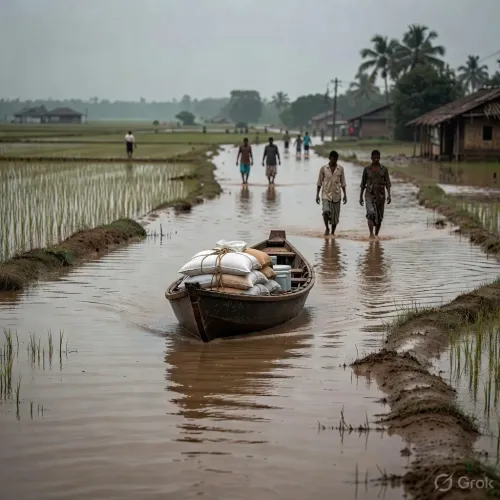
Unprecedented flooding has devastated Upper Assam , with Chief Minister Himanta Biswa Sarma describing the scale as atypical and high-intensity.
The Inter-Ministerial Central Team visited worst-affected districts — Sivasagar, Charaideo, Jorhat and Golaghat — following an assurance by Union Home Minister Amit Shah .
Sarma has demanded formal recognition of the floods as an 'atypical, rapid-onset event' to unlock flexible NDRF assessment and assistance norms.
A dedicated Central support package covering relief, housing, infrastructure and livelihood restoration has been requested for all four named districts.
Documentation and eligibility norms under Central schemes are sought to be relaxed so flood-affected households can access support without bureaucratic barriers.
A permanent North-East disaster risk reduction mechanism covering Assam and seven neighbouring states has been proposed as a structural long-term ask.
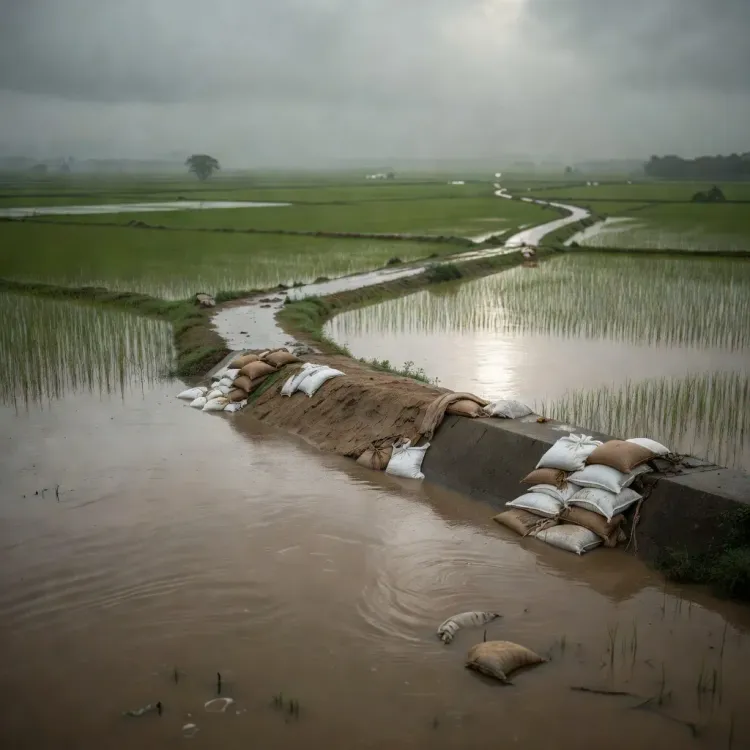
Unprecedented floods have carved a path of destruction across Upper Assam this monsoon season, and Assam Chief Minister Himanta Biswa Sarma is making sure New Delhi hears exactly what it will take to rebuild. On Thursday, July 30, 2026, the Chief Minister laid out a detailed seven-point demand before the Inter-Ministerial Central Team (IMCT) that visited the worst-hit districts — a structured, district-specific ask that goes well beyond routine flood relief.
What the IMCT Saw on the Ground in Upper Assam
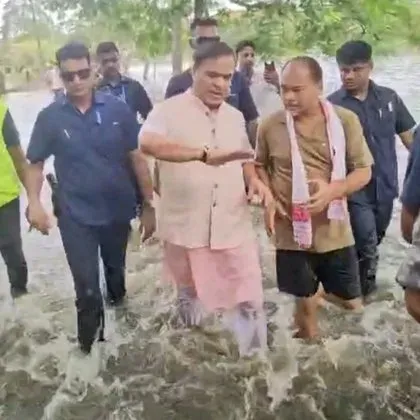
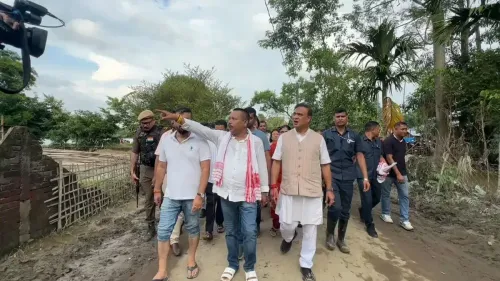
The IMCT visit was set in motion following an assurance by Union Home Minister Amit Shah. The team toured the most severely affected districts of Sivasagar, Charaideo, Jorhat and Golaghat — the heartland of Upper Assam — conducting on-ground assessments of damage to critical infrastructure, agriculture and livelihoods. Sarma described the scale as 'unprecedented,' a characterisation that anchors the first and most consequential of his demands.
The Disaster Management Act, 2005 empowers such inter-ministerial teams to evaluate damage and recommend releases from the National Disaster Response Fund (NDRF). But Sarma is pushing for something beyond the standard playbook — he wants this year's Upper Assam floods formally recognised as an 'atypical, high-intensity, rapid-onset event,' which would unlock flexible norms for both damage assessment and financial assistance.
Seven Demands, One Clear Message to the Centre
The Chief Minister's seven-point charter is precise and sequenced. The first demand — the 'atypical event' classification — is the linchpin: without it, the remaining asks risk being processed under routine norms that may not match the scale of destruction. The second demand calls for a dedicated Central support package covering all four named districts across relief, housing, infrastructure and livelihood restoration.
Points three through six address the machinery of delivery. Sarma has asked for relaxation of documentation and eligibility norms under Central and Centrally Sponsored Schemes — a recognition that flood-affected households often lose the very papers required to claim assistance. He has also demanded district-wise reconstruction plans for roads, bridges, schools, health facilities, water and power infrastructure, alongside rapid multi-agency strengthening of breached embankments on hill-fed rivers before the next monsoon arrives.
The sixth demand calls for convergence of disaster assistance with national programmes covering housing, water, agriculture, health and social protection — with explicit targeting of women, children, persons with disabilities and the elderly. The seventh, and perhaps most structurally significant, asks for the establishment of a North-East disaster risk reduction mechanism to coordinate responses across Assam and its seven neighbouring states.
The 'Double Engine' Test and a Regional Vision
Sarma invoked the BJP's signature 'Double Engine Government' framing — the argument that a BJP state and a BJP Centre move faster together — as the political backdrop for his confidence that the IMCT will 'keep the ground realities and our best interests in mind.' That framing also carries an implicit accountability: the Centre now owns the response as much as the state does.
The proposal for a permanent North-East disaster coordination body is the demand with the longest shelf life. The Brahmaputra basin and its hill-fed tributaries do not respect state boundaries; transboundary flood risk is a shared reality for all eight states of the region. A formal mechanism — if the Centre agrees — would mark a structural shift from reactive relief to proactive regional resilience.
The IMCT's recommendations to New Delhi will determine whether Assam gets a bespoke recovery package or is folded into standard NDRF norms. For the families of Upper Assam who have watched embankments breach and harvests wash away, the difference is everything.
Point of View
Rights-based claim on Central resources — demanding classification, not just cash. The 'Double Engine' framing is both a political asset and a political liability: it accelerates coordination but also transfers accountability to the BJP-led Centre if the response falls short. The proposal for a North-East disaster coordination body is the most consequential long-term ask, reflecting growing recognition that Brahmaputra basin risk cannot be managed state by state. If the Centre accepts even parts of this framework, it could set a precedent for how other chronically flood-prone states negotiate with New Delhi.
NationPress
13 Sept 2026
Frequently Asked Questions
What did Assam CM Himanta Biswa Sarma demand from the Central government for flood relief?
CM Sarma placed seven demands before the Inter-Ministerial Central Team, including recognition of the Upper Assam floods as an atypical high-intensity event, a dedicated Central support package for four districts, relaxation of documentation norms, district-wise reconstruction plans, embankment strengthening, convergence of national programmes, and a North-East disaster risk reduction mechanism.
Which districts of Assam were worst affected by the 2026 floods?
The Inter-Ministerial Central Team visited Sivasagar, Charaideo, Jorhat and Golaghat — the four districts of Upper Assam identified as worst affected by the 2026 monsoon floods.
What is the Inter-Ministerial Central Team and why did it visit Assam?
The Inter-Ministerial Central Team is a body constituted under the Disaster Management Act, 2005 to assess on-ground damage and recommend National Disaster Response Fund assistance to states. It visited Upper Assam following an assurance by Union Home Minister Amit Shah to evaluate flood damage and review relief and rehabilitation efforts.
What is the 'Double Engine Government' claim made by Himanta Biswa Sarma?
The 'Double Engine Government' is a BJP formulation arguing that states and the Centre both governed by the BJP can coordinate faster on development and disaster response. Sarma invoked it to express confidence that the Central team will act on Assam's flood demands.
What is the proposed North-East disaster risk reduction mechanism?
Sarma has proposed establishing a formal regional coordination body covering Assam and its seven neighbouring states to strengthen disaster management across all phases — preparedness, response and recovery — addressing the transboundary nature of Brahmaputra basin flood risk.