IMD issues orange alert for Assam as heavy rainfall forecast July 30–August 1

Synopsis
The IMD has forecast heavy to very heavy rainfall across Assam and the Northeast between July 30 and August 1, triggering orange alerts for Tinsukia and three Nagaland districts. With runoff from Arunachal Pradesh threatening to flood Dhemaji and Lakhimpur, and Papumpare bracing for up to 20 cm of rain in a day, the ASDMA has placed every district administration on high alert — signalling that the region's most dangerous monsoon window may be opening.
Key Takeaways
The IMD has forecast heavy to very heavy rainfall across Assam , Arunachal Pradesh , and Nagaland from 30 July to 1 August .
An orange alert has been issued for Tinsukia district in Assam, and for Mon , Mokokchung , and Wokha in Nagaland.
Papumpare district in Arunachal Pradesh may receive 12 cm to 20 cm of rainfall per day — classified as very heavy.
Runoff from Arunachal Pradesh is expected to affect Tinsukia , Dhemaji , and Lakhimpur districts in Assam.
The ASDMA has put all district administrations on alert and urged residents in low-lying and hilly areas to avoid non-essential travel.
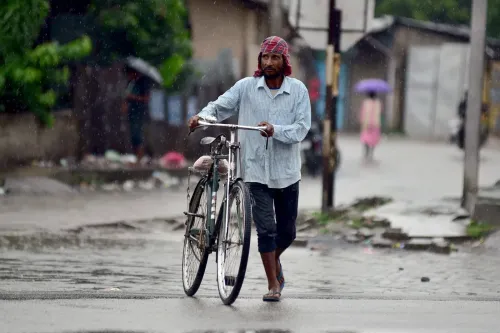
The India Meteorological Department (IMD) has forecast a fresh spell of heavy to very heavy rainfall across Assam and several northeastern states between 30 July and 1 August, raising serious concerns over flooding, flash floods, waterlogging, and landslides in vulnerable areas. The warning, issued on Thursday, has prompted the Assam State Disaster Management Authority (ASDMA) to place all district administrations on high alert.
Orange Alerts and Districts at Risk
The IMD has issued an orange alert for Tinsukia district in Assam. Similar alerts have been sounded for Mon, Mokokchung, and Wokha districts in Nagaland, where heavy rainfall is expected to generate significant runoff that could affect the adjoining Assam districts of Charaideo, Sivasagar, Jorhat, and Golaghat.
Widespread rainfall accompanied by thunderstorms is likely across parts of Assam, Arunachal Pradesh, and Nagaland during this period. A weather system developing over the neighbouring states is expected to particularly influence several districts in Upper Assam, increasing the risk of runoff and inundation.
Arunachal Pradesh Rainfall Projections
The IMD has also predicted heavy rainfall over several districts of Arunachal Pradesh, including East Siang, Lohit, Namsai, Longding, Papumpare, Lower Subansiri, and Lower Dibang Valley. Many affected districts are likely to receive widespread rainfall ranging from 6 cm to 11 cm per day, while isolated locations — particularly Papumpare district — may witness very heavy rainfall between 12 cm and 20 cm.
Runoff from these Arunachal Pradesh districts could directly impact Tinsukia, Dhemaji, and Lakhimpur districts in Assam, compounding an already stressed flood situation in the region.
ASDMA Warning and Precautionary Measures
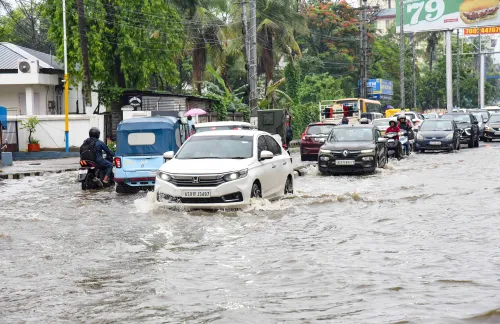
The Assam State Disaster Management Authority warned that the fresh spell of rain could worsen flood conditions in some areas and trigger urban waterlogging, flash floods, road traffic disruption, and localised landslides — especially in hilly and geographically vulnerable regions.
All district administrations across Assam have been instructed to closely monitor the evolving situation. Residents, particularly those in low-lying flood-prone areas and on hill slopes, have been urged to remain cautious, avoid non-essential travel during periods of intense rainfall, and strictly follow advisories issued by the IMD and local administration.
Broader Context
Assam and the broader northeastern region face annual flooding driven by monsoon rainfall and Himalayan river systems, with the Brahmaputra and its tributaries regularly breaching danger levels between June and September. This fresh IMD forecast arrives at a point in the monsoon season when cumulative rainfall has already strained drainage infrastructure across multiple districts. Notably, cross-border runoff from Arunachal Pradesh and Nagaland remains a recurring amplifier of Assam's flood risk — a structural challenge that local disaster management frameworks continue to navigate season after season.
With district administrations now on alert and orange warnings active, the next 48 to 72 hours will be critical in determining the scale of impact across the affected zones.
Point of View
But Assam's recurring flood crisis points to a deeper structural problem: the state's vulnerability is not just meteorological but infrastructural. Cross-border runoff from Arunachal Pradesh and Nagaland has been an acknowledged amplifier of Assam's floods for decades, yet inter-state water management coordination remains limited. Orange alerts and district advisories are necessary, but they address the symptom — not the Brahmaputra basin's chronic under-investment in embankments, drainage, and early-warning infrastructure. The real question is whether ASDMA's 'high alert' translates into pre-positioned relief rather than reactive response.
NationPress
13 Sept 2026
Frequently Asked Questions
What has the IMD forecast for Assam between July 30 and August 1?
The IMD has forecast heavy to very heavy rainfall across Assam, Arunachal Pradesh, and Nagaland from 30 July to 1 August 2025, with thunderstorms likely across several districts. The forecast raises concerns over flash floods, waterlogging, and landslides in vulnerable areas.
Which districts in Assam are under orange alert?
Tinsukia district in Assam is under an orange alert issued by the IMD. Additionally, orange alerts for Mon, Mokokchung, and Wokha in Nagaland mean that runoff from those areas could affect the Assam districts of Charaideo, Sivasagar, Jorhat, and Golaghat.
How much rainfall is expected in Arunachal Pradesh?
Most affected districts in Arunachal Pradesh are likely to receive 6 cm to 11 cm of rainfall per day. Papumpare district may see very heavy rainfall of 12 cm to 20 cm per day, with runoff potentially impacting Tinsukia, Dhemaji, and Lakhimpur in Assam.
What action has the ASDMA taken in response to the forecast?
The Assam State Disaster Management Authority has placed all district administrations on high alert and instructed them to closely monitor the situation. Residents in low-lying and hilly areas have been advised to avoid non-essential travel and follow IMD and local administration advisories.
Why is Assam particularly vulnerable to flooding from neighbouring states?
Assam's river systems, including the Brahmaputra and its tributaries, receive significant runoff from the hills of Arunachal Pradesh and Nagaland. When heavy rainfall hits those states, the resulting runoff flows downstream into Assam, compounding local rainfall and raising flood risk in districts like Tinsukia, Dhemaji, and Lakhimpur.