What Impact Did CJI and Law Minister's Inauguration of the World's Largest Moot Court Have?
Synopsis
The inauguration of the world's largest moot court, NYAYABHYASA MANDAPAM, at O.P. Jindal Global University marks a significant milestone in legal education and the independence of judiciary, attended by eminent jurists and dignitaries. Explore the implications of this historic event for India's democracy and judicial landscape.
Key Takeaways
World's Largest Moot Court inaugurated at O.P.
Jindal Global University.
Focus on Judicial Independence as a cornerstone of democracy.
Involvement of over 200 international judges and jurists.
Commitment to modernizing legal education and access to justice.
Significance of integrity and ethical values in law.
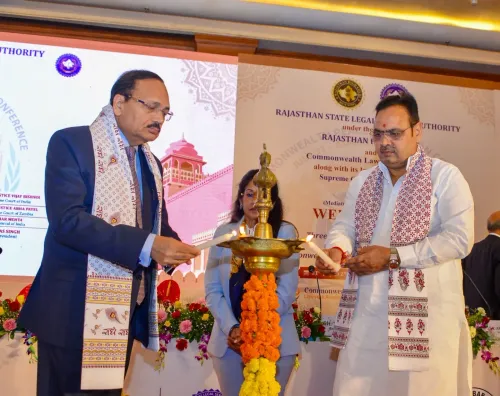
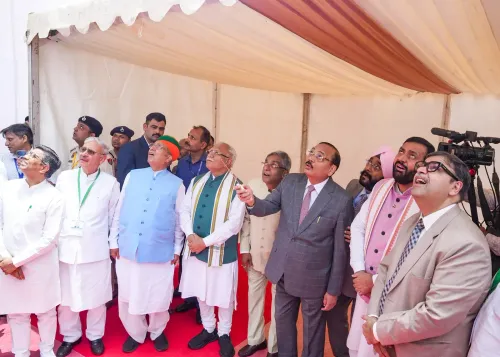
Sonipat, Dec 1 (NationPress) Chief Justice of India Surya Kant along with Arjun Ram Meghwal, Minister of State for Law & Justice, officially inaugurated the world's largest Moot Court, NYAYABHYASA MANDAPAM -- The Grand Moot Court, dedicating it to the nation.
This significant event also featured the launch of IMAANDAAR (International Mooting Academy for Advocacy, Negotiation, Dispute Adjudication, Arbitration and Resolution) in the presence of over 200 international judges and legal experts from around the globe.
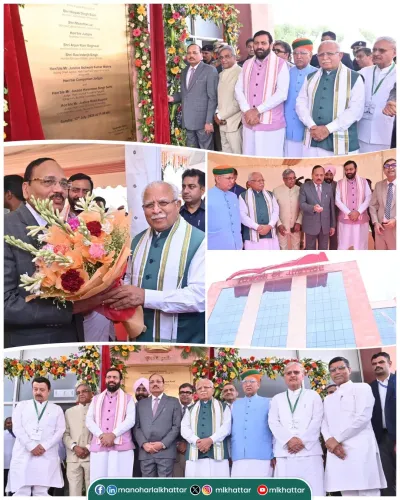
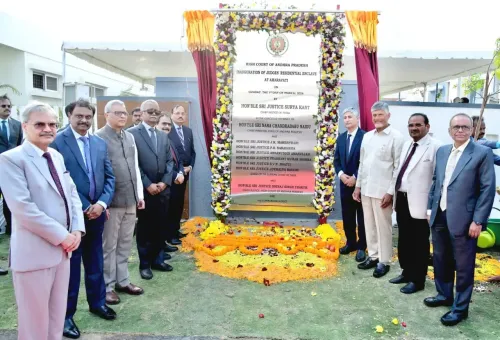
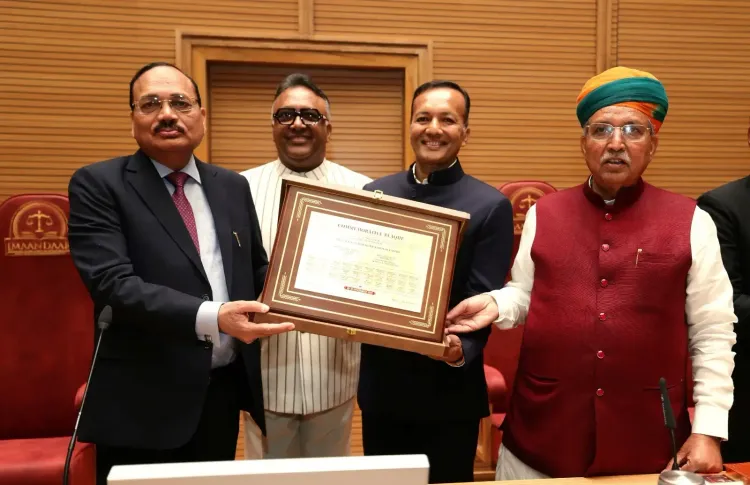
The Chief Justice inaugurated the International Convention on Independence of Judiciary: Comparative Perspectives on Rights, Institutions and Citizens at O.P. Jindal Global University. A Commemorative Plaque was unveiled by both the Chief Justice and the Law Minister to commemorate this momentous occasion.
During the International Convention on the Independence of Judiciary at O.P. Jindal Global University, two 13-Judge Benches, comprising 26 sitting and former Supreme Court Judges, the Attorney General, Solicitor General, and over 200 distinguished national and international jurists, delivered speeches.
Over the course of two days, 26 sitting and former judges of the Supreme Court of India, including the Chief Justice, participated in various thematic sessions. This esteemed gathering included 10 former Chief Justices of India, 10 Chief Justices, Judges & former Judges of High Courts, 14 International Judges & Jurists, 5 Ministers & Parliamentarians, 61 Senior Advocates, and 91 academicians and lawyers.
The International Convention examined the importance of the independence of the judiciary as a cornerstone of Indian democracy. The framers of the Constitution, as a new independent nation, aimed for the Judiciary to operate free from external or internal influence. This principle is fundamental to the Constitution of India.
Chief Justice Surya Kant remarked during the inauguration, “I commend the establishment of the world's largest moot court at O.P. Jindal Global University and Jindal Global Law School. Integrity is the foundational ideal for legal practice and the quest for justice. In a time when information can be manipulated and misinformation proliferates, integrity and honesty are more crucial than ever. The Basic Structure doctrine has enabled our Constitution to evolve while staying anchored to its core principles. This conference serves as a reminder that a Constitution's basic structure is not merely a relic but a guiding map for our future. This tension between tradition and progress must inform our approach to contemporary constitutional challenges, from digital privacy to climate justice, ensuring that every change respects the founding principles of Human Dignity, Equity, Liberty, Equality, and Fraternity.”
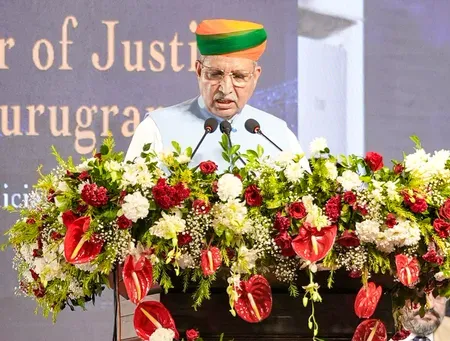
Guest of Honour, Arjun Ram Meghwal, stated, “As citizens, we must uphold our constitutional values. The government is committed to modernizing our judicial infrastructure to ensure it is fit for the future, utilizing initiatives like the E-Courts project and AI-driven tools to enhance accessibility. Our civilization is deeply committed to justice, enshrined in our constitutional framework. The Preamble resolves to secure social, economic, and political justice, emphasizing equality, fairness, and dignity for all. Dr. Ambedkar articulated that justice embodies liberty, equality, and fraternity; it signifies equality in value, fairness in proportion, and righteousness in governance. I congratulate JGU on the establishment of the world's largest Moot Court, IMAANDAAR, which reflects a commitment to integrity in knowledge and justice.”
Messages of appreciation were received from the President and Vice President of India, alongside a note from Prime Minister Narendra Modi, who expressed his delight over the International Convention and the inauguration of the large Moot Court, highlighting the importance of mentoring youth in the legal field and promoting democratic values.
Naveen Jindal, Founding Chancellor of O.P. Jindal Global University, welcomed the Chief Justice and Minister, praising Justice Surya Kant as a prominent figure in Indian judiciary. He noted the importance of judicial independence and its reliance on public trust, advocating for procedural reforms and enhanced technology use in the judicial system.
Professor (Dr) C. Raj Kumar, Founding Vice Chancellor, stated this event celebrates education, democracy, and institutional strength, emphasizing the role of academic institutions in nurturing the rule of law.
The Chairman of the Bar Council of India, Manan Kumar Mishra, discussed the integral roles of judicial independence and access to justice in safeguarding rights and the rule of law.
The event also featured a reenactment of the landmark Kesavananda Bharati Case, showcasing its significance in Indian constitutional history, as discussed by various legal luminaries.
The convention concluded with reflections from a 13-Judge Bench on the enduring legacy of the Kesavananda Bharati judgment, emphasizing the fundamental principles that cannot be altered by parliamentary action.
Point of View
Reflecting the evolving nature of our Constitution. As a nation, we must appreciate these advancements and encourage discourse on the rule of law.
NationPress
22 Sept 2026
Frequently Asked Questions
What is NYAYABHYASA MANDAPAM?
NYAYABHYASA MANDAPAM is the world's largest moot court, inaugurated at O.P. Jindal Global University, aimed at enhancing legal education and advocacy.
Who inaugurated the moot court?
The moot court was inaugurated by Chief Justice Surya Kant and Law Minister Arjun Ram Meghwal.
What is the significance of the event?
The event represents a commitment to judicial independence and modernizing legal education in India, promoting integrity and access to justice.
What was discussed at the International Convention?
The International Convention focused on the independence of the judiciary as a cornerstone of democracy and featured discussions among prominent jurists.
How does this event impact legal education?
This event enhances the educational framework for law students, equipping them with skills and knowledge to become competent legal professionals.