Independents win 2,200+ wards in Rajasthan local polls, grab 30% vote share
Synopsis
Rajasthan's urban local body results have delivered a jolt to the BJP-Congress duopoly — independents and smaller parties swept over 2,200 wards and claimed more than 30% of the vote, while the gap between the two major parties collapsed to under 1%. With Panchayat elections next and the RLP-AIMIM alliance in play, the state's political arithmetic is being rewritten at the grassroots.
Key Takeaways
Independent candidates and smaller parties won over 2,200 wards in Rajasthan's urban local body elections , securing more than 30 per cent of the vote share.
In Bharatpur Municipal Corporation , independents won 36 of 65 wards , outpacing BJP ( 20 ) and Congress ( 7 ).
In Sadulshahar , independents swept 22 of 25 wards ; reports suggest many were backed by BJP rebels.
The BJP-Congress vote-share gap narrowed to just 0.94 per cent across 309 local bodies , down from a previous gap of 8–8.5 per cent .
The RLP-AIMIM alliance between Hanuman Beniwal and Asaduddin Owaisi adds a new dimension, targeting Jat and Muslim voters.
Upcoming Zila Parishad and Panchayat Samiti elections — covering more than 4 crore voters — will be the next test of this trend.
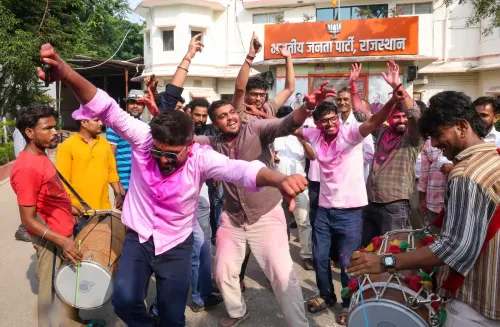
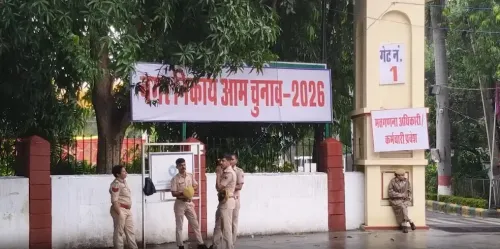
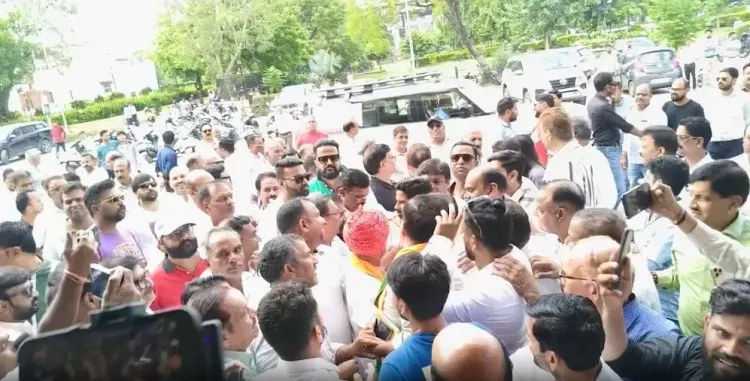
Independent candidates and smaller political formations have emerged as a decisive force in Rajasthan's urban local body elections, collectively securing more than 30 per cent of the vote share beyond the Bharatiya Janata Party (BJP) and Indian National Congress (INC), and winning over 2,200 wards across the state. The results, declared on 16 September, have fundamentally complicated the arithmetic of board formation in several local bodies where neither major party commands a clear majority.
Scale of the Independent Surge
The breadth of the independent performance is striking. In Bharatpur Municipal Corporation, independent candidates captured 36 of 65 wards, comfortably outpacing the BJP's 20 and the Congress's 7. In Sadulshahar municipality in Sri Ganganagar district, independents swept 22 of 25 wards, leaving the BJP with two and the Congress with one.
Reports indicate that a number of these winning independents were backed by BJP rebels — a pattern that underscores how candidate selection disputes within the ruling party can fracture its vote at the local level. This is not an isolated phenomenon; it reflects a broader dynamic in which hyper-local grievances override party loyalty when voters choose ward representatives.
What the Vote-Share Numbers Reveal
Congress President for Rajasthan, Govind Singh Dotasra, pointed to a narrowing gap between the two major parties as evidence of shifting ground. 'The people of Rajasthan have delivered their verdict on the BJP's misgovernance and corruption in the local body elections. In 309 local bodies, the BJP received a total of 37 lakh 35 thousand 568 votes, which is about 35 per cent. The Congress received 36 lakh 35 thousand 952 votes, meaning 34.24 per cent. The margin between the two is just 0.94 per cent,' he said. He added that this gap previously stood at around 8 to 8.5 per cent.
Rajasthan BJP President Madan Rathore acknowledged internal friction. 'In some locations, we faced resentment from our own party members, which inevitably resulted in losses for us. We will review, analyse, and rectify this situation,' he said, while also crediting his party's broader performance and invoking the principle of 'one nation, one law.'
Historical Parallels and the Third-Front Question
Rajasthan's political history offers instructive precedents. In the 1990 Assembly elections, the BJP won 85 seats, the Janata Dal won 55, and the Congress won 50 — with the BJP and Janata Dal subsequently forming a government under Bhairon Singh Shekhawat. Even in the 1952 Assembly election, independents won 35 seats and the Ram Rajya Parishad won 24 in a 160-member House where Congress held 82.
These episodes demonstrate that political space beyond the two dominant parties has repeatedly opened up in Rajasthan, though such formations have rarely coalesced into a durable third bloc at the state level.
The RLP-AIMIM Alliance Factor
Adding a new dimension to this landscape is the recently announced alliance between the Rashtriya Loktantrik Party (RLP) and the All India Majlis-e-Ittehadul Muslimeen (AIMIM). The two parties formalised their partnership for the Rajasthan local body elections following a joint appearance by RLP leader Hanuman Beniwal and AIMIM chief Asaduddin Owaisi in Jaipur. Their leaders have positioned the alliance as an alternative political platform aimed at consolidating Jat and Muslim voters under a common electoral umbrella.
What Comes Next: Panchayat Elections as the Real Test
Whether this independent surge translates into sustained influence will be tested in the forthcoming Zila Parishad and Panchayat Samiti elections, which involve a substantially larger electorate — more than 4 crore voters. Rajasthan has 8,221 wards across 457 Panchayat Samitis and 1,403 wards in Zila Parishads. In local bodies where no single party holds a majority, independent councillors are expected to play a pivotal role in electing chairpersons and constituting boards, giving them leverage well beyond their raw ward count.
Point of View
But how narrow the BJP-Congress margin has become — less than one percentage point across 309 bodies, compared to 8–8.5 per cent previously. That compression, combined with an independent surge driven partly by BJP rebel candidates, suggests the ruling party's internal discipline is fraying at the grassroots precisely when it can least afford it. The RLP-AIMIM alliance is a high-risk gambit: Jat-Muslim consolidation has rarely held beyond a single election cycle in Rajasthan, and its durability will depend on whether Beniwal can retain his base after aligning with Owaisi. The Panchayat elections, with four times the electorate, will reveal whether this is a structural shift or a protest vote that dissipates once the stakes rise.
NationPress
16 Sept 2026
Frequently Asked Questions
How did independent candidates perform in Rajasthan's urban local body elections?
Independent candidates and smaller parties collectively won over 2,200 wards and secured more than 30 per cent of the vote share beyond the BJP and Congress. In Bharatpur Municipal Corporation alone, independents won 36 of 65 wards, and in Sadulshahar they swept 22 of 25 wards.
What is the vote-share gap between BJP and Congress in these elections?
Across 309 local bodies, the BJP received approximately 35 per cent of the vote while the Congress received 34.24 per cent — a margin of just 0.94 per cent, according to Congress President Govind Singh Dotasra. He noted this gap previously stood at around 8 to 8.5 per cent.
What is the RLP-AIMIM alliance and how does it affect Rajasthan politics?
The Rashtriya Loktantrik Party (RLP), led by Hanuman Beniwal, and the All India Majlis-e-Ittehadul Muslimeen (AIMIM), led by Asaduddin Owaisi, formed an alliance for the Rajasthan local body elections. Their stated goal is to create an alternative political platform by consolidating Jat and Muslim voters, adding a new dimension to the state's political landscape.
What are the next elections in Rajasthan that will test this trend?
The upcoming Zila Parishad and Panchayat Samiti elections will be the next test. These polls involve more than 4 crore voters, covering 8,221 wards across 457 Panchayat Samitis and 1,403 wards in Zila Parishads — a far larger electorate than the recent urban local body polls.
Has Rajasthan seen a significant third political force before?
Yes. In the 1990 Assembly elections, the Janata Dal won 55 seats against the BJP's 85 and Congress's 50, and subsequently joined the BJP to form the government under Bhairon Singh Shekhawat. In 1952, independents won 35 seats in a 160-member House. However, such formations have not consistently translated into a durable third bloc at the state level.