Nepal floods: India sends 47.5 tonnes of aid, mobilises Bailey bridges
Synopsis
India has airlifted 47.5 tonnes of emergency supplies across two military aircraft to flood-ravaged Nepal, where the Bhote Koshi river — fed by waters from Tibet — has killed at least 270 people and left over 800 unaccounted for. The deployment of Bailey bridges signals that India is preparing for a sustained, ground-level relief push into areas where road connectivity has been severed.
Key Takeaways
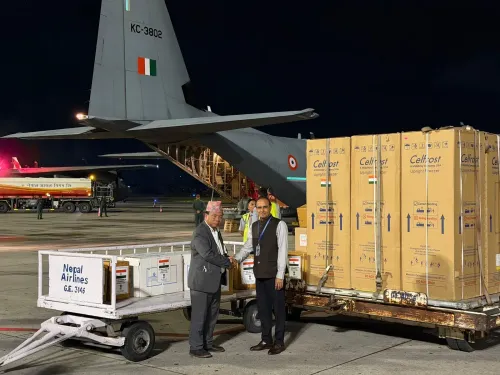
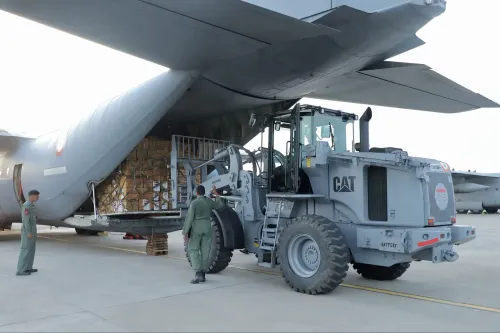
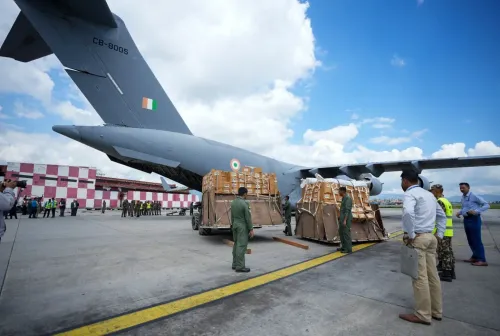
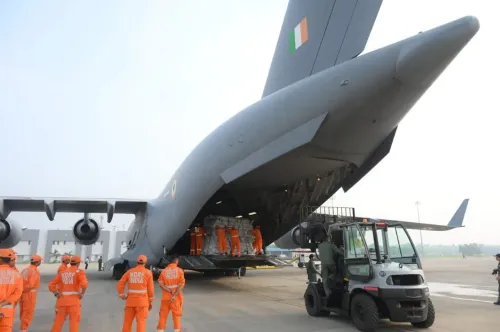
India has airlifted 47.5 tonnes of emergency relief supplies to Kathmandu across two aircraft — a C-130J and a C-17 — following catastrophic Bhote Koshi floods .
The death toll in Nepal has reached 270 , with the highest fatalities — 108 — recorded in Chitwan district .
More than 800 people remain out of contact, according to the Nepali government.
Bailey bridges are being mobilised by India to restore connectivity for rescue operations in flood-cut areas.
The MEA has activated a round-the-clock control room in New Delhi ; Indian embassies in Kathmandu and Beijing have set up 24/7 helplines .
The floods originated in the Tibetan region of China and swept into Nepal through the transboundary Bhote Koshi River .
India is mounting a major relief operation for Nepal after catastrophic flash floods — originating in the Tibetan region of China and sweeping through the transboundary Bhote Koshi River — killed at least 270 people on Wednesday, 27 August, with hundreds more still unaccounted for. The Ministry of External Affairs (MEA) confirmed on Thursday that 47.5 tonnes of emergency supplies have already been airlifted to Kathmandu, with Bailey bridges being mobilised to support ongoing rescue efforts.
What India Has Dispatched
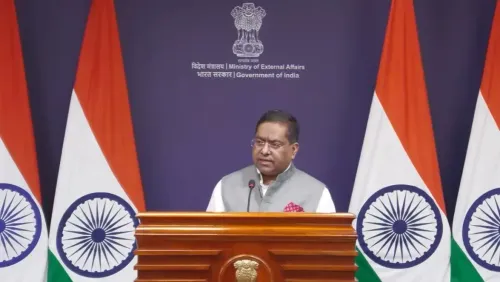
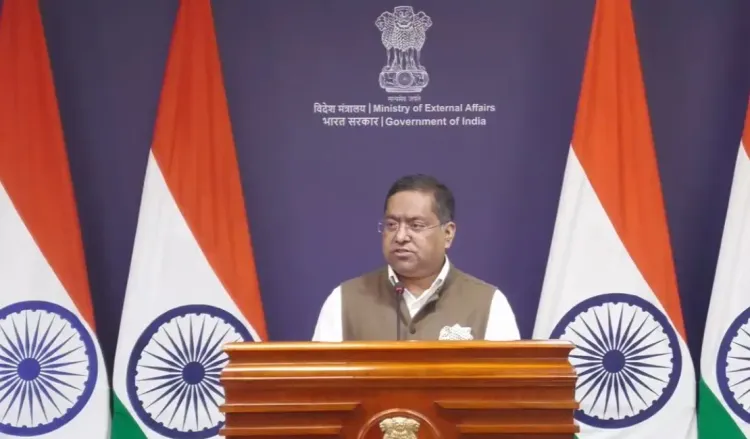
MEA spokesperson Randhir Jaiswal, addressing a press briefing in New Delhi on Thursday, detailed two separate airlift missions. A C-130J aircraft departed on Wednesday evening at approximately 8:30 pm, carrying 10 tonnes of relief material — including temporary shelters, blankets, hygiene kits, solar lamps, and medicines. A larger C-17 aircraft followed on Thursday morning with 37.5 tonnes of supplies, comprising 28.5 tonnes of relief items such as tents, blankets, hygiene kits, solar lamps, dewatering pumps, kitchen sets, and generators, alongside 8 tonnes of medicines and 1 tonne of food items.
'In total, across the two departures by air, India has sent 47.5 tonnes of emergency supplies aimed at supporting Nepal's ongoing rescue and relief operations,' Jaiswal said, adding that 'further assistance is also being considered.'
Bailey Bridges and Round-the-Clock Control Room
Beyond the airlifts, India is mobilising Bailey bridges — portable, prefabricated steel structures — to help restore connectivity in flood-severed areas critical to rescue operations. The MEA has also activated a 24/7 control room in New Delhi, with helpline numbers to be published on its official channels. Indian embassies in both Kathmandu and Beijing have set up round-the-clock helplines. The MEA is coordinating with state governments and the Ministry of Home Affairs regarding Indian nationals who had travelled to Nepal for the Kailash Mansarovar Yatra.
Scale of the Disaster in Nepal
Nepal Police confirmed on Thursday afternoon that the death toll from the Bhote Koshi floods has reached 270, with bodies continuing to be recovered from several downstream districts. The highest concentration of fatalities — 108 bodies — was recovered from Chitwan district in the southern plains, followed by 62 from Nawalparasi East, 27 from Dhading, and 17 from Rasuwa, according to police figures. The Nepali government has said that more than 800 people remain out of contact.
Origin and Impact of the Floods
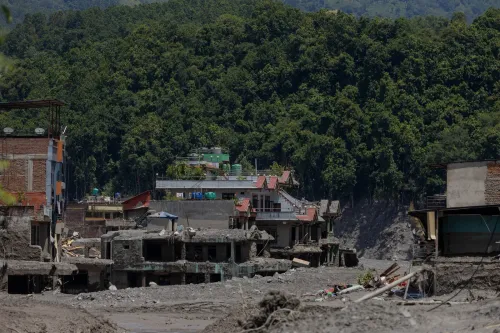
The disaster traces back to the Tibetan region of China, from where floodwaters surged into Nepal via the Bhote Koshi, a transboundary river known for its volatile monsoon behaviour. The deluge swept through human settlements, hydropower projects, customs offices, and electricity infrastructure across multiple districts. This is among the deadliest single flood events to hit Nepal in recent years, underscoring the recurring vulnerability of Himalayan communities to transboundary river flooding — a risk that climate scientists warn is intensifying with glacial melt and erratic precipitation patterns.
What Comes Next
India has indicated that additional assistance is under active consideration, with Bailey bridge deployment expected to be a priority as rescue teams attempt to reach cut-off communities. The MEA's control room will remain operational as the situation evolves, and Indian diplomatic missions in the region are on high alert for requests from stranded nationals.
Point of View
And Wednesday's disaster is not the first time Tibetan glacial or monsoon surges have devastated downstream Nepali communities. What remains absent is a robust early-warning data-sharing mechanism between China, Nepal, and India on transboundary Himalayan rivers — a gap that bilateral diplomacy has repeatedly acknowledged but not closed. The death toll of 270 and 800-plus missing, in a single flood event, is a measure of that institutional lag.
NationPress
12 Oct 2026
Frequently Asked Questions
How much relief has India sent to Nepal after the floods?
India has dispatched 47.5 tonnes of emergency supplies to Nepal across two military aircraft — a C-130J carrying 10 tonnes and a C-17 carrying 37.5 tonnes. The supplies include tents, blankets, hygiene kits, solar lamps, medicines, dewatering pumps, kitchen sets, and generators.
What are Bailey bridges and why is India sending them to Nepal?
Bailey bridges are portable, prefabricated steel structures that can be rapidly assembled to restore road connectivity across damaged or destroyed crossings. India is mobilising them to help rescue teams reach communities cut off by the Bhote Koshi floods.
What is the death toll from the Nepal floods?
Nepal Police confirmed on Thursday that the death toll from the Bhote Koshi floods has reached 270 , with bodies still being recovered. More than 800 people remain out of contact, according to the Nepali government.
Where did the Nepal floods originate?
The floods originated in the Tibetan region of China and swept into Nepal through the transboundary Bhote Koshi River on Wednesday, 27 August. The deluge damaged human settlements, hydropower projects, customs offices, and electricity infrastructure.
Which districts in Nepal were worst affected by the floods?
Chitwan district in the southern plains recorded the highest fatalities at 108 , followed by Nawalparasi East with 62, Dhading with 27, and Rasuwa with 17, according to Nepal Police figures.