India's LPG Production Soars 36% Amid Import Challenges
Synopsis
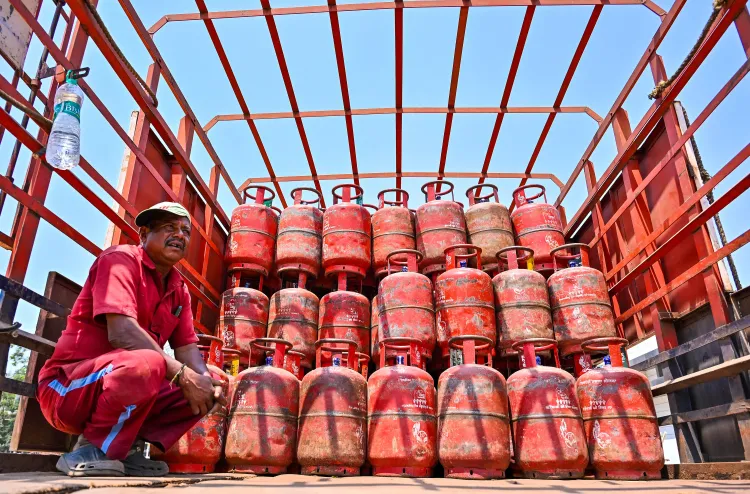
In response to the crisis in the Strait of Hormuz, India has significantly boosted its LPG production by 36% to mitigate import shortages. This strategic move aims to ensure a steady supply for households while preventing illegal market practices.
Key Takeaways
LPG production in India has risen by 36% to mitigate import challenges.
State governments are enforcing measures to prevent hoarding and black marketing .
Booking intervals for LPG have been adjusted to ensure equitable distribution.
India remains self-sufficient in petrol and diesel production, negating the need for imports.
Incentives are being offered to promote the adoption of PNG connections .
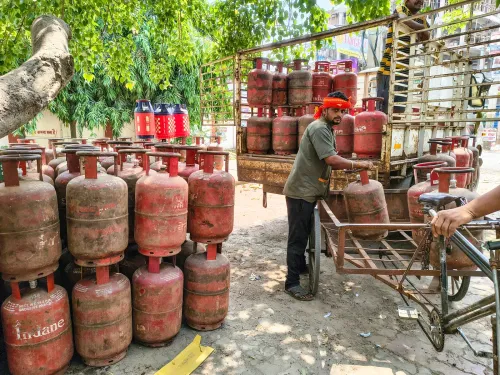
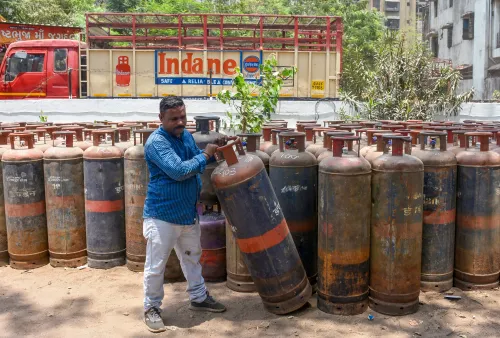
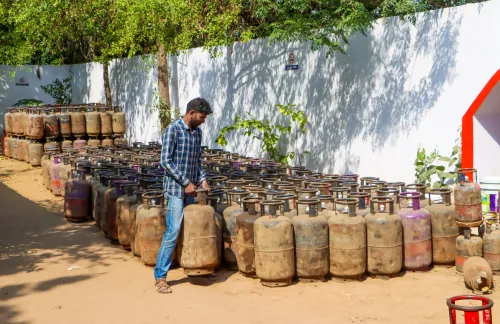
New Delhi, March 16 (NationPress) In a significant move, India’s local refineries have ramped up their LPG production by an impressive 36% to address the shortfall in imports that arose due to the closure of the Strait of Hormuz amid the ongoing Iran conflict, as stated by the Ministry of Petroleum and Natural Gas on Monday.
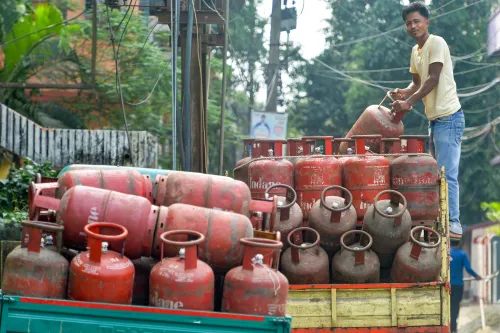
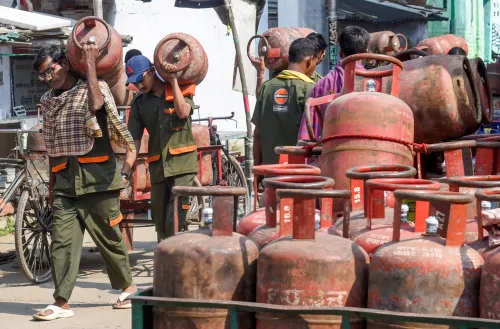
"We are closely monitoring LPG supply in light of the current geopolitical climate. So far, there have been no reports of dry-outs at LPG distributorships. The coverage of the Delivery Authentication Code (DAC) has expanded from 53% before the crisis to approximately 72% to deter any cylinder diversions at the distributor level," the ministry declared.
Online bookings for LPG cylinders have surged from about 84% to nearly 90%, facilitating a more organized distribution of cooking gas to households.
To ensure fair distribution, booking intervals have been adjusted to 25 days in urban locales and up to 45 days in rural areas.
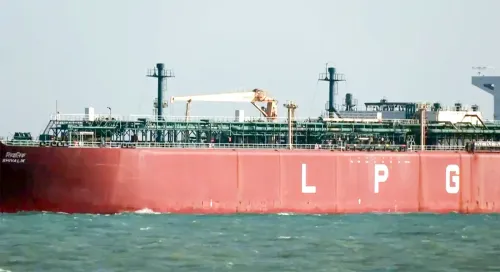
On March 14, two Indian-flagged LPG carriers traversed the Strait of Hormuz, transporting around 92,712 MT of LPG. The vessel 'Shivalik' arrived at Mundra Port by 5 p.m. on Monday, while 'Nanda Devi' is anticipated to dock early Tuesday morning.
State authorities are launching enforcement operations to curb hoarding and black marketing of petrol, diesel, and LPG. Raids are in progress across several states, including Uttar Pradesh, Haryana, Andhra Pradesh, Madhya Pradesh, Assam, and Mizoram, to tackle these illegal activities.
Officials from public sector oil marketing companies have conducted surprise inspections at over 1,100 retail outlets and LPG distributorships to ensure uninterrupted supply and prevent irregularities.
Additionally, an extra allocation of 48,000 KL of kerosene has been distributed to states and Union Territories (UTs), while alternative fuels like kerosene and coal have been made available to alleviate the pressure on LPG demand.
All refineries are functioning at full capacity and maintaining sufficient crude oil reserves. India is currently self-sufficient in petrol and diesel production, negating the need for imports of these fuels to satisfy domestic demand, the ministry clarified.
Public sector oil marketing companies (OMCs) have reported no instances of fuel dry-outs at retail outlets, and regular supplies of petrol and diesel are being sustained. Citizens are urged to avoid panic buying as there are adequate stocks of petrol and diesel available, the statement emphasized.
Priority sectors are still guaranteed protected gas supplies, including 100% provision to PNG and CNG, while supplies to industrial and commercial consumers are being regulated at around 80%.
Commercial LPG users in major cities and urban areas are encouraged to transition to PNG. Establishments such as hotels, restaurants, hospitals, and hostels can obtain PNG connections through approved City Gas Distribution (CGD) entities. Consumers can apply for PNG connections via email, customer portals, letters, or CGD company call centers, with connections being rapidly provided where pipeline networks are already established, as stated.
Numerous CGD companies are providing incentives to promote PNG connections, including free gas worth Rs 500 for domestic consumers from Indraprastha Gas Ltd. and GAIL Gas Ltd., waivers on registration charges of ₹500 for domestic PNG consumers and security deposits for commercial consumers from Mahanagar Gas Ltd., as well as waivers on security deposits for all commercial connections from BPCL.
Point of View
It's crucial to highlight the proactive measures being taken by India to ensure energy security amid international challenges. The increase in LPG production not only addresses immediate supply concerns but also reflects the nation's commitment to self-sufficiency in energy resources.
NationPress
22 Sept 2026
Frequently Asked Questions
Why has India increased LPG production?
India has boosted LPG production by 36% to bridge the import gap caused by disruptions in the Strait of Hormuz due to the Iran conflict.
What measures are being taken to prevent LPG hoarding?
State governments are conducting raids and enforcing regulations to combat hoarding and black marketing of LPG and other fuels.
How has the delivery process changed?
Booking intervals for LPG cylinders have been revised to 25 days in urban areas and up to 45 days in rural regions to ensure fair distribution.
Are supplies of petrol and diesel affected?
No, public sector oil marketing companies have reported no fuel dry-outs, and regular supplies of petrol and diesel are being maintained.
What incentives are available for switching to PNG?
Several CGD companies are offering incentives such as free gas for domestic consumers and waived registration fees for PNG connections.