India's defence production hits record ₹1.8 lakh crore in FY26, exports surge 63%
Synopsis
India's defence sector isn't just growing — it's structurally transforming. A record ₹1.8 lakh crore in production, a 63% export surge, and 75% of the FY27 modernisation budget reserved for domestic industry signal that this is no longer a procurement cycle story. It's a decade-long industrial pivot, and the FY29 targets of ₹3 lakh crore in production and ₹50,000 crore in exports will be the real test of whether ambition has become architecture.
Key Takeaways
India's defence production reached a record ₹1.8 lakh crore in FY26 , up 15.6% year-on-year and reflecting an ~ 18% CAGR since FY21.
Defence exports surged 63% to approximately ₹38,000 crore ; India now exports to over 80 countries .
Government targets ₹3 lakh crore in production and ₹50,000 crore in exports by FY29 .
Private sector's share of defence production rose to 24% in FY26, with ₹34,700 crore of the FY27 capital acquisition budget reserved for private firms.
Over 13,900 items have been indigenised via the Srijan portal out of 38,000+ identified.
Defence capital outlay for FY27 stands at ₹1.9 lakh crore , up 24% year-on-year .
India's defence sector has reached a historic milestone, with domestic production touching a record ₹1.8 lakh crore in FY26 — a 15.6% year-on-year jump representing an approximately 18% compound annual growth rate (CAGR) since FY21, according to a report released on Wednesday, 23 September 2026 by Emkay Global Financial Services. The sector is simultaneously scaling indigenisation, deepening private-sector participation, and emerging as a credible global defence exporter.
Export Surge and Global Footprint
Defence exports climbed 63% to approximately ₹38,000 crore (₹380 billion), reinforcing India's growing position as a supplier of defence equipment and systems worldwide. India now ships defence products to over 80 countries, with the United States, France, and Armenia among the leading buyers. The government has set an ambitious target of ₹3 lakh crore in defence production and ₹50,000 crore in exports by FY29, pointing to sustained expansion across the domestic manufacturing ecosystem.
Indigenisation Drive Gains Momentum
The government's indigenisation push is broadening the addressable opportunity for domestic manufacturers at an accelerating pace. Five positive indigenisation lists covering 5,012 critical items have been notified, of which 3,025 have already been indigenised. Over 38,000 items have been identified for indigenisation through the Srijan portal, with more than 13,900 successfully localised so far. Out of a nearly ₹1.4 lakh crore modernisation budget for FY27, 75% has been earmarked for domestic industry — a structural shift in procurement policy that directly benefits Indian manufacturers.
Private Sector's Rising Role
The private sector's contribution to overall defence production rose to 24% in FY26 from 22% in FY25, reaching approximately ₹42,000 crore. Nearly 25% of the domestic capital acquisition budget for FY27 — approximately ₹34,700 crore — has been earmarked specifically for private industry. Notably, Indian companies are increasingly transitioning beyond the traditional Build-to-Print model towards Build-to-Specification, Build-to-Design, and Build-to-Requirements capabilities. Several players are also developing Lead System Integrator capabilities, positioning them for deeper involvement in the design, integration, and delivery of complex defence platforms.
Key Procurement Pipelines Across Services
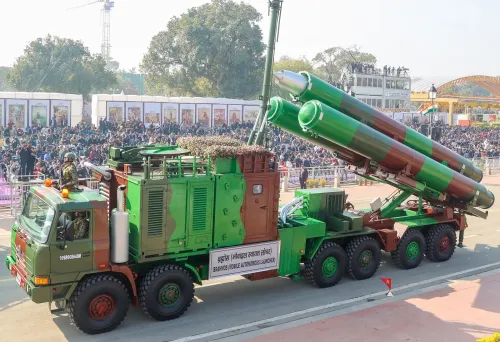
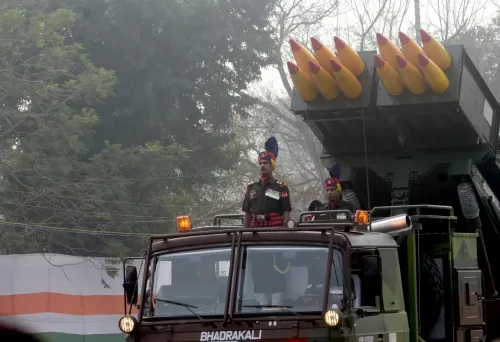
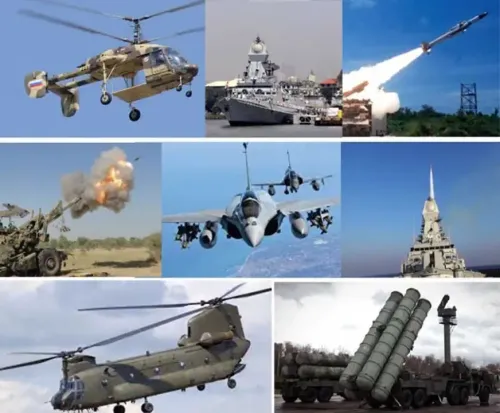
The defence capital outlay for FY27 stands at approximately ₹1.9 lakh crore, up 24% year-on-year, underpinning a substantial procurement pipeline. The Indian Air Force is advancing programmes including the Multi-Role Fighter Aircraft, LCA Tejas Mk-II, Su-30 MKI upgrades, medium transport aircraft, additional S-400 systems, and the Advanced Medium Combat Aircraft. The Army's pipeline includes Future Infantry Combat Vehicles, Future Ready Combat Vehicles, K9 Vajra-T systems, QRSAM, Akash-NG, loitering munitions, helicopters, and next-generation Pinaka systems. The Navy is pursuing Project 75I, additional Scorpene submarines, next-generation frigates, naval utility helicopters, unmanned underwater vehicles, and an indigenous carrier-based fighter.
Structural Shift, Not a Procurement Blip
According to the Emkay Global Financial Services report, 'With record production already achieved in FY26 and ambitious production and export targets ahead, the sector is increasingly positioned around a longer-term structural growth opportunity rather than a short-term procurement cycle.' This comes amid a broader geopolitical realignment that has elevated demand for reliable, cost-competitive defence suppliers — a gap India is increasingly stepping in to fill. With the FY29 targets now firmly in the government's crosshairs, the next few years will test whether the ecosystem can convert pipeline scale into delivered platforms.
Point of View
But the harder question is whether scale is translating into strategic self-sufficiency or simply substituting imports with domestically assembled foreign designs. The Build-to-Print-to-Design progression is the right direction, yet major platforms — including the AMCA and MRFA — remain years from induction. Export growth to over 80 countries is a real signal, but the concentration of buyers and the category of systems exported will determine whether India is a tier-one supplier or a niche one. The FY29 targets are achievable on current trajectory, but execution risk in the Navy's submarine programme and the Air Force's fighter pipeline remains underappreciated.
NationPress
23 Sept 2026
Frequently Asked Questions
What is India's defence production figure for FY26?
India's defence production reached a record ₹1.8 lakh crore in FY26, marking a 15.6% year-on-year increase and an approximately 18% CAGR since FY21, according to a report by Emkay Global Financial Services.
How much have India's defence exports grown?
India's defence exports surged 63% to approximately ₹38,000 crore in FY26. The country now exports defence equipment and systems to over 80 nations, including the United States, France, and Armenia.
What are India's defence production targets for FY29?
The government has set a target of ₹3 lakh crore in defence production and ₹50,000 crore in exports by FY29. These targets reflect a continued push to expand the domestic defence manufacturing ecosystem and grow India's global supplier footprint.
How is the private sector contributing to India's defence growth?
The private sector's share of defence production rose to 24% in FY26 from 22% in FY25, reaching around ₹42,000 crore. Approximately ₹34,700 crore — or 25% of the FY27 domestic capital acquisition budget — has been earmarked specifically for private industry.
What is India's indigenisation progress in the defence sector?
Five positive indigenisation lists covering 5,012 critical items have been notified, of which 3,025 have been indigenised. Over 38,000 items have been identified for indigenisation through the Srijan portal, with more than 13,900 already successfully localised.