India-EU strategic partnership: 12th FPSC held in New Delhi
Synopsis
India and the EU used their 12th security consultations to call each other trusted, predictable and like-minded partners. They also aligned on the Indo-Pacific, Ukraine peace, Black Sea navigation and cross-border terrorism. The next test is the pending Security of Information Agreement, which would unlock deeper defence and tech cooperation.
Key Takeaways
India and the EU held the 12th Foreign Policy and Security Consultations in New Delhi on 27 November 2026 .
The talks were co-chaired by MEA Secretary (West) Sibi George and EEAS Deputy Secretary General Olof Skoog .
Discussions followed the Towards 2030 agenda endorsed at the 16th India-EU Summit in January 2026 .
Both sides backed a free, open Indo-Pacific and a just, lasting peace in Ukraine , and called for restoring Black Sea navigation.
They noted progress on the Security of Information Agreement and agreed to hold the second Security and Defence Dialogue next year.
The next FPSC will be held in Brussels next year.
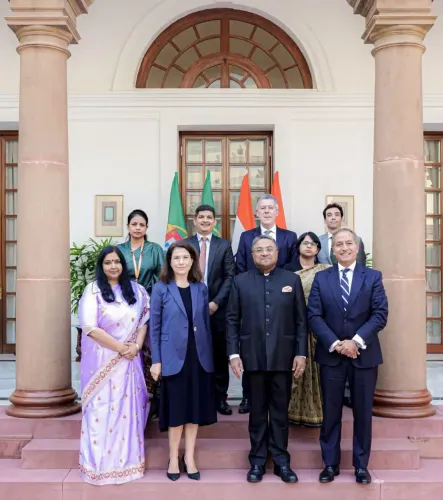
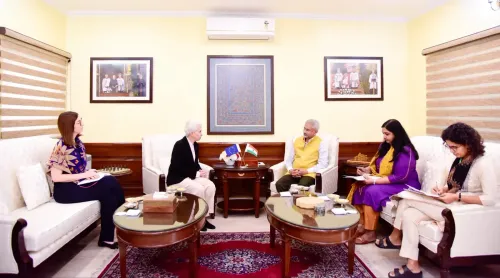
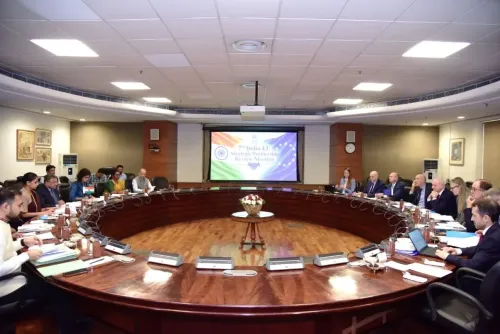
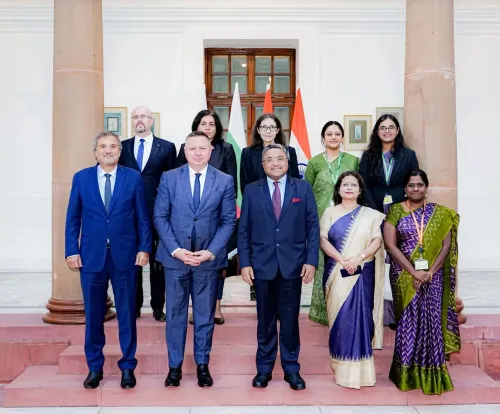
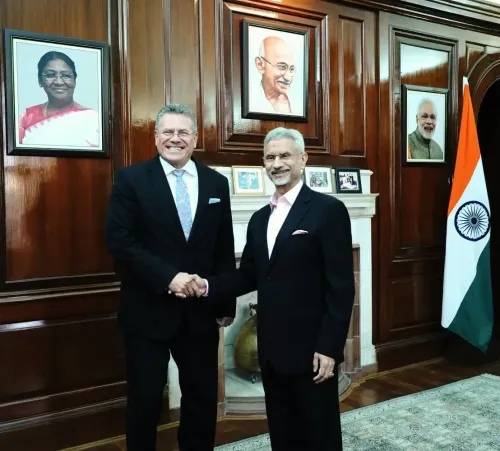
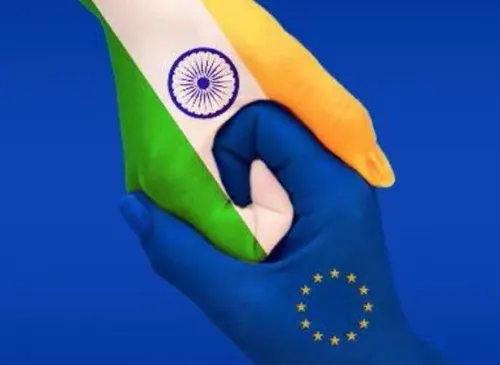
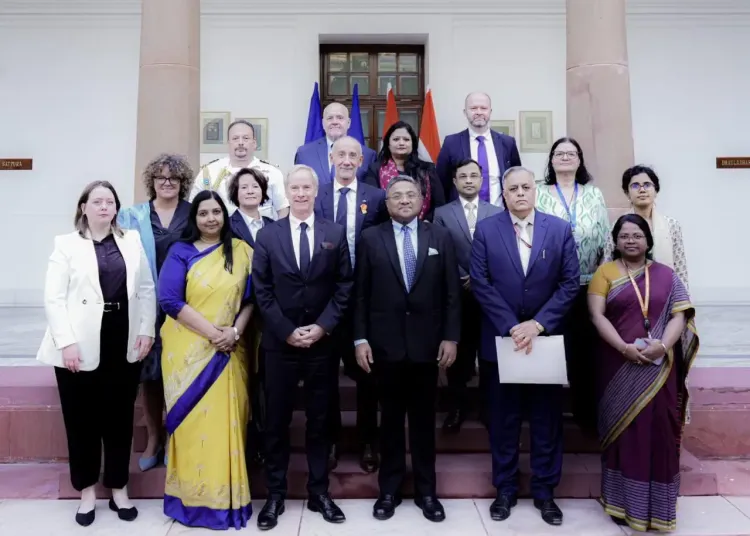
India and the European Union (EU) on Friday, 27 November 2026, reviewed the strong momentum in their ties and discussed ways to deepen their strategic partnership at the 12th India-EU Foreign Policy and Security Consultations (FPSC) in New Delhi. The talks were guided by the 'Towards 2030' agenda. They covered the Indo-Pacific, the war in Ukraine, defence cooperation and counterterrorism.
The consultations were co-chaired by Sibi George, Secretary (West) in the Ministry of External Affairs (MEA), and Olof Skoog, Deputy Secretary General for Political Affairs of the European External Action Service (EEAS).
Key Developments at the Consultations
A joint press statement issued by the MEA said the meeting gave both sides a chance to take stock of the relationship. According to the statement, “The consultations provided an opportunity to both sides to review the strong momentum and current state of play in India-EU relations and to discuss ways to further deepen the strategic partnership, in line with the Towards 2030: A Joint India-European Union Comprehensive Strategic Agenda endorsed at the 16th India-EU Summit in January 2026.”
Notably, the consultations come less than a year after that summit. The roadmap adopted there now serves as the main framework for how New Delhi and Brussels structure their engagement.
Indo-Pacific and the Rules-Based Order
Both sides noted that multilateralism and international law are being challenged in the current geopolitical context. Against that backdrop, they underlined their firm commitment to upholding the UN Charter, particularly the principles of sovereignty and territorial integrity. They also exchanged views on regional and global developments, including in the Indo-Pacific.
“Both sides emphasised the importance of closer coordination in support of a free, open, peaceful and prosperous Indo-Pacific built on international law and mutual respect for sovereignty, territorial integrity and peaceful resolution of disputes,” the joint statement added.
Ukraine, Black Sea and Food Security
India and the EU stressed the need for a comprehensive, just and lasting peace in Ukraine in accordance with international law and the principles of the UN Charter. They also discussed the need to restore freedom of navigation in the Black Sea to limit the negative impact on global food security.
The shared language on Ukraine is significant. The two sides have often approached the conflict from different starting points. Framing the issue through food security reflects a concern that matters directly to many developing economies.
Security and Defence Cooperation
The talks reviewed cooperation under the India-EU Security and Defence Partnership. The areas discussed were maritime security, defence industry and technology, cyber and hybrid threats, space and counterterrorism.
Both sides welcomed the inaugural Security and Defence Dialogue, held in New Delhi in March 2026. They noted the progress and importance of concluding the India-EU Security of Information Agreement, and agreed to hold the second edition of the Security and Defence Dialogue next year.
India and the EU also unequivocally and strongly condemned terrorism and violent extremism in all its forms and manifestations, including cross-border terrorism. This is a formulation New Delhi has consistently sought in its bilateral statements.
What Comes Next
The two sides described each other as trusted, predictable and like-minded partners. They reaffirmed their commitment to regular high-level exchanges and existing institutional dialogue mechanisms. The meeting also reviewed preparations for future Leaders'-level meetings.
The next FPSC will be held in Brussels next year. That round, together with the second Security and Defence Dialogue, will show whether the Towards 2030 agenda is turning into concrete outcomes.
Point of View
Talk of defence-industrial and technology cooperation stays largely aspirational. The EU's explicit condemnation of cross-border terrorism is a quiet diplomatic gain for New Delhi, while India's endorsement of Black Sea freedom of navigation shows calibrated movement on Ukraine. The real measure of Towards 2030 will be signed agreements and joint capabilities, not another round of warm communiqués.
NationPress
27 Nov 2026
Frequently Asked Questions
What is the India-EU Foreign Policy and Security Consultations?
It is a regular institutional dialogue between India's Ministry of External Affairs and the EU's European External Action Service on foreign policy and security issues. The 12th round was held in New Delhi on 27 November 2026.
Who co-chaired the 12th India-EU FPSC?
The talks were co-chaired by Sibi George, Secretary (West) in the MEA, and Olof Skoog, Deputy Secretary General for Political Affairs of the EEAS.
What is the Towards 2030 India-EU agenda?
Towards 2030: A Joint India-European Union Comprehensive Strategic Agenda is the roadmap for bilateral ties endorsed at the 16th India-EU Summit in January 2026. The 12th FPSC discussed deepening the strategic partnership in line with this agenda.
What did India and the EU say about Ukraine?
Both sides called for a comprehensive, just and lasting peace in Ukraine in line with international law and the UN Charter. They also discussed restoring freedom of navigation in the Black Sea to limit the impact on global food security.
When and where is the next India-EU FPSC?
The next round of the Foreign Policy and Security Consultations will be held in Brussels next year. The second Security and Defence Dialogue is also planned for next year.