Jaishankar meets EU defence panel chief, discusses Ukraine, security ties
Synopsis
EAM Jaishankar's meeting with the European Parliament's defence committee chair on 12 November is the latest in a string of high-level India-EU contacts spanning the G20 sidelines, a bilateral phone call, and now a dedicated security dialogue — signalling that India-EU strategic ties are quietly but deliberately deepening amid global conflict pressures.
Key Takeaways
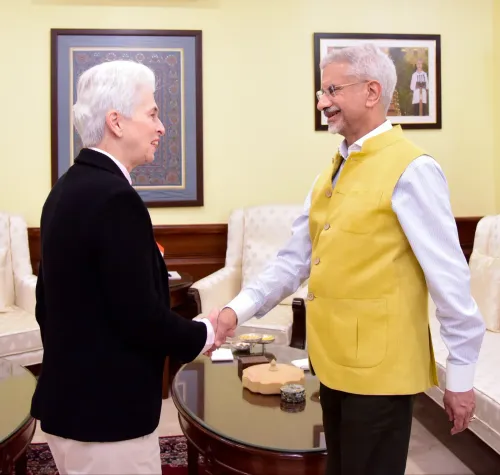
EAM S Jaishankar met Marie-Agnes Strack-Zimmermann , Chair of the European Parliament's Committee on Security and Defence , in New Delhi on 12 November 2026 .
Both sides discussed security, economic, technological, and people-to-people cooperation, as well as the Ukraine conflict .
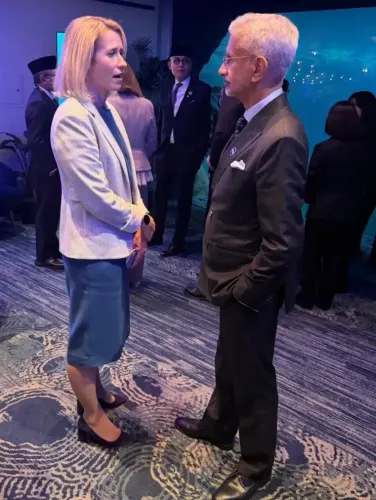
Last month, Jaishankar met EU HRVP Kaja Kallas at the G20 Foreign Ministers' meeting in Atlanta and separately spoke with her by phone on 25 October .
Kallas called for a Black Sea freedom of navigation arrangement and flagged energy and food supply threats from the Ukraine war and Middle East crisis.
Jaishankar warned that the Global South is disproportionately suffering from attacks on civilian shipping and stressed the need to uphold UNCLOS .
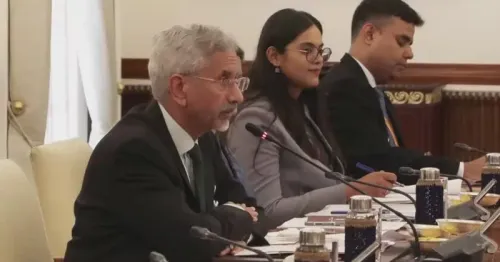
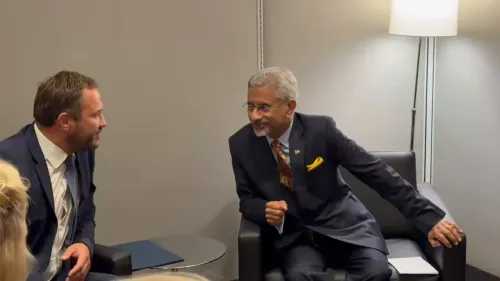
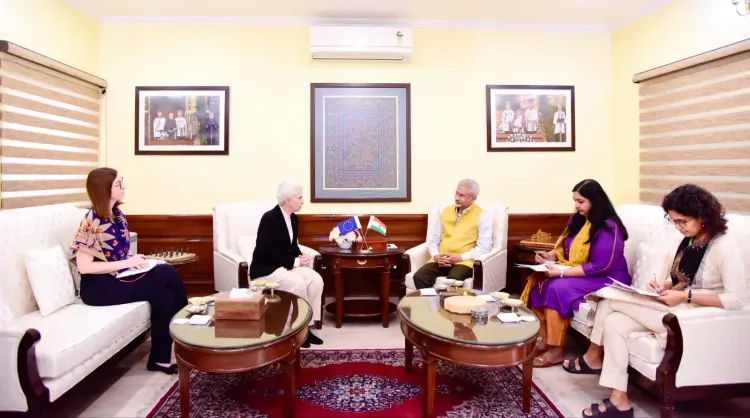
External Affairs Minister S Jaishankar met Marie-Agnes Strack-Zimmermann, Chair of the European Parliament's Committee on Security and Defence, in New Delhi on Thursday, 12 November 2026, with both sides discussing pathways to deepen India-EU bilateral cooperation across security, economic, technological, and people-to-people domains. The two leaders also exchanged perspectives on the Ukraine conflict and other pressing regional and global developments.
What Was Discussed
Following the meeting, Jaishankar posted on X: 'Glad to meet Dr. Marie-Agnes Strack-Zimmermann, Chair of the European Parliament's Committee on Security and Defence. A good discussion on our security, economic, technological & people-to-people cooperation, and next steps. Also exchanged views on the Ukraine conflict and other regional & global issues.'
The meeting underscores a steady cadence of high-level India-EU diplomatic engagements, particularly as Europe seeks to consolidate partnerships with democratic nations amid the ongoing war in Ukraine.
Jaishankar's Recent EU Engagements
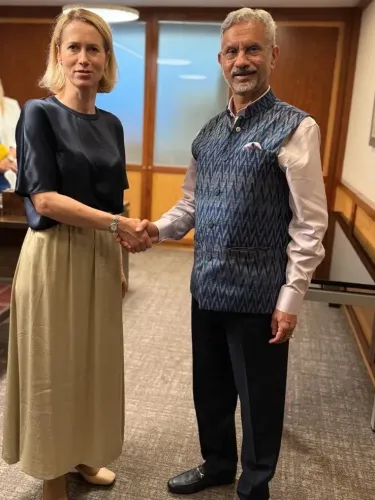
Last month, Jaishankar met EU High Representative for Foreign Affairs and Security Policy Kaja Kallas on the sidelines of the G20 Foreign Ministers' meeting in Atlanta, where the two discussed ongoing global conflicts, including the Ukraine war and the Gulf situation. That encounter followed a phone call on 25 October to coordinate diplomatic positions on the same set of issues.
At the G20 session, Kallas drew attention to the cascading consequences of the Russia-Ukraine war and the Middle East conflict, warning that 'Russia's war in Ukraine and the crisis in the Middle East pose major threats to energy and food supplies, trade and freedom of navigation. Maritime routes are global lifelines.' She also called for a Black Sea freedom of navigation arrangement and reaffirmed EU opposition to tolls and fees on international shipping routes.
India's Stance on Global Conflicts
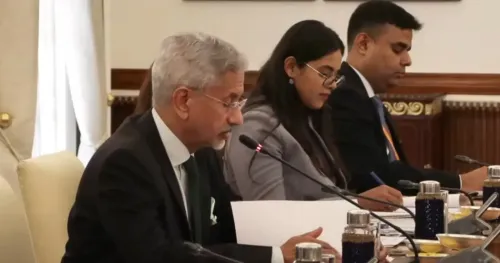
Speaking at the G20 Foreign Ministers' meeting, Jaishankar reiterated India's longstanding position that military solutions cannot resolve global challenges and that diplomacy must be prioritised. He issued a pointed warning that the Global South is disproportionately bearing the costs of attacks on civilian shipping and seafarers, which is jeopardising the availability and cost of fuel, food, and fertilisers.
'There is an urgent need to preserve the freedom of navigation and ensure cessation of attacks within the framework of international law, especially UNCLOS,' Jaishankar said.
Significance for India-EU Relations
The series of engagements reflects a deepening of the India-EU strategic partnership, which has gained momentum since the two sides launched Trade and Technology Council talks. India's consistent messaging — that diplomacy must prevail and that the Global South cannot be collateral damage in great-power conflicts — aligns with its broader foreign policy posture of strategic autonomy. Notably, India has maintained dialogue with both Western partners and Russia, a balancing act that Brussels has watched closely.
The next steps on bilateral cooperation, including on defence technology and supply chain resilience, are expected to be elaborated in follow-up exchanges between the two sides.
Point of View
A phone call, and now a parliamentary security dialogue all within weeks. What is striking is the convergence of messaging: both sides are framing maritime security and supply chain resilience as core strategic interests, not just humanitarian talking points. Yet India's refusal to condemn Russia directly remains an unspoken tension in every such engagement. Brussels is pragmatic enough to pursue the partnership anyway, but the gap in Ukraine positions means India-EU ties remain a strategic partnership with an asterisk — broad in scope, shallow on the hardest question.
NationPress
12 Nov 2026
Frequently Asked Questions
What did Jaishankar discuss with the EU Parliament's defence committee chair?
Jaishankar met Marie-Agnes Strack-Zimmermann on 12 November 2026 in New Delhi to discuss India-EU cooperation in security, economic, technological, and people-to-people areas, as well as the Ukraine conflict and other global developments.
Who is Marie-Agnes Strack-Zimmermann?
Marie-Agnes Strack-Zimmermann is the Chair of the European Parliament's Committee on Security and Defence. Her committee oversees EU defence policy and security-related legislation, making her a significant interlocutor for strategic partnership discussions.
What is India's position on the Ukraine conflict?
India has consistently called for diplomacy over military solutions and has not explicitly sided with either Russia or Ukraine. At the G20 Foreign Ministers' meeting, Jaishankar stressed that the Global South is disproportionately affected by attacks on civilian shipping and called for upholding freedom of navigation under international law, including UNCLOS.
What did EU's Kaja Kallas say at the G20 Foreign Ministers' meeting?
Kallas warned that Russia's war in Ukraine and the Middle East crisis pose major threats to energy and food supplies, trade, and freedom of navigation. She called for a Black Sea freedom of navigation arrangement and reaffirmed EU opposition to tolls and fees on international shipping routes.
How active has India-EU diplomatic engagement been recently?
Very active. Within a few weeks, Jaishankar met Kallas on the sidelines of the G20 in Atlanta, spoke with her by phone on 25 October, and then held a dedicated meeting with the European Parliament's defence committee chair on 12 November — signalling sustained momentum in the India-EU strategic relationship.