How Does the India-EU Free Trade Pact Align with India's Development Goals?
Synopsis
The India-EU free trade agreement is a significant leap towards India's development vision, promising job creation, market expansion, and enhanced global trade integration. This monumental pact positions India as a key player in global economics and innovation.
Key Takeaways
Historic agreement that aligns with India's development vision.
Creation of millions of jobs and opportunities.
Enhanced market access for over 99% of Indian exports to the EU.
Focus on key sectors like AI , defense , and semiconductors .
Elimination of tariffs on $33 billion worth of exports.
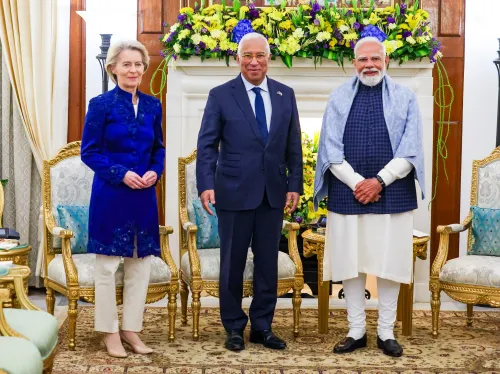
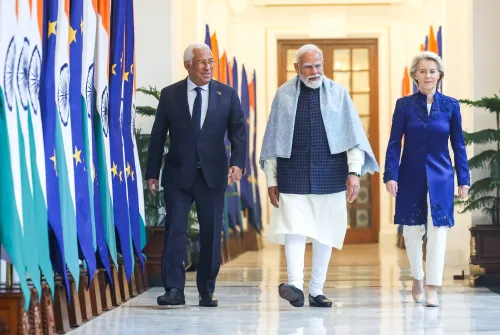
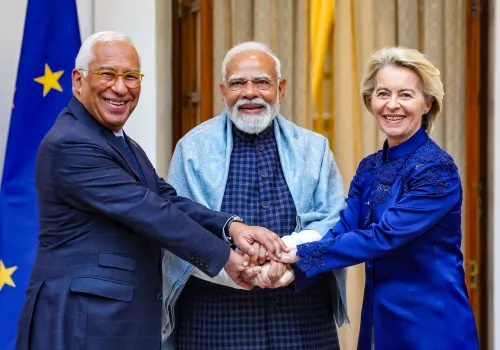
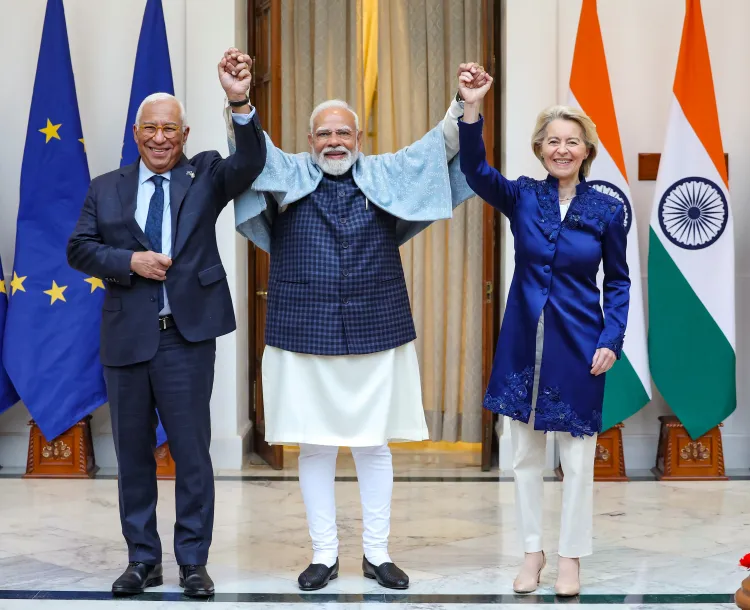
New Delhi, Jan 30 (NationPress) Prime Minister Narendra Modi emphasized that the landmark India-EU free trade agreement is in complete harmony with the vision of transforming India into a developed nation.
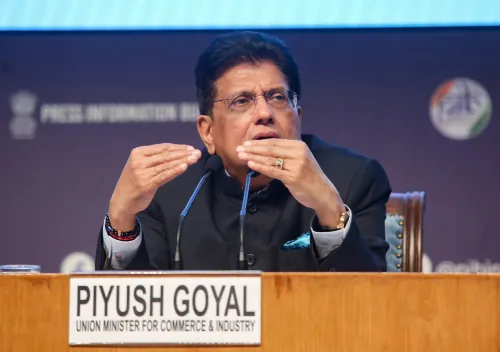
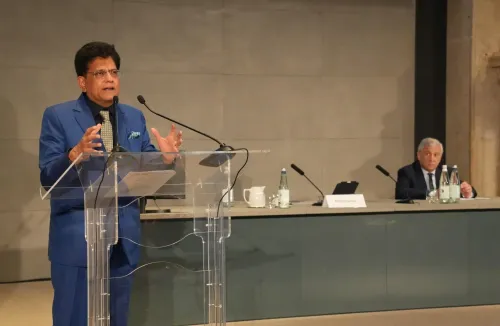
The Prime Minister referred to an article by Commerce Minister Piyush Goyal, who stated that "the government has achieved a groundbreaking agreement that broadens markets, generates jobs, and safeguards India’s essential interests".
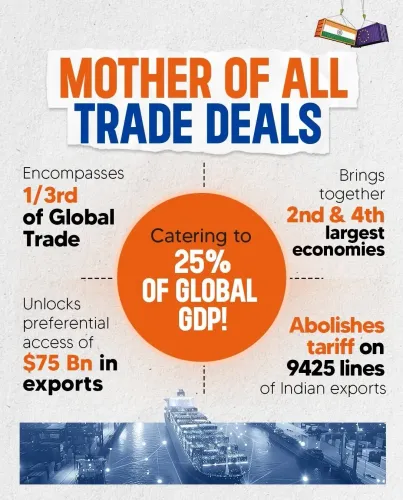
In his article, Goyal mentioned that the India–EU free trade agreement marks a historic achievement in Prime Minister Modi’s economic diplomacy. It is poised to create millions of jobs, unlock vast opportunities for India’s youth and farmers, and generate wealth for nearly 2 billion people, collectively accounting for a quarter of the global economy.
This agreement between the world’s second- and fourth-largest economies stands as one of the most significant trade deals ever finalized. Moreover, it transcends a mere trade agreement, establishing a comprehensive partnership that enhances collaboration in vital sectors such as artificial intelligence, defense, and semiconductors. The FTA is expected to benefit all regions and citizens of India, as observed in the article.
The FTA guarantees rules-based trade and stability in economic policies, making India even more appealing for both domestic and international investments. This will provide numerous prospects for small businesses, startups, and workers.
The global community has praised PM Modi’s announcement, dubbing it the "mother of all deals." It arrives as a refreshing development amidst a challenging period for global trade and supply-chain adjustments. According to Goyal, the agreement positions India and the EU as reliable partners committed to open markets, stability, and inclusive growth.
India has attained unparalleled market access for over 99% of its exports to the EU based on trade value, significantly bolstering the Make in India initiative. The FTA is set to provide a substantial uplift to labor-intensive industries such as textiles, apparel, leather, footwear, marine products, gems and jewelry, handicrafts, engineering goods, and automobiles, as per the minister’s assertions.
The agreement will eliminate tariffs of up to 10% on approximately $33 billion worth of Indian exports. Additionally, it aims to empower workers, artisans, women, youth, and MSMEs, while further integrating Indian businesses into global value chains and reinforcing India’s role as a crucial supplier in international trade.
Furthermore, the deal facilitates mobility for business professionals and opens new avenues in sectors such as education, information technology, financial services, and computing. These commitments create high-value employment opportunities and further solidify India’s status as a global hub for talent, innovation, and sustainable economic growth, as highlighted in the article.
Point of View
This agreement signifies a pivotal moment for India in its quest for economic prominence. It reflects a strategic move to bolster domestic industries, enhance global partnerships, and foster inclusive growth. The alignment with the government's vision portrays a commitment to not just economic growth, but sustainable development.
NationPress
29 Sept 2026
Frequently Asked Questions
What is the significance of the India-EU free trade agreement?
The India-EU free trade agreement is crucial as it expands market access, creates jobs, and fortifies India's standing in the global economy.
How will this agreement benefit Indian farmers?
The agreement aims to create vast opportunities for farmers through enhanced market access and reduced tariffs, leading to increased exports.
What sectors will be most impacted by the FTA?
Key sectors such as textiles, apparel, leather, electronics, and defense will see significant benefits from the FTA.
What does this mean for Indian startups?
The FTA opens new avenues for startups by providing them with access to European markets and creating a conducive environment for investment.
Will there be job creation as a result of this agreement?
Yes, the agreement is expected to generate millions of jobs across various sectors, enhancing the employment landscape in India.