No petrol-diesel shortage in India, PSU oil firms absorbing ₹600-700 crore daily loss

Synopsis
There is no nationwide fuel shortage — but India's state-run oil companies are quietly absorbing losses of up to ₹700 crore every single day. Former BPCL Marketing Director Sukhmal Kumar Jain's candid remarks reveal a system holding the line on supply while being squeezed by a volatile rupee, rising shipping costs, and elevated crude prices.
Key Takeaways
Former BPCL Marketing Director Sukhmal Kumar Jain confirmed there is no petrol or diesel shortage in India as of 24 May .
PSU oil marketing companies operate around 85,000 of the nearly one lakh fuel retail outlets nationwide.
Exchange rates have moved from 89–90 to approximately 96 to the dollar, raising import costs for OMCs.
Oil marketing companies are currently absorbing losses of ₹600 crore to ₹700 crore per day due to volatile crude, shipping, insurance, and forex costs.
Despite margin pressure, PSU OMCs continue to ensure uninterrupted fuel supply across the country.
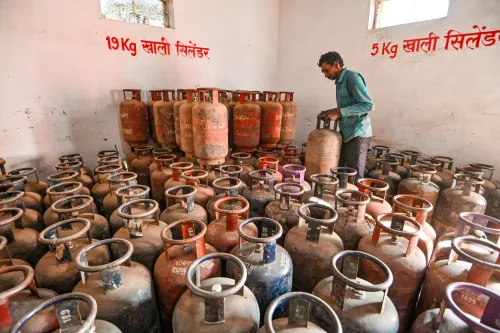
There is no shortage of petrol or diesel anywhere in the country, Sukhmal Kumar Jain, former Marketing Director of Bharat Petroleum Corporation Limited (BPCL), said on Sunday, 24 May, adding that public sector oil marketing companies (OMCs) are fully managing fuel supply and consumption across India. His remarks came amid scattered concerns about fuel availability in certain areas.
PSU Dominance Ensures Steady Supply
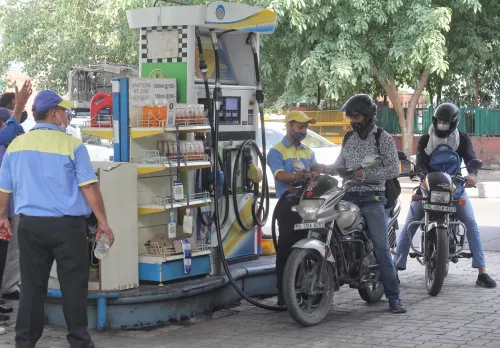
Jain pointed to the sheer scale of the public sector network as the primary stabiliser. PSU oil marketing companies operate approximately 85,000 retail outlets out of nearly one lakh fuel stations nationwide — a market share that, according to him, makes system-wide shortages highly unlikely.
'I don't think there is any shortage because as far as the consumption part is concerned, it is being fully managed by the public sector oil marketing companies,' Jain said. He acknowledged that isolated incidents may occur for localised reasons, but maintained these do not reflect a structural supply gap.
Volatile Global Costs Squeezing OMCs
While supply remains intact, Jain flagged mounting financial pressure on oil companies. He described the current market environment as 'very volatile', citing a convergence of cost escalations — crude oil price swings, rising shipping costs, higher insurance premiums, and a depreciating rupee.
On the currency front, Jain noted that exchange rates, which were earlier around 89–90 to the dollar, are now hovering near 96, materially increasing the import burden on OMCs. The combined effect of these factors, he said, has pushed daily losses at oil marketing companies to between ₹600 crore and ₹700 crore per day.
Supply Commitment Despite Margin Pressure
Despite absorbing these losses, Jain emphasised that PSU oil companies remain committed to uninterrupted supply. This is consistent with the historical role of state-run OMCs — Indian Oil Corporation (IOC), BPCL, and Hindustan Petroleum Corporation Limited (HPCL) — in prioritising energy security over short-term profitability, particularly during periods of global commodity stress.
This comes amid a broader pattern of OMCs delaying retail price revisions even as international crude benchmarks remain elevated, a dynamic that has periodically strained their balance sheets. Notably, this is not the first time PSU oil firms have absorbed significant under-recoveries to shield consumers from price shocks — a practice that has drawn both praise for affordability and criticism for fiscal sustainability.
What to Watch
With exchange rate pressures persisting and global crude markets remaining unpredictable, the scale of daily losses at OMCs will be closely watched by investors and policymakers alike. Any decision on retail fuel price revision — or government compensation to OMCs — could emerge as a key policy question in the weeks ahead.
Point of View
But the ₹600–700 crore daily loss figure is the real story — and it raises an uncomfortable question about how long state-run firms can absorb these under-recoveries without either a retail price hike or a government bailout. India has been here before: in 2012–13, OMC under-recoveries crossed ₹1.6 lakh crore annually before a combination of price deregulation and subsidy reform was forced. With the rupee sliding past 96 and crude staying elevated, the political calculus around fuel pricing is once again under pressure. The silence on a timeline for price revision is conspicuous.
NationPress
26 Sept 2026
Frequently Asked Questions
Is there a petrol or diesel shortage in India right now?
No, according to former BPCL Marketing Director Sukhmal Kumar Jain, there is no shortage of petrol or diesel in India. PSU oil marketing companies are managing supply across approximately 85,000 retail outlets and ensuring uninterrupted availability nationwide.
Why are oil marketing companies incurring heavy losses?
OMCs are absorbing losses of ₹600 crore to ₹700 crore per day due to a combination of volatile crude oil prices, rising shipping costs, higher insurance premiums, and a weakening rupee that has moved from around 89–90 to near 96 against the dollar.
How many fuel stations do PSU oil companies operate in India?
Public sector oil marketing companies operate around 85,000 retail outlets out of nearly one lakh fuel stations across India, giving them the dominant share of the country's fuel retail network.
Who is Sukhmal Kumar Jain?
Sukhmal Kumar Jain is a former Marketing Director of Bharat Petroleum Corporation Limited (BPCL), one of India's largest state-run oil companies. He commented on the fuel supply situation and OMC financials on 24 May.
Could fuel prices be revised given the losses OMCs are absorbing?
No official announcement on a retail price revision has been made. However, with daily losses at ₹600–700 crore and exchange rate pressures persisting, analysts and industry observers consider a price adjustment or government compensation to OMCs a key policy question in the near term.