Oil PSUs absorbing ₹550 crore loss daily to shield consumers from global price surge
Synopsis
India's state-owned oil companies are bleeding ₹550 crore every single day to keep petrol, diesel, and LPG affordable — but the benefit is being gamed. With private OMCs charging more, industrial buyers are flooding PSU retail pumps, crowding out the households and farmers the subsidy was built for. The Centre has now called in the Essential Commodities Act.
Key Takeaways
Public sector OMCs are absorbing ₹550 crore per day in losses on petrol, diesel, and LPG under government direction.
The price cushion is meant solely for retail consumers — households, two-wheeler commuters, and farmers — not industrial buyers.
Private OMC diesel offtake has fallen approximately 38 per cent this month; PSU bulk volumes are down approximately 29 per cent , both shifting to PSU retail pumps.
States and UTs have been asked to form special squads to act against diversion, hoarding, and black marketing under the Essential Commodities Act .
India has 22 operational refineries with a capacity of 258.1 million tonnes per annum ; the ministry says there is no supply shortage .
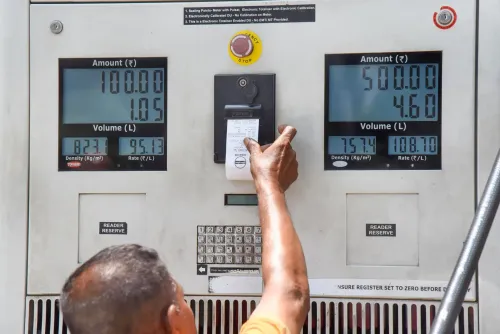
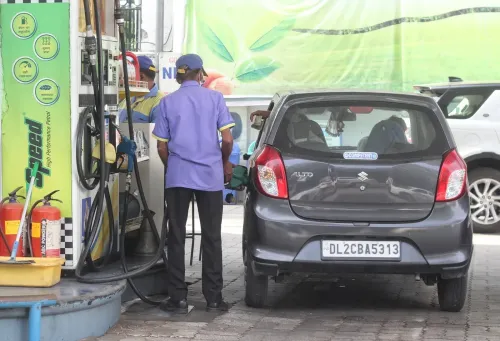
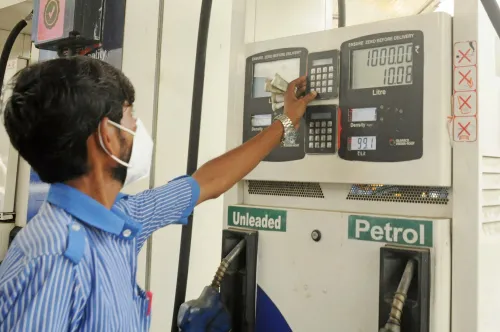
State-owned oil marketing companies (OMCs) are currently absorbing losses of ₹550 crore per day on the sale of petrol, diesel, and LPG, refraining from passing on the full impact of surging global crude prices to domestic consumers, the Ministry of Petroleum and Natural Gas said on Wednesday, 27 May. The cushion has been put in place under government direction, triggered by price disruptions stemming from the West Asia crisis.
Who the subsidy is meant for
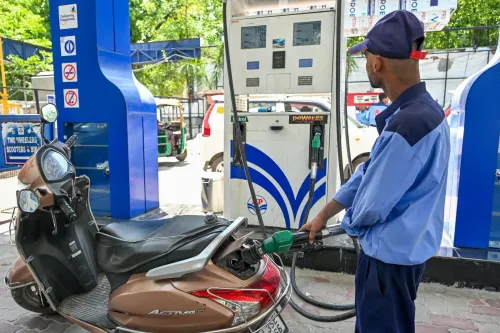
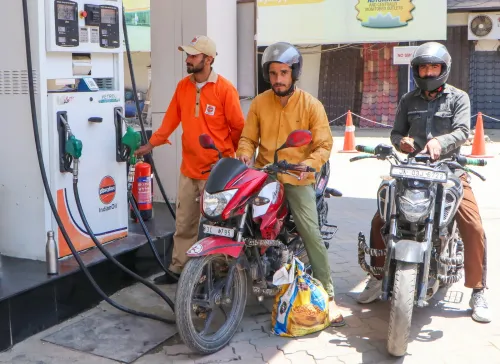
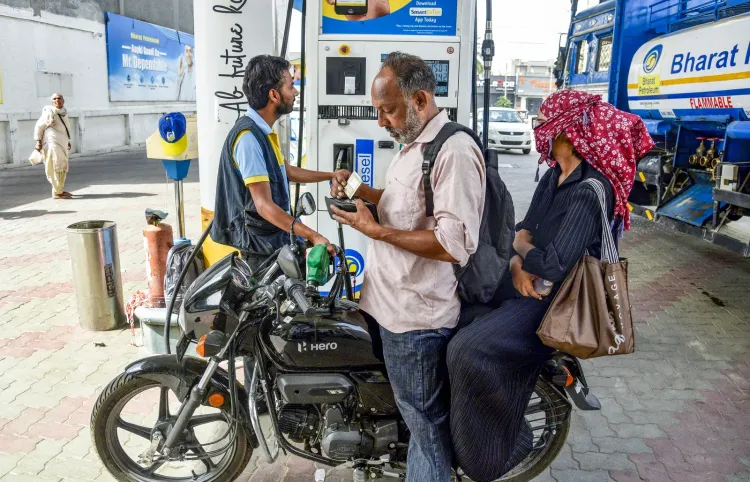
The ministry was explicit that this price protection is designed exclusively for retail consumers — households, two-wheeler commuters, and farmers purchasing at the pump. It does not extend to industrial procurement, where pricing tracks international benchmarks as a matter of standing policy. Officials warned that any industrial buyer routing purchases through retail outlets to capture the subsidised rate is effectively diverting a benefit meant for ordinary citizens.
Demand shift straining PSU retail outlets
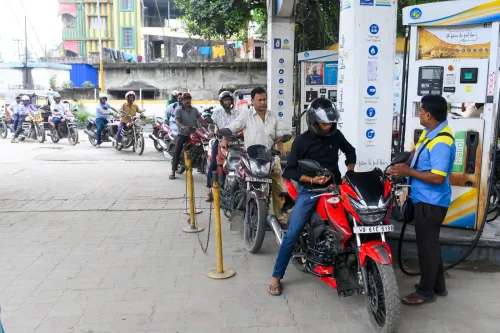
Private oil marketing companies have seen a decline of approximately 38 per cent in diesel offtake this month — across both retail outlets and bulk customers — owing to higher rates they have maintained. That volume, according to the ministry, is migrating entirely to PSU oil marketing retail outlets. Simultaneously, PSU bulk customer volumes have recorded a drop of approximately 29 per cent, with that demand also shifting to the retail channel. The combined effect is concentrating demand at public pumps in a manner that risks creating localised shortages where none would otherwise exist.
Government response and enforcement action
The Centre has taken a serious view of the diversion and has asked industry associations to alert their members about both the principle and the legal consequences of violations. States and Union Territories have been requested to form special squads to take strict action against bulk consumers and hoarders diverting petroleum products from retail channels, black marketing, and unauthorised stocking — under relevant provisions of the Essential Commodities Act and control orders issued thereunder.
India's refining capacity and supply position
The ministry moved to counter what it described as misinformation, stressing that there is no supply shortage of any kind. India is the world's fourth largest refiner, with an installed capacity of 258.1 million tonnes per annum across 22 operational refineries. Domestic consumption stood at 243.2 million tonnes in FY 2025-26, while petroleum product exports were 61.5 million tonnes in the same year, making India one of the largest exporters of refined products globally.
'The country has more than adequate supplies of petrol and diesel to meet every domestic need, retail and industrial alike,' the ministry's statement said. Citizens were urged to rely on official communication and disregard rumours that, in the ministry's words, 'mistake an arbitrage problem for a supply problem.'
Broader energy security architecture
The ministry noted that India's refining strength, disciplined operation of public sector OMCs, and active coordination across the Centre, states, and industry form the working architecture of energy security during this period. The government said it remains fully seized of the evolving international situation and will continue to monitor developments closely.
Point of View
But the more telling detail is the 38 per cent demand shift away from private OMCs to PSU retail outlets — a near-textbook arbitrage cascade. The government's subsidy architecture was designed for retail consumers, not as a backdoor discount for industrial buyers, and the Centre is right to invoke the Essential Commodities Act. What this episode also reveals is the structural tension in India's dual-track fuel pricing model: every time global prices spike and PSUs absorb the gap, the incentive to game the retail channel intensifies. Without a faster enforcement loop between the Centre and state squads, the subsidy bleeds out before it reaches the farmer at the pump it was designed for.
NationPress
28 Sept 2026
Frequently Asked Questions
Why are oil PSUs absorbing ₹550 crore in losses per day?
State-owned oil marketing companies are absorbing ₹550 crore in daily losses on petrol, diesel, and LPG because the government has directed them not to pass on the full increase in global crude prices to domestic consumers. The measure is a response to price disruptions caused by the West Asia crisis.
Who is entitled to the subsidised fuel price?
The subsidised retail price is intended exclusively for retail consumers — households, two-wheeler commuters, and farmers buying at the pump. Industrial procurement is priced at international benchmarks and is not covered by the subsidy.
Why are PSU retail pumps facing excess demand?
Private oil marketing companies have kept their rates higher, causing a roughly 38 per cent drop in their diesel offtake. That volume has shifted entirely to PSU retail outlets. PSU bulk customer volumes have also fallen about 29 per cent, adding further pressure on PSU retail pumps.
What action is the government taking against diversion and hoarding?
The Centre has asked industry associations to inform members about the consequences of violations and has requested states and Union Territories to form special squads. These squads are tasked with taking strict action against diversion, hoarding, black marketing, and unauthorised stocking under the Essential Commodities Act.
Is there a fuel shortage in India?
No. The Petroleum Ministry has stated there is no supply issue of any kind. India has 22 operational refineries with a capacity of 258.1 million tonnes per annum, and domestic consumption of 243.2 million tonnes in FY 2025-26 was well within that capacity. The ministry has described the situation as an arbitrage problem, not a supply problem.