Diesel hoarding curbed: Govt caps sales at 200L as OMCs bleed ₹500 crore daily
Synopsis
With retail diesel ₹40 cheaper than bulk rates, bulk buyers quietly flooded PSU pumps — and 80 districts saw diesel demand spike over 30%. The government's 90-day crackdown caps purchases at 200 litres and bars commercial buyers from retail outlets entirely, as OMCs bleed ₹500 crore a day to hold prices steady amid West Asia disruptions.
Key Takeaways
The Ministry of Petroleum and Natural Gas issued the Motor Spirit and High-Speed Diesel (Temporary Regulation of Supply through Retail Outlets) Order, 2026 on 12 June 2026 .
Retail diesel purchases are now capped at 200 litres per day per customer or vehicle; resale is prohibited.
Industrial and commercial consumers are barred from PSU retail outlets and must use designated consumer pumps .
Retail diesel is currently around ₹40 per litre cheaper than bulk diesel, driving the arbitrage that prompted the crackdown.
327 districts saw retail diesel sales rise more than 10% in May 2026; 80 districts recorded growth above 30% .
OMCs are absorbing losses of nearly ₹500 crore per day on petrol, diesel, and domestic LPG amid global energy disruptions.
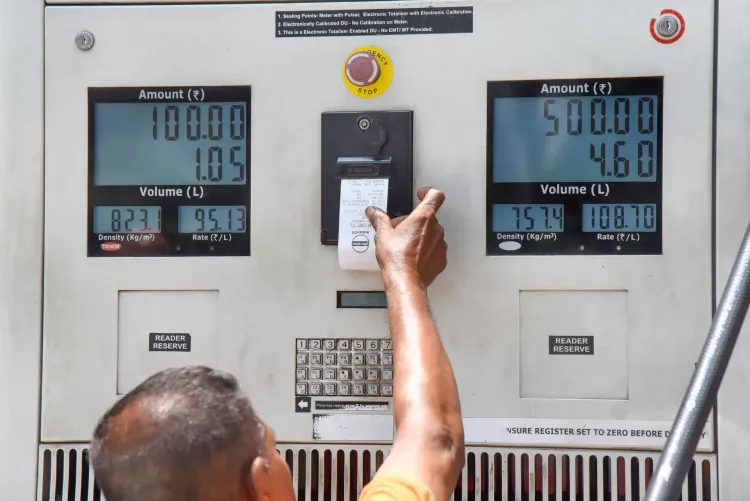
The Ministry of Petroleum and Natural Gas on Friday, 12 June 2026, introduced temporary restrictions on diesel sales at retail outlets to combat hoarding and black marketing, as public sector oil marketing companies (OMCs) absorb losses of nearly ₹500 crore per day on petrol, diesel, and domestic LPG. The curbs come amid a sharp and unusual surge in retail diesel demand driven by bulk consumers exploiting the price gap between retail and commercial supplies.
What the New Order Says
The 'Motor Spirit and High-Speed Diesel (Temporary Regulation of Supply through Retail Outlets) Order, 2026' caps diesel dispensed at retail pumps to a maximum of 200 litres per day per customer or vehicle, and only into vehicle fuel tanks or Petroleum and Explosives Safety Organisation (PESO)-approved containers. Resale of retail-purchased diesel is explicitly prohibited under the order.
Industrial, institutional, commercial, and direct consumers have been barred from sourcing diesel at retail outlets entirely. They must now procure supplies exclusively through designated consumer pumps. The restrictions are initially valid for up to 90 days.
Why the Government Acted
Retail diesel is currently priced around ₹40 per litre cheaper than bulk diesel, as PSU OMCs have held retail prices steady despite elevated global energy costs linked to ongoing disruptions in West Asia. This differential created a powerful arbitrage incentive: bulk consumers shifted purchases to PSU fuel stations in large volumes, straining retail supply chains.
The ministry confirmed that instances of large-quantity diesel procurement in jerry cans and subsequent resale had come to its notice — a direct trigger for the intervention. Notably, this is a structural risk that emerges whenever retail fuel prices are administratively suppressed relative to market rates for extended periods.
The Data Behind the Crackdown
Diesel sales data for May 2026 revealed a striking pattern: 327 districts reported growth of more than 10% in PSU retail diesel sales compared with the same period last year, while 80 districts recorded growth exceeding 30%. The demand spike was not organic — it mirrored a simultaneous collapse in private OMC volumes.
Private oil marketing companies reported a 58% decline in high-speed diesel (HSD) sales during May, a direct consequence of their higher pricing relative to PSU peers. The divergence underscores how price-controlled public sector fuel stations were effectively absorbing demand meant for the commercial market.
OMC Losses and Consumer Shield
According to the government, public sector fuel retailers are currently sustaining combined daily losses of approximately ₹500 crore across petrol, diesel, and domestic LPG — a deliberate policy choice to protect households, farmers, and small businesses from global price volatility. The cumulative strain on OMC balance sheets, if sustained over the full 90-day order period, could exceed ₹45,000 crore.
Enforcement and What Comes Next
OMCs and retail outlet dealers have been made directly responsible for compliance and for preventing circumvention of the order. State governments and Union Territories have been directed to take action against black marketing and unauthorised diversion of subsidised fuel. The Centre has not yet indicated whether retail fuel prices will be revised upward once the 90-day window closes, or whether the order will be extended.
Point of View
Not a cure. Every time the Centre suppresses retail fuel prices in response to global shocks, it creates the same arbitrage gap — and the same hoarding cycle follows. The ₹40-per-litre differential between retail and bulk diesel is not a minor inefficiency; it is an open invitation to diversion at scale, as the May district-level data makes plain. The deeper question the government has not answered is what happens at Day 91: will prices be revised upward, or will OMC losses — potentially crossing ₹45,000 crore over the order period — simply be absorbed and recapitalised through the budget? India has repeatedly deferred that reckoning, and each deferral makes the next price correction more politically costly.
NationPress
25 Sept 2026
Frequently Asked Questions
What is the new diesel sales restriction order issued by the government?
The 'Motor Spirit and High-Speed Diesel (Temporary Regulation of Supply through Retail Outlets) Order, 2026', issued on 12 June 2026, caps diesel purchases at retail outlets to 200 litres per day per customer or vehicle and prohibits resale. The order is initially valid for 90 days and bars industrial and commercial consumers from buying diesel at PSU retail pumps.
Why did the government restrict diesel sales at retail outlets?
Bulk consumers had been shifting purchases to cheaper PSU retail pumps, exploiting a ₹40-per-litre price gap between retail and bulk diesel. This triggered a surge in retail diesel demand — up more than 30% in 80 districts in May 2026 — and prompted instances of large-scale jerry-can procurement and resale, which the government moved to stop.
How much are oil marketing companies losing on fuel sales?
Public sector OMCs are currently absorbing losses of approximately ₹500 crore per day across petrol, diesel, and domestic LPG, according to the government. The losses reflect a deliberate policy to shield consumers from elevated global energy prices linked to disruptions in West Asia.
Who is affected by the new diesel order?
Industrial, institutional, commercial, and direct bulk consumers are most directly affected — they can no longer buy diesel at retail outlets and must use designated consumer pumps. Retail consumers and farmers buying for vehicle tanks or PESO-approved containers are permitted to continue purchasing, subject to the 200-litre daily cap.
What happens if the order is violated?
OMCs and retail outlet dealers are responsible for enforcing compliance. State governments and Union Territories have been directed to act against black marketing and unauthorised diversion of subsidised fuel. The order does not specify penalties in the publicly available details, but existing petroleum laws govern violations.