India-Italy ties enter demanding new phase amid EU trade deal push
Synopsis
India and Italy have quietly built one of South Asia's more structured European partnerships — Special Strategic Partnership, a €20 billion trade target, IMEC alignment, and now a Track 1.5 dialogue in Rome. The architecture is in place; the question, as analysts at John Cabot University framed it, is whether this framework can deliver concrete results before the 80th anniversary of diplomatic ties in 2027.
Key Takeaways
India and Italy are now operating under a Special Strategic Partnership with a Joint Action Plan running through 2029 , upgraded during PM Modi's visit to Italy in May 2026 .
The first Italy–India Track 1.5 Dialogue was held at John Cabot University in Rome , attended by India's Ambassador Vani Rao .
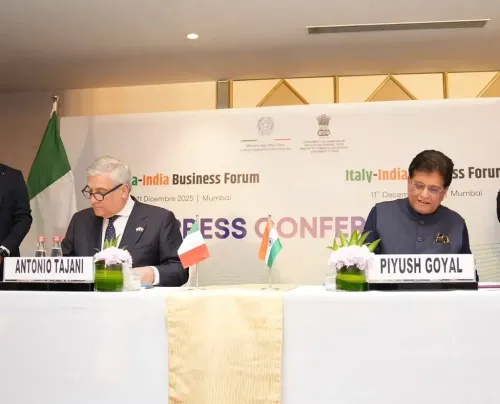
A stated bilateral trade target of €20 billion has been set, but non-tariff barriers and regulatory divergence remain key obstacles.
Defence ties now cover personnel exchanges, procurement, R&D , and industrial partnerships, alongside naval cooperation.
The India–Middle East–Europe Economic Corridor (IMEC) is a shared strategic interest, linking India's Indo-Pacific reach with Italy's Mediterranean position.
The 80th anniversary of diplomatic relations in 2027 is seen as a milestone to consolidate further progress.
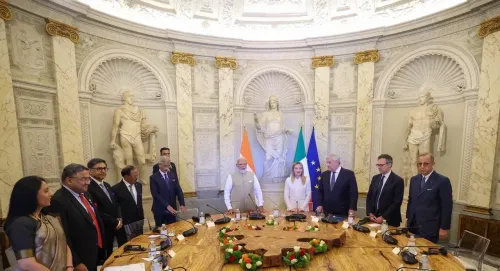
India and Italy are entering a more demanding phase of their bilateral relationship, according to a report by Decode39, even as Brussels accelerates the signature of a long-negotiated trade agreement between India and the European Union (EU). The shift comes as the two nations now operate under a Special Strategic Partnership framework, with a structured action plan running through 2029 and a stated trade target of €20 billion.
Track 1.5 Dialogue Marks a New Chapter
The Guarini Institute for Public Affairs at John Cabot University (JCU) in Rome recently hosted the first-ever Italy–India Track 1.5 Dialogue — a semi-official forum bringing together government-adjacent voices and policy analysts. India's Ambassador to Italy, Vani Rao, attended the event's public segment. Discussions were held under the Chatham House Rule, focusing on how the relationship has evolved and what remains to be done ahead of the 80th anniversary of diplomatic ties in 2027.
The dialogue format itself signals a maturation in the relationship — Track 1.5 exercises are typically reserved for partnerships where governments want candid, structured analysis beyond formal diplomatic channels.
Economic Potential Outpaces Infrastructure
A central finding of the Decode39 report is that the economic relationship between India and Italy carries potential that its current institutional infrastructure cannot yet fully support. Financial institutions have been identified as having a greater role to play in facilitating commerce, while non-tariff barriers and regulatory divergence continue to obstruct deeper integration.
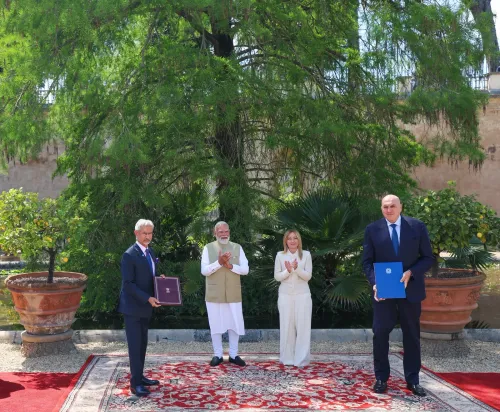
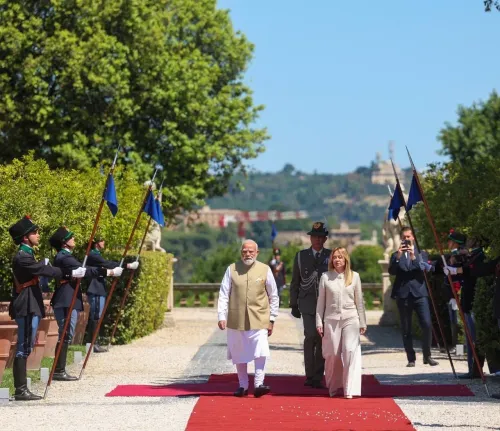
India and Italy established a Strategic Partnership in 2023, adopted a Joint Strategic Action Plan for 2025–2029 in 2024, and upgraded to a Special Strategic Partnership during Prime Minister Narendra Modi's visit to Italy in May 2026. A Foreign Ministers-led mechanism has since been set up to monitor implementation of the Action Plan.
Defence and Maritime Cooperation Deepening
Defence ties have also evolved substantially, now encompassing personnel exchanges, procurement, research and development, and industrial partnerships, in addition to naval visits and joint training activities. Geographically, India and Italy sit on opposite ends of a maritime corridor connecting the Indo-Pacific, the Middle East, and Europe — making the protection of those sea routes a shared economic and security interest.
The India–Middle East–Europe Economic Corridor (IMEC) is central to this alignment. For Italy, IMEC bridges its growing Indo-Pacific engagement with its traditional Mediterranean projection. For India, the corridor offers another channel into European markets through the Gulf.
Modi and Meloni Exchange Diplomatic Signals
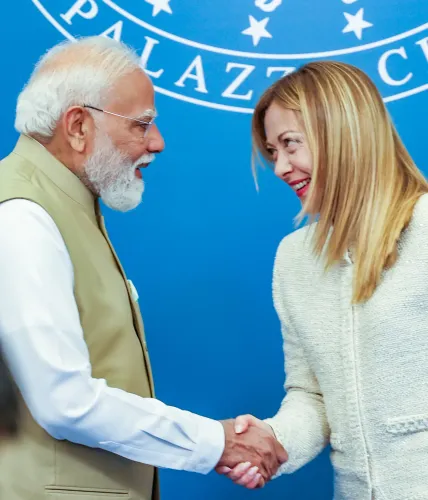
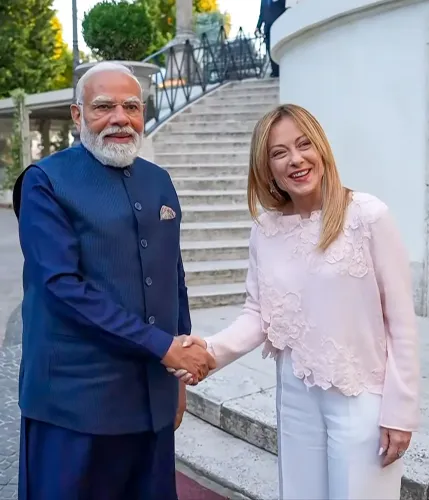
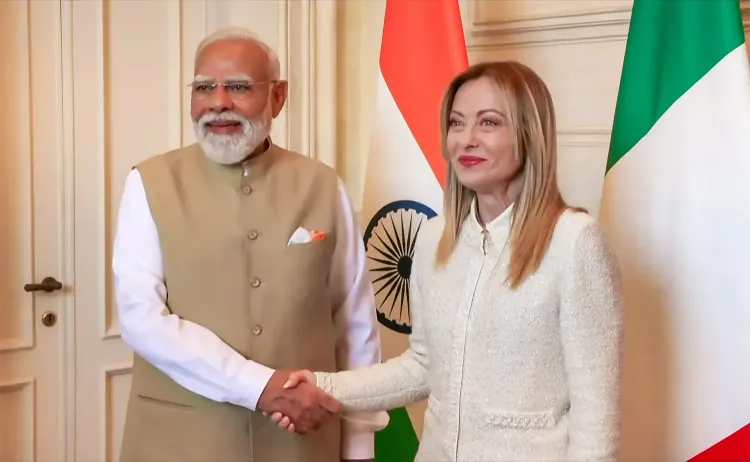
The personal rapport between the two leaders has reinforced the institutional momentum. On 17 September, Italian Prime Minister Giorgia Meloni wished PM Modi on his 76th birthday, saying both nations continue to strengthen their 'deep bond of friendship' and build a future of cooperation and prosperity together. Modi thanked Meloni for her warm wishes and said he looks forward to close bilateral cooperation.
Earlier this month, PM Modi also congratulated Meloni on becoming the longest-serving Prime Minister in Italy's postwar history. Meloni, in response, said ties between the two nations are 'right now stronger than ever before,' adding that the Special Strategic Partnership 'is the recognition of the importance of this bond and of the will to unite the expertise of our Nations to create new opportunities for growth.'
What Comes Next
The Guarini Institute has signalled plans to scale up the Track 1.5 initiative with a larger event at John Cabot University in 2026. Meanwhile, the 2027 anniversary year — which also marks a year dedicated to cultural tourism between the two nations — is expected to provide a further platform to broaden the partnership's foundations.
As Emanuele Rossi wrote in the Decode39 report, the challenge now is to 'turn this architecture into results' — moving beyond commemorations and affirmations to define what, in practice, a Special Strategic Partnership can actually deliver.
Point of View
A multi-year action plan, a Track 1.5 forum — but paperwork is not policy delivery. The €20 billion trade target remains aspirational while non-tariff barriers and regulatory divergence continue to frustrate business on both sides. Italy's role in IMEC is strategically logical, but the corridor itself is still more concept than construction. The 80th anniversary in 2027 will be an opportunity, but it risks becoming another commemorative milestone unless the Foreign Ministers-led implementation mechanism produces auditable outcomes before then.
NationPress
20 Sept 2026
Frequently Asked Questions
What is the current status of India-Italy bilateral ties?
India and Italy have elevated their relationship to a Special Strategic Partnership, first established as a Strategic Partnership in 2023 and upgraded during PM Modi's visit to Italy in May 2026. A Joint Strategic Action Plan covering 2025–2029 is now in place, monitored by a Foreign Ministers-led mechanism.
What is the Italy–India Track 1.5 Dialogue?
It is a semi-official policy forum organised by the Guarini Institute for Public Affairs at John Cabot University in Rome, designed to analyse how India-Italy ties have evolved. The first edition was held recently, with India's Ambassador Vani Rao attending the public segment; discussions were held under the Chatham House Rule.
What role does IMEC play in India-Italy relations?
The India–Middle East–Europe Economic Corridor (IMEC) is a shared strategic interest for both nations. For Italy, it connects its growing Indo-Pacific engagement with its traditional Mediterranean projection, while for India it offers an additional route to European markets through the Gulf.
What are the main obstacles to deeper India-Italy economic integration?
Non-tariff barriers and regulatory divergence are the primary obstacles, according to the Decode39 report. Financial institutions have also been identified as underperforming their potential role in facilitating commerce between the two countries.
What is planned for India-Italy ties in 2027?
2027 marks the 80th anniversary of diplomatic relations between India and Italy, and will also be a year dedicated to cultural tourism between the two nations. The Guarini Institute has signalled plans to host a larger Track 1.5 initiative at John Cabot University ahead of that milestone.