India-Maldives FTA: First round of talks concluded, bilateral trade up 13.54%
Synopsis
India and the Maldives have wrapped up the first round of FTA talks after eight technical sessions, with broad convergence reached across key policy areas. With bilateral trade already up 13.54% to $771.76 million, the FTA — if concluded — could significantly deepen one of South Asia's most strategically important economic partnerships at a milestone 60-year diplomatic juncture.
Key Takeaways
India and the Maldives concluded the first round of FTA negotiations on 14 July , covering eight policy areas across eight technical sessions .
Bilateral trade rose 13.54% to $771.76 million in 2025–26 , up from $679.70 million in 2024–25 .
India is the second-largest trading partner of the Maldives.
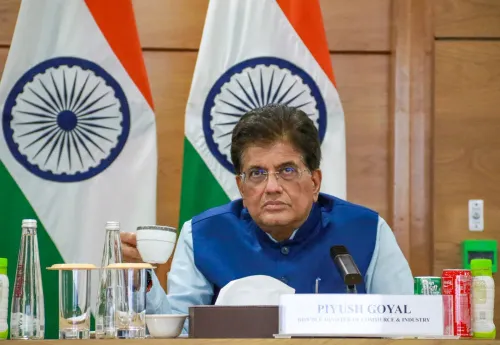
Commerce Minister Piyush Goyal met Maldivian counterpart Mohamed Saeed last week to review progress on the FTA and a Bilateral Investment Treaty (BIT) .
Both sides also agreed to expand cooperation in tourism, startups, digital payments , and MSMEs .
The two countries are marking 60 years of diplomatic relations, with economic integration at the centre of renewed engagement.
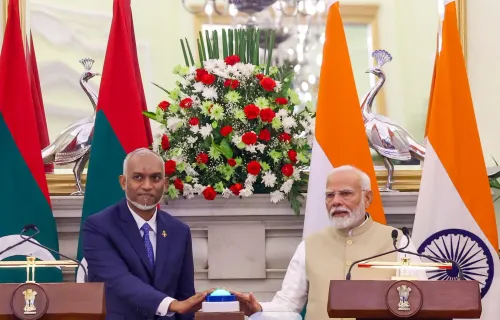
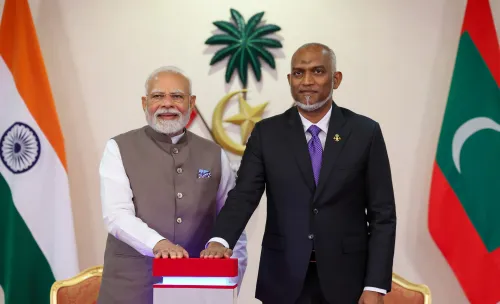
India and the Maldives have successfully concluded the first round of negotiations for a Free Trade Agreement (FTA), the Commerce Ministry announced on Tuesday, 14 July, marking a significant step toward deepening bilateral trade and investment ties. The two nations are also working to expedite a Bilateral Investment Treaty (BIT) as they mark 60 years of diplomatic relations.
Key Developments from the First Round
Negotiating teams from both countries held eight technical sessions, engaging in text-based discussions across eight policy areas. According to a Commerce Ministry statement, both sides made substantive progress across all negotiating tracks and reached broad convergence on several issues.
India's delegation was led by Chief Negotiator Ujjwal Kumar Ghosh, Joint Secretary, Department of Commerce. The Maldivian side was represented by its Chief Negotiator Yusuf Riza.
Bilateral Trade on the Rise
India is currently the second-largest trading partner of the Maldives. Bilateral trade between the two countries reached $771.76 million in 2025–26, up from $679.70 million in 2024–25 — a growth of 13.54%. The proposed FTA is expected to further accelerate this trajectory by enhancing market access and facilitating greater investment flows.
What the Ministers Agreed
Last week, Commerce Minister Piyush Goyal met his Maldivian counterpart, Mohamed Saeed, Minister of Economic Development, Transport and Trade of the Maldives. The two ministers reviewed ongoing bilateral economic initiatives, including the FTA negotiations, and reaffirmed their commitment to conclude both the FTA and the BIT expeditiously.
They also agreed to deepen cooperation in tourism, startups, digital payments, MSMEs, and broader trade to unlock new economic opportunities for both nations.
What the FTA Is Expected to Deliver
The Commerce Ministry described the proposed agreement as a 'broad-based, balanced and comprehensive' deal guided by the principles of fairness and reciprocity. It is expected to strengthen bilateral economic relations by enhancing market access, facilitating investment, promoting economic cooperation, and contributing to sustainable growth in both countries.
Notably, the FTA push comes at a diplomatically significant moment — as the two neighbours mark six decades of formal ties, economic integration is emerging as a central pillar of their relationship. With the first round completed and broad convergence achieved, both sides are now expected to move into deeper text-finalisation in subsequent rounds.
Point of View
And following a period of notable strain in bilateral relations. Trade numbers are moving in the right direction, but the real test lies in what the FTA's market-access provisions actually offer Maldivian exporters, given the asymmetry in economic size. A deal weighted too heavily toward Indian exports risks political backlash in Malé. The inclusion of digital payments, startups, and MSMEs in the cooperation agenda signals that both sides are trying to build a modern economic architecture — but the BIT, which remains unfinished, is arguably as important as the FTA for unlocking investment confidence.
NationPress
13 Oct 2026
Frequently Asked Questions
What is the India-Maldives Free Trade Agreement (FTA)?
The India-Maldives FTA is a proposed trade deal aimed at enhancing market access, facilitating investment, and deepening economic cooperation between the two countries. The first round of negotiations was concluded on 14 July, covering eight policy areas across eight technical sessions.
How much bilateral trade do India and the Maldives conduct?
Bilateral trade between India and the Maldives stood at $771.76 million in 2025–26, up from $679.70 million in 2024–25 — a growth of 13.54%. India is currently the second-largest trading partner of the Maldives.
Who led the FTA negotiations from both sides?
India's negotiating team was led by Chief Negotiator Ujjwal Kumar Ghosh, Joint Secretary, Department of Commerce. The Maldivian delegation was headed by its Chief Negotiator Yusuf Riza.
What did Commerce Minister Piyush Goyal and his Maldivian counterpart agree on?
Commerce Minister Piyush Goyal and Maldivian Minister Mohamed Saeed reviewed the FTA and Bilateral Investment Treaty (BIT) progress and reaffirmed commitment to conclude both agreements expeditiously. They also agreed to deepen cooperation in tourism, startups, digital payments, and MSMEs.
What is the significance of the 60-year diplomatic milestone for the FTA?
India and the Maldives are marking 60 years of formal diplomatic relations, during which both sides have reaffirmed their commitment to accelerating the FTA and BIT. The milestone has lent political momentum to economic integration efforts between the two neighbours.