India medical device industry to hit $250 billion by 2047: FICCI-DUA report
Synopsis
A FICCI-DUA White Paper released at India Medical Device 2026 projects India's $14 billion medical device sector will hit $250 billion by 2047 — but flags that manufacturing alone won't get it there. The report's central argument: a world-class servicing and maintenance ecosystem is as critical as production, and India currently lacks one.
Key Takeaways
India's medical device sector, currently valued at $14 billion , is projected to reach $30–50 billion this decade and $250 billion by 2047 .
The FICCI-DUA White Paper was released on 7 August 2025 at the India Medical Device 2026 event organised by the Department of Pharmaceuticals .
Growth drivers include rising healthcare demand, the PLI Scheme , the Medical Devices Industry Scheme , and India's MedTech hub ambitions.
The report proposes a risk-tiered hybrid maintenance framework anchored in the CDSCO device classification system.
Recommendations include a national certification architecture for service engineers and wider adoption of predictive maintenance and digital lifecycle management.
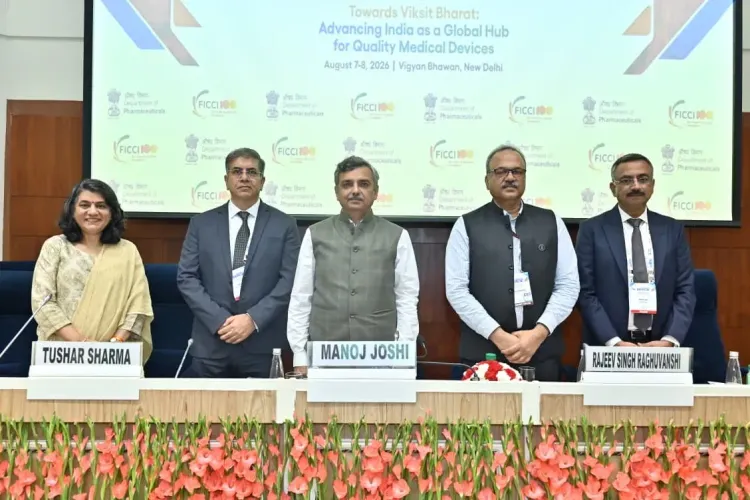
India's medical device industry, currently valued at around $14 billion, is projected to reach $250 billion by 2047, according to a FICCI-DUA White Paper released on 7 August 2025 during the inaugural session of 'India Medical Device 2026', organised by the Department of Pharmaceuticals in association with FICCI in New Delhi. The report charts a comprehensive roadmap for building a safe, transparent, and sustainable medical equipment maintenance ecosystem in the country.
Projected Growth Trajectory
The White Paper, titled 'Service and Maintenance of Medical Equipment in Indian Healthcare – Towards a Safe, Reliable and Sustainable Medical Device Maintenance Ecosystem', projects that India's medical device sector will reach $30–50 billion within this decade before scaling to $250 billion by the centenary of India's independence. Key growth drivers identified include rising healthcare demand, accelerating adoption of advanced medical technologies, government support for indigenous manufacturing, and India's ambition to become a global MedTech hub.
Role of Government Schemes
According to the White Paper, India has made measurable progress through initiatives such as the Production Linked Incentive (PLI) Scheme and the strengthening of the Medical Devices Industry Scheme, both of which have bolstered domestic manufacturing capabilities and improved the country's global competitiveness. Notably, these schemes are credited with laying the foundation for a more self-reliant medical device supply chain — a priority that gained urgency during the COVID-19 pandemic, when import dependency exposed critical vulnerabilities.
The Maintenance Gap
The report stresses, however, that manufacturing alone will not sustain sectoral growth. It argues that the value of medical technologies extends well beyond procurement and depends on reliable servicing throughout their operational lifecycle. Proper maintenance, the paper notes, improves patient safety, enhances clinical effectiveness, reduces equipment downtime, extends equipment life, and optimises healthcare investments — a dimension that has historically received far less policy attention than manufacturing.
Key Recommendations
To address the maintenance gap, the White Paper proposes a risk-tiered hybrid maintenance framework anchored in the Central Drugs Standard Control Organisation (CDSCO) device classification system. It recommends maintenance protocols based on device risk categories, the creation of a national certification architecture for service engineers, strengthened technical training, commercial model innovation, and rationalisation of the fiscal framework to promote compliant maintenance practices. The report also advocates wider adoption of digital technologies — including predictive maintenance, digital monitoring, and lifecycle management systems — to improve equipment reliability and minimise downtime.
What This Means for Indian Healthcare
Medical equipment today forms the backbone of modern healthcare, supporting timely diagnosis, emergency response, surgeries, and advanced treatment, the report observes. As India scales its hospital infrastructure — particularly in Tier 2 and Tier 3 cities — a world-class servicing ecosystem will be as critical as the devices themselves. The FICCI-DUA roadmap, if adopted, could set the regulatory and commercial architecture for the next two decades of MedTech growth in India.
Point of View
But the report's more substantive contribution is its diagnosis of the maintenance gap — an unglamorous problem that rarely makes it into policy speeches. India's MedTech ambitions have largely been framed around manufacturing; the FICCI-DUA paper is a corrective, arguing that a device that breaks down and stays broken is worse than no device at all. The CDSCO-anchored maintenance framework and national certification architecture for service engineers are concrete proposals, but their success will depend on regulatory will and industry buy-in that past healthcare reform efforts have often failed to sustain. The sector's growth story is real, but the distance between a projected number and a delivered ecosystem is where India's policy execution has historically stumbled.
NationPress
22 Sept 2026
Frequently Asked Questions
What is the FICCI-DUA White Paper on medical devices?
It is a consulting white paper titled 'Service and Maintenance of Medical Equipment in Indian Healthcare – Towards a Safe, Reliable and Sustainable Medical Device Maintenance Ecosystem', released on 7 August 2025 at the India Medical Device 2026 event in New Delhi. It projects India's medical device market growing from $14 billion today to $250 billion by 2047 and lays out a roadmap for building a world-class servicing ecosystem.
Why is India's medical device sector expected to grow so rapidly?
According to the White Paper, key drivers include rising healthcare demand, increased adoption of advanced medical technologies, government support through the PLI Scheme and the Medical Devices Industry Scheme, and India's stated ambition to become a global MedTech hub. These factors are expected to push the sector to $30–50 billion within this decade.
What is the risk-tiered hybrid maintenance framework proposed in the report?
It is a maintenance model anchored in the CDSCO device classification system, under which maintenance protocols are assigned based on the risk category of each device. The framework also recommends a national certification architecture for service engineers, stronger technical training, and adoption of predictive maintenance and digital lifecycle management tools.
Who organised the India Medical Device 2026 event?
The event was organised by the Department of Pharmaceuticals in association with FICCI. The White Paper was released during its inaugural session in New Delhi on 7 August 2025.
Why does the report emphasise maintenance alongside manufacturing?
The report argues that the value of medical technologies extends well beyond procurement and depends on reliable servicing throughout their operational lifecycle. Proper maintenance improves patient safety, reduces equipment downtime, extends device life, and optimises healthcare investments — areas the report says have received insufficient policy attention compared to manufacturing.