India has 4 navigation satellites in orbit; ISRO plans 5 more launches this FY

Synopsis
India now has the minimum four navigation satellites needed for basic PNT services — but ISRO chief V. Narayanan says seven are needed for full accuracy. With NVS-03 deployed and five more launches planned this financial year, including the pivotal uncrewed Gaganyaan G flight, India is racing toward both a sovereign GPS and its first human spaceflight within a single fiscal window.
Key Takeaways
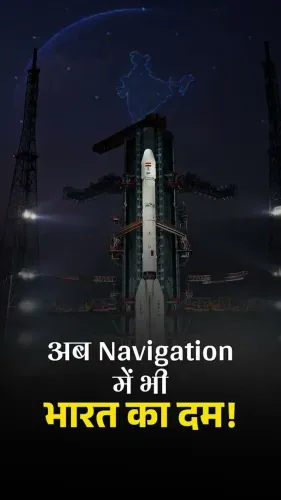
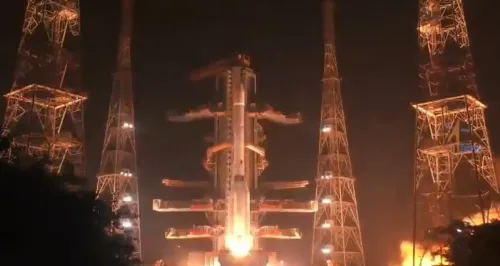
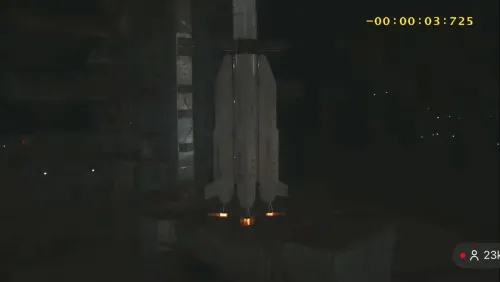
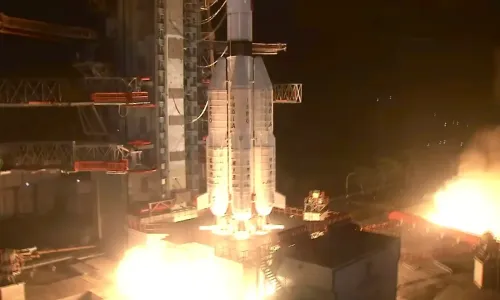
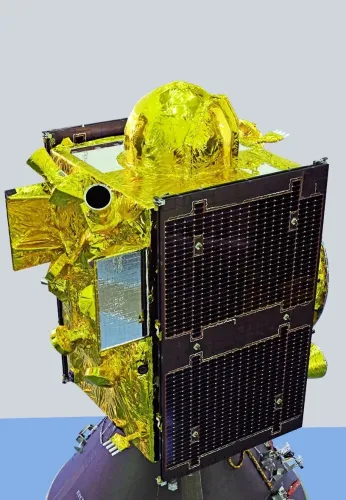
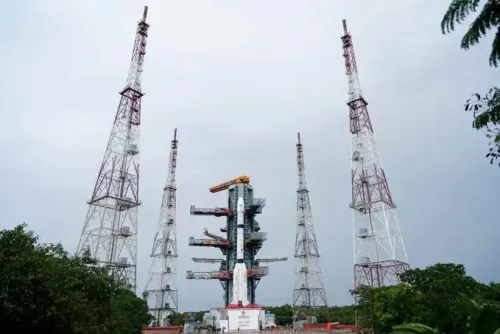
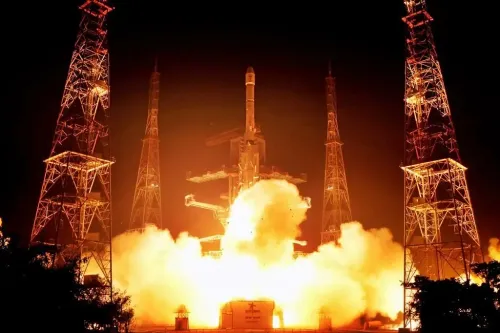
ISRO's GSLV-F18 successfully deployed the NVS-03 navigation satellite on 31 October 2026 from Sriharikota .
India now has four navigation satellites in orbit — the minimum required for basic PNT services; a full constellation needs seven .
Narayanan has announced at least five more launches before the end of the financial year, including the uncrewed Gaganyaan G mission.
The launch slate also includes at least two PSLV missions , two SSLVs , and one private-sector launch .
More than 8,000 tests have been completed for the Gaganyaan programme; three uncrewed missions must succeed before astronauts are sent to orbit.
Two additional NavIC satellites are in the final stages of preparation, with a seventh pending approval.
ISRO on 31 October 2026 successfully deployed the NVS-03 navigation satellite into its intended orbit aboard the GSLV-F18 rocket from Sriharikota, bringing India's active navigation satellite count to four. ISRO Chairman V. Narayanan hailed the mission's precision and announced an ambitious slate of at least five more launches before the end of the current financial year.
NavIC Constellation: Where India Stands
With NVS-03 now in orbit, India's NavIC (Navigation with Indian Constellation) system meets the minimum operational threshold. 'For enhanced PNT — Positioning, Navigation and Timing — services, a minimum of four satellites are required, and with today's launch, we now have four satellites in orbit,' Narayanan said after the successful deployment.
However, the ISRO chief underlined that four is a floor, not a ceiling. 'To ensure uninterrupted services and highly accurate positioning, we need a constellation of seven satellites in orbit,' he said. Two additional satellites are reportedly in the final stages of preparation, while regulatory approval for a seventh is in process. Once complete, India will join a select group of nations — including the US (GPS), Russia (GLONASS), China (BeiDou), and the European Union (Galileo) — that operate their own sovereign navigation constellations.
Five More Launches Targeted This Financial Year
Narayanan outlined a packed launch calendar for the remainder of the financial year. 'Our target is to carry out five more launches during this financial year, including the uncrewed Gaganyaan G mission. In addition, we plan to launch at least two PSLV missions and two Small Satellite Launch Vehicles (SSLVs). We are also planning one private-sector launch. Overall, we are looking at six launches, but completing at least five missions remains our primary objective,' he said.
This comes amid India's broader push to scale up its annual launch cadence and capture a larger share of the global commercial satellite market, where competitors including SpaceX have significantly compressed launch costs.
Gaganyaan: Over 8,000 Tests Completed
The centrepiece of the upcoming schedule is the Gaganyaan G uncrewed mission — one of three mandatory crewless flights that must succeed before Indian astronauts, referred to as Gaganyatris, can be sent to orbit aboard an indigenous launch vehicle. 'Gaganyaan is a highly prestigious, technologically intensive and important programme,' Narayanan emphasised, adding that more than 8,000 tests have already been completed.
Narayanan stressed that astronaut safety is the agency's overriding priority. 'The safety of our Gaganyatris is of utmost importance. Therefore, our current focus is on the uncrewed missions first,' he said. Teams at IPRC and BSSE have completed the launch vehicle assembly and are simultaneously contributing to software development for the service module and crew module, according to Narayanan.
Significance for India's Space Ambitions
The NVS-03 deployment and the Gaganyaan pipeline together represent two parallel tracks of India's space strategy: building sovereign infrastructure for everyday civilian and defence applications, and demonstrating human spaceflight capability. A fully operational seven-satellite NavIC constellation would reduce India's dependence on US GPS signals for critical services including precision agriculture, disaster response, and defence navigation.
Narayanan indicated that the programme is progressing well and expressed confidence in achieving the crewed Gaganyaan milestone 'in the near future,' citing the Prime Minister's guidance as an enabler. With the financial year ending in March 2027, the next several months will be a defining test of ISRO's execution capability on multiple fronts simultaneously.
Frequently Asked Questions
What is the NVS-03 satellite and why does it matter?
NVS-03 is the latest addition to India's NavIC navigation satellite system, deployed on 31 October 2026 by the GSLV-F18 rocket from Sriharikota. Its launch brings India's operational navigation satellite count to four — the minimum needed for basic Positioning, Navigation and Timing (PNT) services.
How many navigation satellites does India need for a full constellation?
ISRO Chairman V. Narayanan has stated that seven satellites are required for uninterrupted and highly accurate positioning. Two more are in the final stages of preparation and a seventh is awaiting approval, which would complete the NavIC constellation.
What is the Gaganyaan G mission?
Gaganyaan G is an uncrewed test flight that is part of India's human spaceflight programme. ISRO must successfully complete three crewless missions before sending Indian astronauts — called Gaganyatris — into orbit using an indigenous launch vehicle.
What other launches has ISRO planned for this financial year?
Beyond the Gaganyaan G mission, ISRO plans at least two PSLV missions, two Small Satellite Launch Vehicle (SSLV) missions, and one private-sector launch before the end of the financial year. The agency's primary objective is completing at least five of the planned six missions.
How does NavIC compare to GPS and other global navigation systems?
NavIC is India's indigenous counterpart to systems such as the US GPS, Russia's GLONASS, China's BeiDou, and the European Galileo. A completed seven-satellite NavIC constellation would give India sovereign navigation capability, reducing dependence on foreign systems for defence, disaster response, and precision agriculture applications.