India-Switzerland trade ties deepen after TEPA launch, Modi eyes key exports
Synopsis
India and Switzerland are cashing in on TEPA — India's first-ever FTA with a European economic bloc — signed into force in October 2025. With PM Modi personally stressing outcomes over optics at a joint press conference with Swiss President Parmelin, the bilateral agenda now covers AI, defence, nuclear energy, and supply chains, far beyond the traditional finance-and-watchmaking relationship.
Key Takeaways
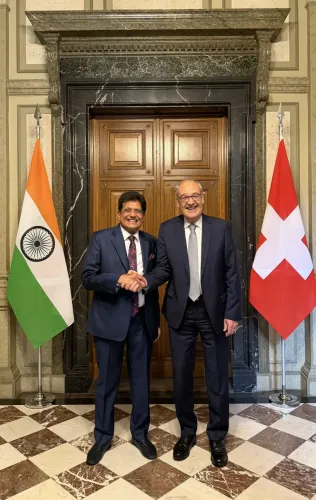
Commerce Secretary Rajesh Agarwal on 6 October 2026 confirmed India and Switzerland are deepening economic partnership across trade, investment, and technology.
India and the four EFTA nations — Switzerland, Iceland, Norway, Liechtenstein — implemented the Trade and Economic Partnership Agreement (TEPA) in October 2025 , India's first FTA with a European economic bloc.
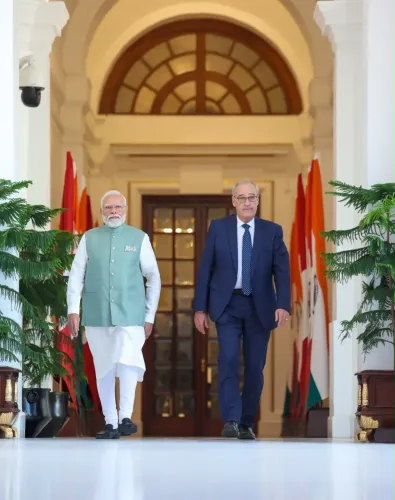
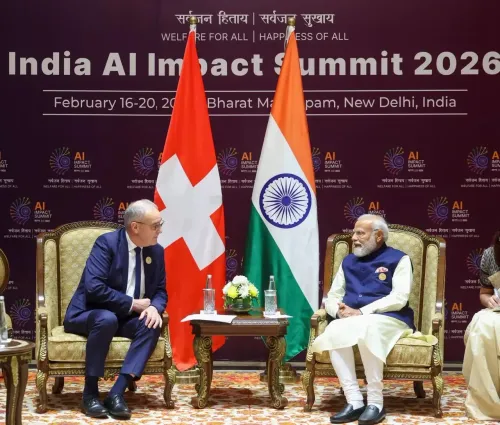
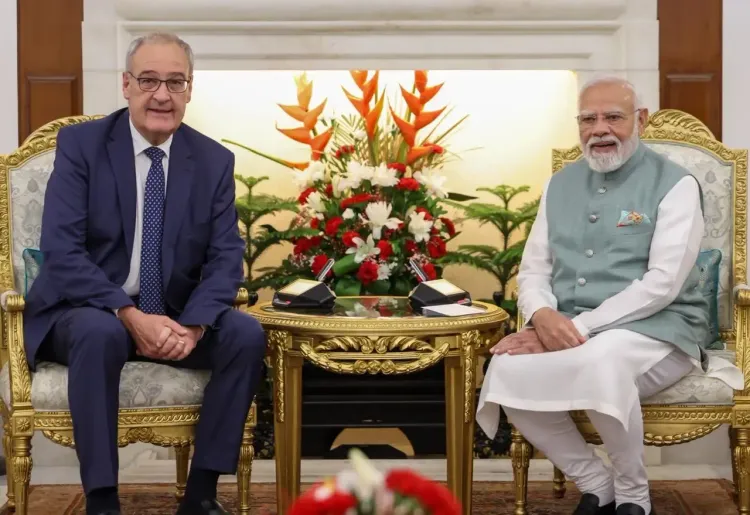
PM Modi and Swiss President Guy Parmelin met in New Delhi on Monday , with talks covering AI , defence production, nuclear energy, and people-to-people ties.
India aims to boost exports of agriculture, pharma, textiles, and engineering goods to Switzerland under the new framework.
Switzerland is expected to increase investment in Indian biotech, life sciences, banking, insurance, food processing, and sustainability sectors.
Commerce Secretary Rajesh Agarwal on Tuesday, 6 October 2026, said India and Switzerland are actively strengthening their economic partnership, with a focused push on expanding market access, facilitating investment, and deepening cooperation in infrastructure, technology, innovation, and supply chains. The remarks came as bilateral momentum builds following last year's landmark trade agreement between India and the European Free Trade Association (EFTA).
TEPA: India's First FTA with a European Bloc
Agarwal, in a post on X, highlighted that India and the four EFTA member nations — Switzerland, Iceland, Norway, and Liechtenstein — implemented the Trade and Economic Partnership Agreement (TEPA) in October 2025. He described it as India's first free trade agreement with a European economic bloc, calling it a framework designed to drive investment, innovation, jobs, and shared prosperity.
Notably, TEPA's implementation marks a structural shift in India's trade diplomacy — moving beyond Asia-focused FTAs toward a more expansive engagement with developed Western economies.
What PM Modi Said at the Joint Press Conference
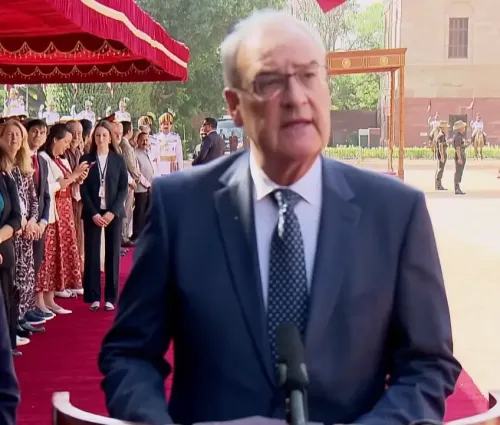
Earlier this week, Prime Minister Narendra Modi addressed a joint press conference in New Delhi with Swiss President Guy Parmelin following bilateral talks on Monday. Modi underscored the convergence of values between the two nations.
'India and Switzerland both believe in democratic values, rule of law, dialogue and diplomacy,' PM Modi said, adding that India has consistently supported meaningful efforts towards peace in Ukraine and West Asia.
He also outlined concrete trade decisions: 'We have taken several important decisions to enhance market access for India's exports in Switzerland and to further facilitate investment between the two countries. This will increase the export of India's agriculture, pharma, textile, and engineering goods to Switzerland. At the same time, we will attract new Swiss investment in India's important sectors such as biotech, life sciences, banking, insurance, food processing, and sustainability.'
Key Areas of Bilateral Cooperation
PM Modi and Swiss President Parmelin reviewed the full spectrum of bilateral ties during their New Delhi meeting. Their discussions spanned trade, investment, innovation, Artificial Intelligence (AI), military matters, defence production, nuclear energy, science and technology, and people-to-people ties.
The breadth of the agenda reflects the growing ambition of the bilateral relationship, which has traditionally centred on finance, watchmaking, and Swiss FDI into Indian manufacturing, but is now expanding into frontier sectors.
Commerce Secretary's Assessment
Agarwal noted that Prime Minister Modi has personally emphasised translating the growing India-Switzerland partnership into concrete outcomes in trade and investment. This framing of outcomes-over-optics signals a shift from earlier diplomatic engagements that produced broad statements without sector-specific deliverables.
This comes amid India's broader push to diversify its trade relationships and reduce dependence on any single bilateral corridor, a strategy that TEPA with EFTA directly serves.
What Comes Next
With TEPA now operational, the immediate focus will be on operationalising the market access gains for Indian exporters in agriculture, pharmaceuticals, textiles, and engineering goods, while creating enabling conditions to attract Swiss capital into biotech, life sciences, banking, and food processing. Industry bodies and trade facilitation agencies on both sides are expected to set up implementation working groups in the months ahead.
Point of View
Yet public attention has lagged behind its strategic weight. The agreement's real value lies not in its headline commitments but in whether sector-specific implementation follows — a gap that has plagued India's FTAs with ASEAN and South Korea. PM Modi's insistence on 'concrete outcomes' is the right framing, but concrete outcomes require credible dispute-resolution mechanisms and investment facilitation infrastructure that TEPA has yet to fully operationalise. The broadening of the agenda to AI, defence, and nuclear energy is notable — it suggests India is using bilateral summits as building blocks for a wider technology partnership with Europe, not merely trade photo-ops.
NationPress
6 Oct 2026
Frequently Asked Questions
What is TEPA, and why does it matter for India?
TEPA, or the Trade and Economic Partnership Agreement, is India's first free trade agreement with a European economic bloc, implemented in October 2025 with EFTA members Switzerland, Iceland, Norway, and Liechtenstein. It opens new channels for Indian exports in pharma, agriculture, textiles, and engineering goods while inviting Swiss and European investment into Indian high-growth sectors.
What did PM Modi and Swiss President Parmelin agree on during their New Delhi meeting?
PM Modi and Swiss President Guy Parmelin met in New Delhi on Monday and agreed on several decisions to enhance market access for Indian exports and facilitate investment between the two countries. Their talks also covered AI, defence production, nuclear energy, science and technology, and people-to-people ties.
Which Indian export sectors stand to gain from the India-Switzerland agreement?
Under the newly implemented framework, India aims to boost exports of agriculture, pharmaceuticals, textiles, and engineering goods to Switzerland. On the investment side, India seeks Swiss capital in biotech, life sciences, banking, insurance, food processing, and sustainability.
What is the significance of TEPA being India's first FTA with a European economic bloc?
TEPA marks a strategic pivot in India's trade diplomacy, extending its FTA network into Europe for the first time through the EFTA grouping. This signals India's intent to diversify trade relationships beyond Asia and the Gulf, tapping into Swiss and Nordic capital, technology, and markets.
What role did Commerce Secretary Rajesh Agarwal play in highlighting the agreement?
Commerce Secretary Rajesh Agarwal posted on X on 6 October 2026 to highlight the TEPA implementation and the growing India-Switzerland partnership. He noted that PM Modi has personally stressed translating the partnership into concrete outcomes in trade and investment.