Anurag Thakur: India Takes CWG 2030 Flag at Centenary Games
Synopsis
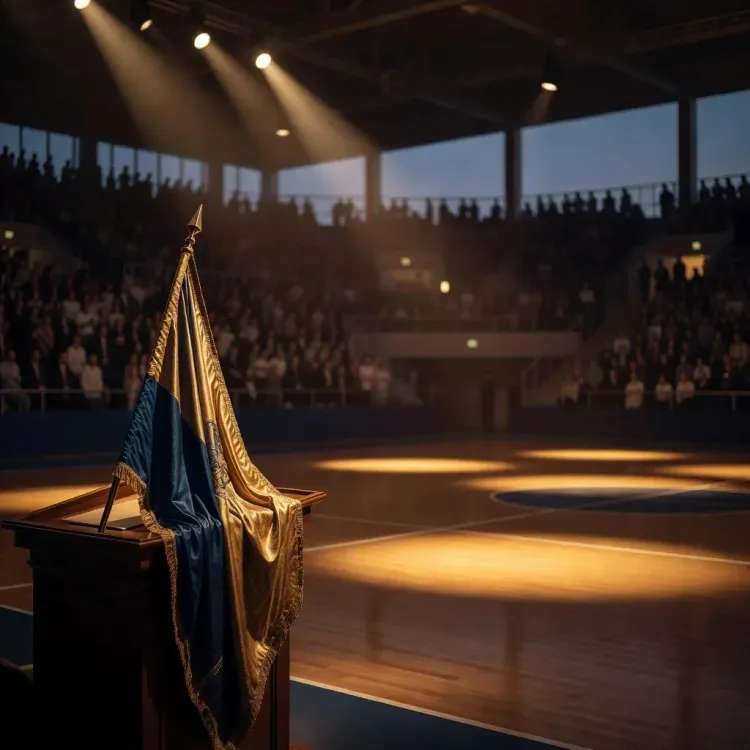
India officially received the Commonwealth Games hosting flag for the 2030 Centenary edition, with IOA President PT Usha, Gujarat Dy CM Harsh Sanghavi, and javelin champion Neeraj Chopra at the handover. BJP MP Anurag Thakur hailed the moment, calling it a commitment to deliver one of the greatest editions in CWG history.
Key Takeaways
India formally took charge of Commonwealth Games hosting duties for the Centenary CWG 2030 at an official flag handover ceremony.
PT Usha (IOA President), Harsh Sanghavi (Gujarat Deputy Chief Minister), and Neeraj Chopra (Olympic gold medallist) received the Commonwealth Games flag together.
Gujarat's Deputy CM presence at the handover signals the state's likely central role in hosting infrastructure and venues.
India's last Commonwealth Games hosting experience was the 2010 Delhi Games — the 2030 edition will be its second and the competition's centenary.
The formal host-city selection and constitution of an organising committee are the immediate next milestones.
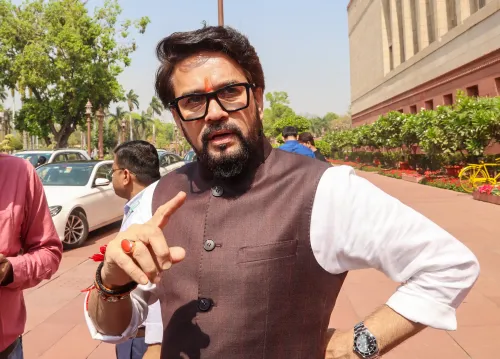
BJP MP Anurag Thakur , a former Union Minister for Sports, called the occasion a commitment to 'one of the greatest editions' of the Commonwealth Games.
The Commonwealth Games flag is now in Indian hands — and the countdown to 2030 has officially begun. BJP MP Anurag Thakur marked the historic moment on Monday, August 3, 2026, as India formally received hosting duties for the Centenary Commonwealth Games 2030, with three of the country's most prominent sporting and political figures front and centre for the handover.
Three faces, one flag: the handover moment
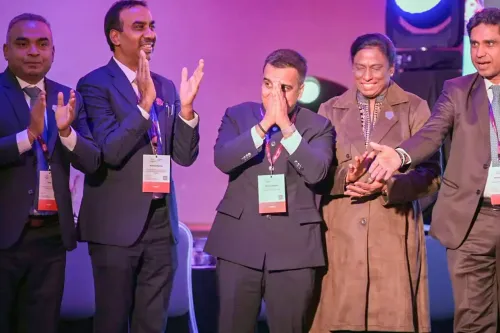
PT Usha, President of the Indian Olympic Association (IOA), accepted the Commonwealth Games flag alongside Gujarat Deputy Chief Minister Harsh Sanghavi and Olympic javelin gold medallist Neeraj Chopra. The trio's presence was deliberate — an administrator, a state government representative, and India's most decorated track-and-field athlete, together signalling that the 2030 Games will be a national project, not a single city's affair.
Thakur described Chopra as India's 'golden boy' and called the upcoming edition 'one of the greatest' in Commonwealth Games history, noting its significance as the centenary edition of the competition.
Gujarat's signal and the host-city question
The presence of Harsh Sanghavi — Gujarat's Deputy Chief Minister — at the flag handover is the sharpest clue yet about where India may concentrate its 2030 CWG infrastructure. Gujarat has positioned itself as India's premier destination for large-scale sporting events in recent years, and Sanghavi's prominent role in this ceremony adds weight to that ambition. The formal selection of a host city and the constitution of an organising committee remain the immediate next steps.
From Delhi 2010 to the Centenary stage
India's only previous experience as Commonwealth Games host was the 2010 Delhi Games — an edition remembered as much for its organisational turbulence as for the athletic performances it produced. Sixteen years on, the country returns to the host's chair with considerably more multi-sport event experience, a stronger athlete pipeline, and a stated ambition to use major international competitions to build lasting sports infrastructure. The 2030 edition, as the centenary Games, carries outsized symbolic weight — and India has framed its hosting as a commitment, not just an opportunity.
For PT Usha, a former sprint legend who once missed an Olympic medal by a fraction of a second, presiding over this handover as IOA President completes a remarkable arc — from the track to the boardroom, now steering India's biggest sporting hosting assignment in a generation.
The flag has changed hands. The clock is running. India's centenary moment in the Commonwealth is four years away — and the pressure to deliver is already on.
Point of View
Likely designed to avoid the single-city overload that complicated Delhi 2010. Neeraj Chopra's presence is calculated optics: his face tells the world that India's athlete pipeline, not just its infrastructure, is ready for the centenary stage. The real test will be how quickly a host-city framework and organising committee are formalised — that timeline will determine whether 2030 is remembered as a watershed or a warning.
NationPress
17 Sept 2026
Frequently Asked Questions
Which country is hosting the Commonwealth Games 2030?
India will host the Commonwealth Games 2030, the centenary edition of the competition. The hosting flag was formally handed over to India, with IOA President PT Usha, Gujarat Deputy CM Harsh Sanghavi, and Neeraj Chopra accepting it.
Which city in India will host CWG 2030?
A formal host city has not yet been officially confirmed. The presence of Gujarat Deputy Chief Minister Harsh Sanghavi at the flag handover ceremony has fuelled speculation about Gujarat's role, but the selection process is ongoing.
What is the Centenary Commonwealth Games 2030?
The 2030 Commonwealth Games will mark the 100th anniversary of the first British Empire Games held in 1930, making it the centenary edition. India's hosting of this milestone event carries significant symbolic and sporting weight.
Has India hosted the Commonwealth Games before?
Yes. India hosted the Commonwealth Games once before — in New Delhi in 2010. The 2030 edition will be the country's second time as host, and its first as host of the centenary Games.
Why was Neeraj Chopra at the CWG 2030 flag handover?
Neeraj Chopra, India's Olympic gold medallist in javelin throw, participated in the CWG 2030 flag handover as a symbolic representative of Indian sporting excellence, alongside IOA President PT Usha and Gujarat Deputy CM Harsh Sanghavi.