Sitharaman: India toy exports hit $186 mn, imports down 71%
Synopsis
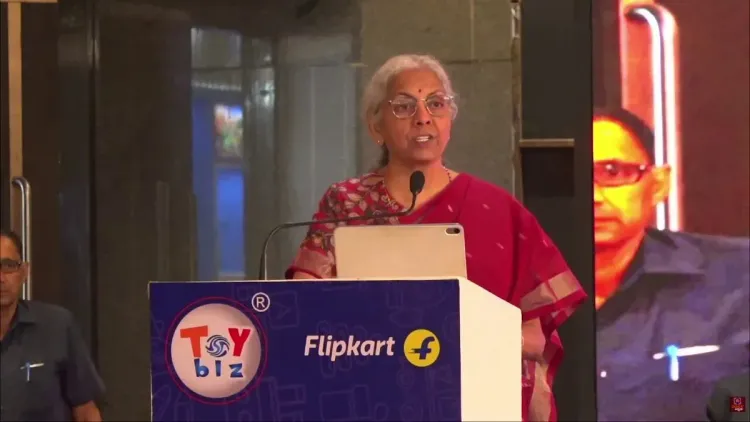
Finance Minister Nirmala Sitharaman, speaking at a Toy Association of India event in New Delhi on 7 July 2026, cited $186 million in toy exports reaching 153 countries and a 71% import decline since 2019, while urging the sector to aim for a far larger share of the global market than the projected $5 billion domestic figure by 2034.
Key Takeaways
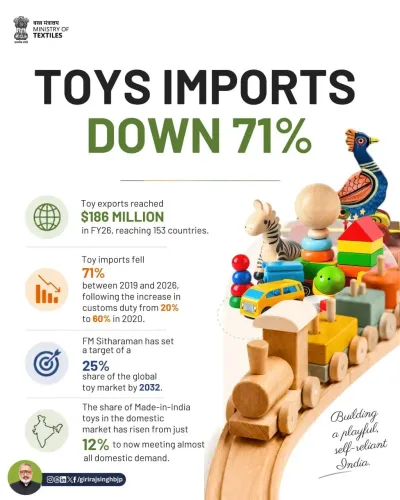
India's toy exports reached $186 million in FY 2025–26 , up sharply over the past decade.
Indian toy products now reach 153 countries , reflecting significant export diversification.
Toy imports have fallen by 71 per cent since 2019 , driven by quality-control enforcement and customs policy.
The domestic toy market is projected to reach $5 billion by 2034 , though Sitharaman urged ambitions beyond that figure.
The sector's growth is anchored in the Make in India and Atmanirbhar Bharat policy frameworks.
Further export promotion and budget-level support for the sector is anticipated in upcoming policy reviews.
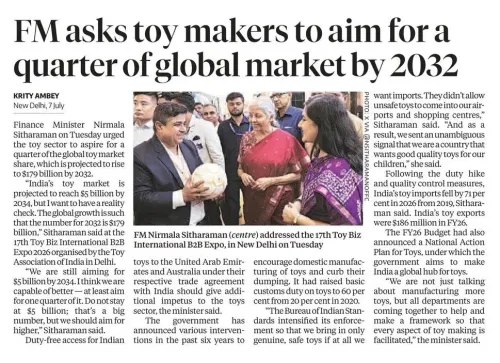
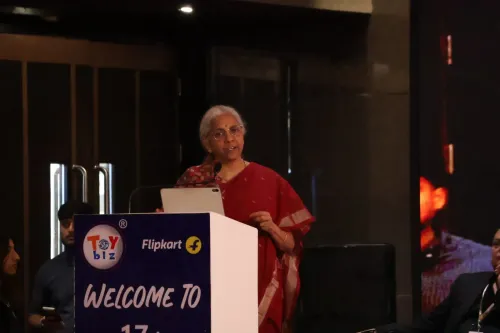
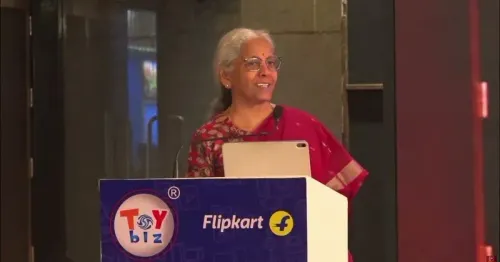
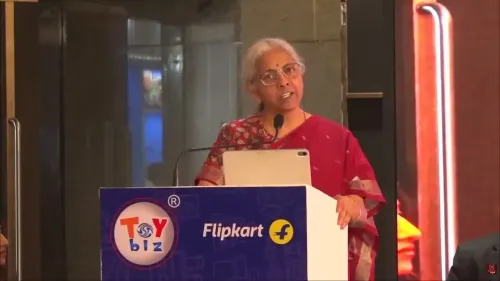
Union Finance Minister Nirmala Sitharaman on Tuesday, 7 July 2026, highlighted the sharp turnaround in India's toy sector, citing export figures of $186 million in FY 2025–26 and a 71 per cent decline in toy imports since 2019. Speaking at an event organised by the Toy Association of India in New Delhi, she called for ambitions that go well beyond the sector's projected $5 billion market size by 2034.
Context
Addressing the industry body, Sitharaman noted that Indian toy exports now reach 153 countries, a marker of widening global acceptance. She described the import decline as 'reflecting the success of quality-focused, self-reliant manufacturing' — language that directly links sectoral performance to the broader Atmanirbhar Bharat policy framework announced in May 2020.
Her remarks underscore a consistent government position: domestic quality standards and tariff calibration, not just cost advantages, are driving the shift away from import dependence. The toy sector has been a visible test case for this approach since 2020, when stricter quality control orders were enforced on imported toys.
Policy Backdrop
India's toy manufacturing push sits within the broader Make in India initiative launched in September 2014, which sought to position the country as a global production hub across labour-intensive sectors. The subsequent Atmanirbhar Bharat Abhiyan sharpened that focus by targeting import substitution and MSME-level capacity building.
For toys specifically, the government deployed a combination of mandatory Bureau of Indian Standards (BIS) certification for imports, higher basic customs duties, and promotional support for domestic manufacturers — a multi-instrument playbook that has since been replicated in electronics and textiles. The 71 per cent import decline over roughly six years is the headline result of that coordinated effort.
Stakeholders and Impact
The primary beneficiaries are domestic toy manufacturers and MSMEs, many of which are clustered in hubs such as Delhi-NCR, Mumbai, and emerging production centres in Rajasthan and Karnataka. Exporters have gained market access across 153 countries, suggesting product diversification beyond traditional trading partners.
Consumers and retailers stand to benefit from a wider domestic supply base, though sustained competitiveness on price and design quality will determine whether India can challenge established toy-exporting nations in the longer term. Sitharaman explicitly flagged that the $5 billion domestic market projection for 2034 should be a floor, not a ceiling, for industry ambition.
What's Next
The Finance Minister's call for 'a significantly larger share of the expanding global market' signals that further policy support — potentially through upcoming Union Budget allocations or trade promotion measures — may be on the table. Industry observers will watch for any new production-linked incentives or export facilitation schemes targeting the toy sector specifically.
With the global toy market itself expanding, India's ability to move up the value chain from basic to premium and tech-integrated toys will be a key determinant of whether the sector's growth trajectory is sustained beyond the current decade.
Point of View
She is framing the toy sector as proof-of-concept for a manufacturing model the government intends to scale. The call to exceed the $5 billion market projection is a political signal as much as an economic one: with a general election cycle in view, the administration has an interest in presenting tangible industrial wins. Whether the sector can transition from import-replacement to genuine global competitiveness — competing on design and innovation, not just tariff protection — remains the unresolved question at the heart of the ambition she outlined.
NationPress
6 Oct 2026
Frequently Asked Questions
How much did India's toy exports grow in FY 2025-26?
India's toy exports reached $186 million in FY 2025–26, according to figures cited by Finance Minister Nirmala Sitharaman at a Toy Association of India event on 7 July 2026. The exports now cover 153 countries.
By how much have toy imports into India declined?
Toy imports into India have declined by 71 per cent since 2019, a fall attributed to stricter quality-control regulations, higher customs duties on imported toys, and growing domestic manufacturing capacity.
What is India's toy market size expected to be by 2034?
India's toy market is projected to reach $5 billion by 2034. Finance Minister Sitharaman, however, urged the industry to set its sights on capturing a significantly larger share of the global market beyond that domestic figure.
What government schemes helped India's toy sector grow?
The Make in India initiative (launched 2014) and the Atmanirbhar Bharat Abhiyan (announced 2020) are the primary policy frameworks. These were supported by mandatory BIS quality certification for imports and higher basic customs duties that reduced import dependence.
What did Nirmala Sitharaman say at the Toy Association of India event?
Sitharaman highlighted that toy exports have reached $186 million across 153 countries and that imports have fallen 71 per cent since 2019. She called for industry ambitions that go well beyond the projected $5 billion domestic market size by 2034.