India-UK FTA will boost jobs and growth, says Minister Shekhawat
Synopsis
Union Minister Gajendra Singh Shekhawat called the India-UK FTA a historic economic milestone, crediting PM Modi's diplomacy and projecting major gains for Indian exporters, MSMEs, and youth employment. He also took a sharp swipe at the Congress over the Women's Reservation Bill, framing the ruling government's record as action versus opposition rhetoric.
Key Takeaways
Gajendra Singh Shekhawat hailed the India-UK FTA as a landmark deal on 15 July at Jaipur Airport .
The agreement is expected to benefit Indian industries, exporters, MSMEs , and the services sector .
Shekhawat attributed the FTA to PM Modi's diplomatic approach prioritising long-term national interest.
The minister accused the Congress of a contradictory record on women's political empowerment.
He described the Women's Reservation Bill as a shift from women-centric welfare to women-led development.
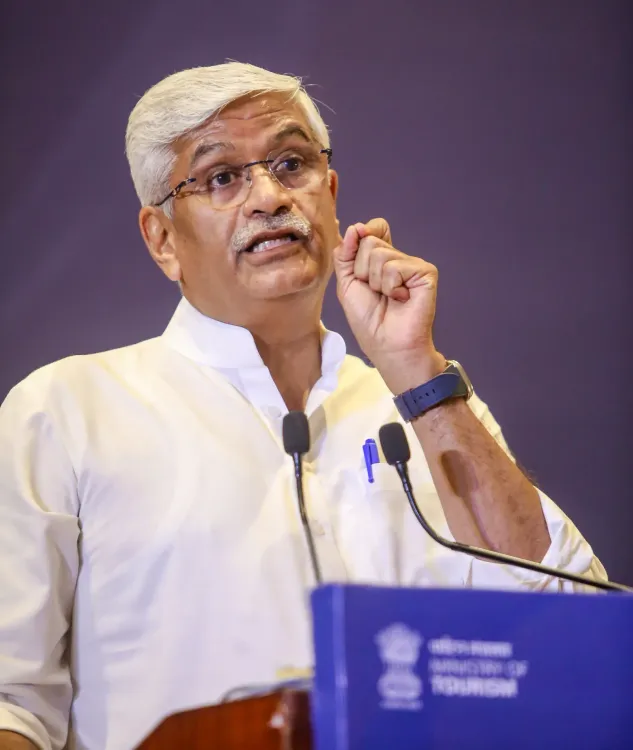
Union Minister for Culture and Tourism Gajendra Singh Shekhawat on Wednesday described the India-UK Free Trade Agreement (FTA) as a landmark milestone in India's economic trajectory, asserting it will deepen bilateral trade, generate employment for the country's youth, and accelerate overall economic growth. Shekhawat made the remarks while speaking to reporters at Jaipur Airport.
What the Minister Said on the FTA
Shekhawat credited Prime Minister Narendra Modi's diplomatic approach for securing the agreement, arguing that his leadership has consistently placed long-term national interest ahead of political considerations. He said India's global standing has grown considerably as a result.
'The India-UK FTA is a historic achievement that will deepen economic cooperation between the two countries. It will provide significant opportunities for Indian industries, exporters, MSMEs and the services sector, while creating new avenues for employment, innovation and skill development for young Indians,' Shekhawat said.
He further positioned the FTA as part of India's wider strategy of building stronger economic partnerships globally, with the goal of establishing the country as a leading international economic power.
Why the Agreement Matters
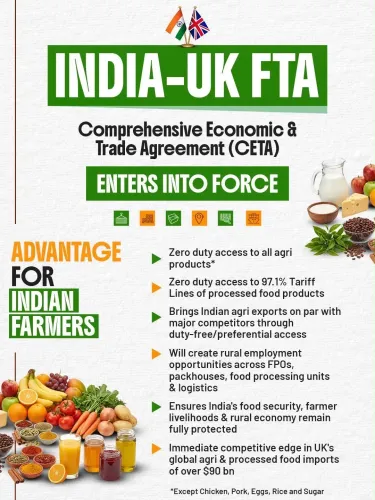
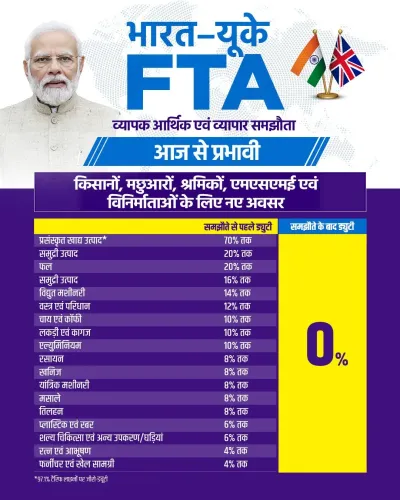
The India-UK FTA, concluded after years of negotiations, is among the most significant trade deals India has signed in recent memory. For Indian MSMEs and exporters in sectors such as textiles, pharmaceuticals, and IT services, the agreement is expected to open preferential access to the United Kingdom market. The services sector — a key driver of Indian employment — stands to gain from eased mobility provisions, according to officials.
This comes amid India's broader push to diversify its trade partnerships and reduce dependence on any single economic bloc, a strategy that has gained urgency in the wake of global supply chain disruptions.
Shekhawat on Women's Reservation Bill
Separately, Shekhawat responded to remarks by former Union Finance Minister P. Chidambaram on the Women's Reservation Bill, accusing the Indian National Congress (INC) of having a contradictory record on women's political empowerment. He argued that the Congress had repeatedly failed to act when opportunities arose to advance women's reservation in legislative bodies.
'The objective is not only to provide women with equal rights but also to ensure their meaningful participation in governance and nation-building,' Shekhawat said, describing the Women's Reservation Bill as a historic reform.
He contended that the Modi government has moved beyond rhetoric by introducing the legislation, framing it as a shift from women-centric welfare to women-led development. The minister further claimed that opposition criticism of the bill reflects discomfort with women's growing political representation, reiterating the Centre's commitment to expanding leadership opportunities for women.
What Comes Next
With the India-UK FTA now hailed at the political level, attention will turn to implementation — specifically, the timelines for tariff reductions, rules of origin norms, and the operationalisation of services mobility provisions. Industry bodies and trade associations are expected to study the fine print closely in the coming weeks.
Point of View
Not rhetoric. Past Indian trade agreements have often stalled at operationalisation, with rules of origin and services mobility provisions proving contentious. The MSME sector, while cited as a beneficiary, has historically been the most exposed to import competition when tariff walls come down. On the Women's Reservation Bill, the minister's attack on the Congress is well-worn ground — but neither side has yet addressed the critical question of when delimitation will actually enable the law to take effect, a detail that mainstream coverage continues to underplay.
NationPress
14 Oct 2026
Frequently Asked Questions
What is the India-UK Free Trade Agreement?
The India-UK Free Trade Agreement is a bilateral trade deal between India and the United Kingdom aimed at reducing tariffs and expanding market access for goods and services. It is expected to benefit Indian exporters, MSMEs, the services sector, and create new employment opportunities.
What did Gajendra Singh Shekhawat say about the India-UK FTA?
Speaking at Jaipur Airport on 15 July, Union Minister Gajendra Singh Shekhawat called the India-UK FTA a historic achievement, saying it would deepen economic cooperation, open opportunities for Indian industries and MSMEs, and generate jobs for young Indians.
Who does the India-UK FTA benefit most?
According to Shekhawat, the primary beneficiaries include Indian industries, exporters, MSMEs, and the services sector. Young Indians stand to gain through new avenues in employment, innovation, and skill development.
What did Shekhawat say about the Women's Reservation Bill?
Shekhawat accused the Congress of having a contradictory record on women's political empowerment and defended the Modi government's introduction of the Women's Reservation Bill as a concrete step toward women-led development rather than token welfare measures.
What happens next after the India-UK FTA announcement?
Implementation details — including tariff reduction timelines, rules of origin norms, and services mobility provisions — are expected to be studied closely by industry bodies and trade associations in the coming weeks.