Dr. Jitendra Singh Hails Indian Team's Sweep at 37th Biology Olympiad
Synopsis
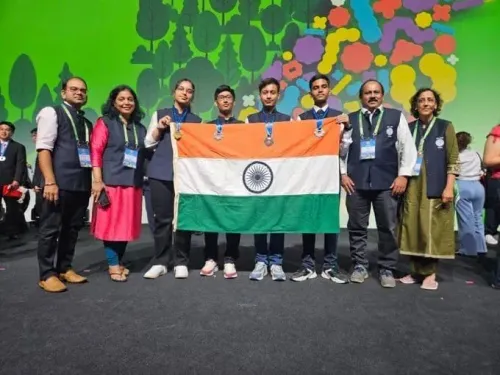
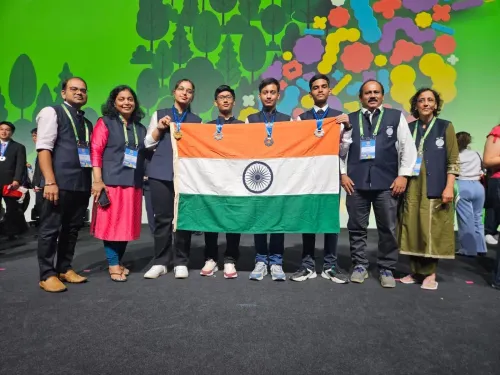
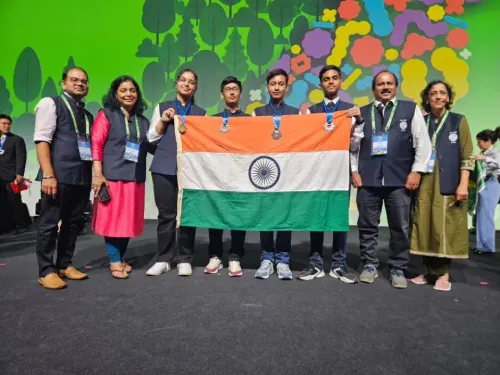
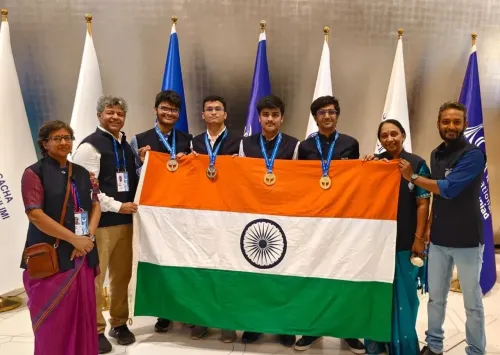
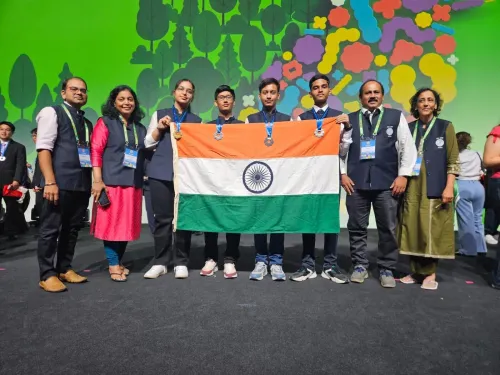
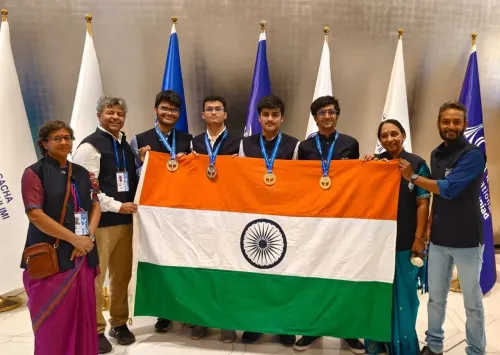
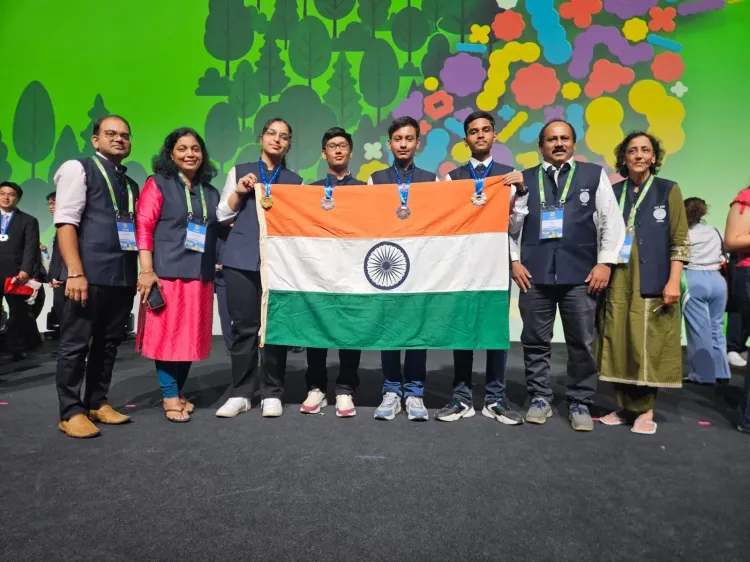
All four members of India's team at the 37th International Biology Olympiad in Vilnius, Lithuania, won medals including one gold. Union Minister Dr. Jitendra Singh praised Bhavyaa Gunwal, Soumil Maity, Nishit Kalani and Anmol Kumar, linking their success to India's BioE3 Policy and the government's biotechnology ambitions.
Key Takeaways
India's four-member team — Bhavyaa Gunwal , Soumil Maity , Nishit Kalani , and Anmol Kumar — won medals at the 37th International Biology Olympiad in Vilnius, Lithuania , including one gold.
Jitendra Singh publicly congratulated the team on 19 July 2026 via a post on X.
The minister linked the achievement to India's growing talent in Molecular Biology , Biochemistry , and Computational Biology .
The BioE3 Policy under PM Narendra Modi was cited as a key enabler, aimed at fostering innovation, research, and biomanufacturing.
The Department of Biotechnology (DBT) is the nodal agency supporting the talent and policy ecosystem behind such achievements.
Union Science and Technology Minister Dr. Jitendra Singh on Sunday, 19 July 2026 congratulated the four-member Indian team that won medals — including one gold — at the 37th International Biology Olympiad (IBO) held in Vilnius, Lithuania, calling the achievement a reflection of India's growing scientific talent.
Context
The 37th International Biology Olympiad brought together pre-university students from across the world to compete in disciplines spanning Molecular Biology, Biochemistry, and Computational Biology. India's four-member squad — Bhavyaa Gunwal, Soumil Maity, Nishit Kalani, and Anmol Kumar — returned with a complete medal haul, with at least one gold among them. Dr. Jitendra Singh posted on X: 'Proud of Bhavyaa Gunwal, Soumil Maity, Nishit Kalani and Anmol Kumar for their outstanding achievement.'
The International Biology Olympiad is an annual global competition that tests knowledge across biology sub-disciplines and is widely regarded as a benchmark for pre-university scientific aptitude. A clean sweep by any national delegation is considered a strong indicator of the depth of STEM talent in that country's school pipeline.
Policy Backdrop
Dr. Jitendra Singh explicitly linked the students' performance to the policy environment shaped by Prime Minister Narendra Modi, citing the BioE3 Policy as a key instrument. The BioE3 framework — focused on economy, environment, and employment — is the government's flagship initiative to foster innovation, research, and biomanufacturing capacity within India.
The nodal agency overseeing these efforts, the Department of Biotechnology (DBT) under the Ministry of Science and Technology, has pursued successive National Biotechnology Development Strategies aimed at building human resources and international competitiveness in life sciences. The minister's post was tagged #DBT, underscoring the department's role in nurturing the talent pipeline that feeds into competitions such as the IBO.
Successive administrations have treated strong olympiad results as visible proof points for school-level STEM investment, and the current government has reinforced that tradition by tying such outcomes directly to industrial policy ambitions in biotechnology.
Stakeholders and Impact
For Indian students and the broader science education community, a full-team medal sweep at a global biology olympiad carries significant symbolic weight. It signals that India's preparation infrastructure — coaching, curriculum, and institutional support — is competitive at the highest international level.
For the biotechnology sector, the minister's framing positions these young scientists as future contributors to India's bio-economy ambitions. The BioE3 Policy seeks to convert academic talent into domestic biomanufacturing capacity, and early recognition of exceptional students is part of that talent-pipeline strategy.
What's Next
Attention will now turn to concrete roll-out milestones and funding allocations under the BioE3 Policy, as the government seeks to translate olympiad-level talent into industrial and research outcomes. India's performance at subsequent international science competitions will also be watched as a continuing metric of STEM education progress.
Dr. Singh closed his post with a forward-looking note: 'May their accomplishment inspire many more young minds to pursue science and innovation for the nation' — signalling that the government views these medals not merely as a one-off achievement but as a catalyst for broader youth participation in science.
Point of View
Helping build public and investor confidence in the bio-economy agenda. By naming all four students and tagging the Department of Biotechnology, the minister signals institutional ownership of the talent pipeline. The broader arc points to a government keen to demonstrate that upstream STEM investments are producing internationally competitive outcomes, even as downstream BioE3 milestones remain a work in progress.
NationPress
18 Oct 2026
Frequently Asked Questions
Which Indian students won medals at the 37th International Biology Olympiad?
Bhavyaa Gunwal , Soumil Maity , Nishit Kalani , and Anmol Kumar represented India at the 37th International Biology Olympiad in Vilnius, Lithuania, and all four won medals, including one gold.
Where was the 37th International Biology Olympiad held?
The 37th International Biology Olympiad was held in Vilnius, Lithuania .
What is the BioE3 Policy?
The BioE3 Policy is a Government of India initiative under the Department of Biotechnology focused on economy, environment, and employment, aimed at fostering innovation, research, and biomanufacturing capacity in India.
What did Dr. Jitendra Singh say about India's Biology Olympiad result?
Dr. Jitendra Singh said the achievement 'reflects the growing scientific talent of India's youth' and linked it to expanding opportunities in biotechnology under PM Narendra Modi 's vision and the BioE3 Policy .
What subjects does the International Biology Olympiad test?
The International Biology Olympiad tests pre-university students in biology sub-disciplines including Molecular Biology , Biochemistry , and Computational Biology , among others.