BJP's Victory Asana to Rahul's Eternal Discontent: Indian politics does yoga
Synopsis
On International Yoga Day, India's political class turns out to be far ahead of the curve — each party has spent years perfecting its own advanced asana. From BJP's unshakeable Victory Pose to Rahul Gandhi's Eternal Discontent, Kejriwal's Strategic Meditation, and Mamata's post-2026 reckoning, the real yoga camp is Parliament — and the voters are the only certified instructors.
Key Takeaways
The BJP has mastered the Victory Asana over a decade of electoral wins at the Centre and in states, most recently in West Bengal .
Congress leader Rahul Gandhi is identified as the chief practitioner of the Eternal Discontent Asana — sustained critique across every political weather condition.
AAP convenor Arvind Kejriwal has shifted from the Rapid Motion Asana to Strategic Meditation following a run of electoral losses.
TMC chief Mamata Banerjee lost her seat and her government in 2026 , testing her long-held Defiant Reality Asana .
Uddhav Thackeray continues to claim the Shiv Sena legacy even as the party split, the symbol moved, and colleagues departed.
The INDIA bloc Pranayama — inhale unity, hold breath through seat-sharing, exhale on disagreement — repeats before every major election.
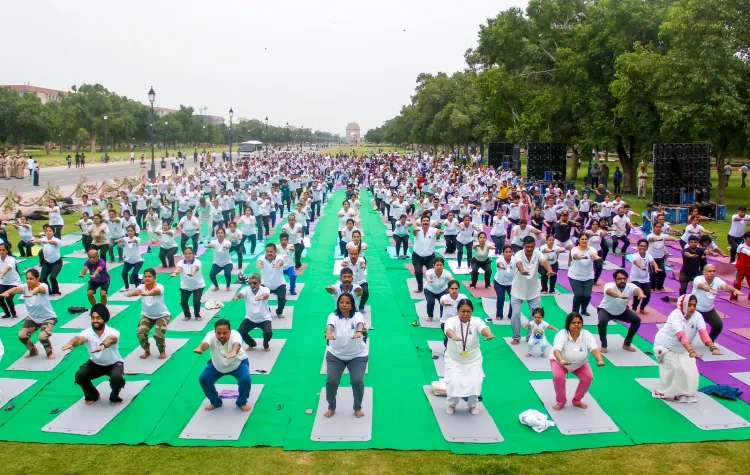
The yoga mats have been rolled up and the session photographs uploaded — but watching yet another International Yoga Day unfold on 21 June raises an uncomfortable question: do Indian politicians actually need formal training? Many appear to have been practising far more advanced asanas for years, entirely on their own.
In truth, Indian politics has long resembled one sprawling yoga camp, where every party has developed a signature posture — and some have refined it to an art form.
The Ruling Establishment's Victory Asana
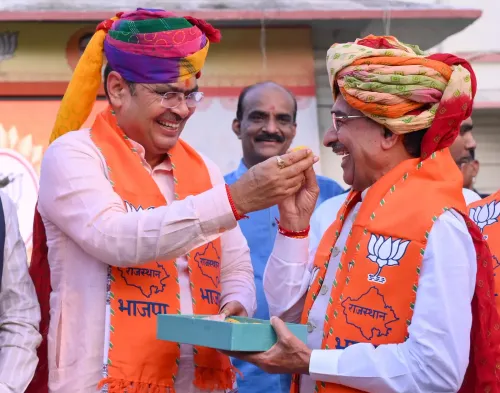
The Bharatiya Janata Party (BJP) has, over the past decade, mastered what might be called the Victory Asana. The pose demands that its practitioners radiate the confidence of a champion regardless of circumstances. A string of electoral wins — at the Centre and across states — has reinforced the posture, making it second nature.
The latest and arguably most demanding test of this asana came in West Bengal, where the BJP secured a result that observers described as Precision Yoga: a sequence of difficult moves executed in near-perfect order. Yet the posture is not without its wobbles. The recent Karnataka MLC polls exposed a crack, with some members reportedly cross-voting — a reminder that even well-practised poses can slip.
Rahul Gandhi and the Eternal Discontent Asana
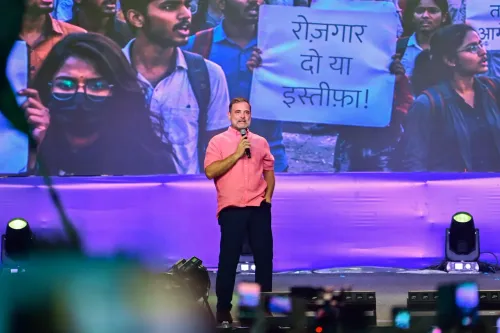
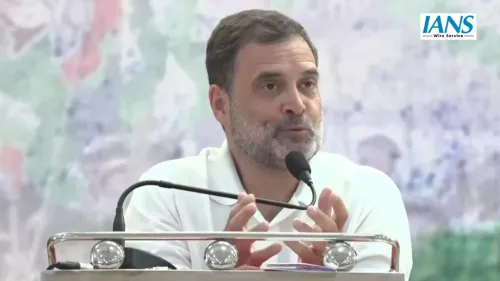
The Opposition, led in spirit by Congress leader Rahul Gandhi, has cultivated an entirely different discipline: the Eternal Protest Pose. The logic is elegantly simple — if the government moves left, oppose it; if it moves right, oppose that too; if it stays still, call it paralysis.
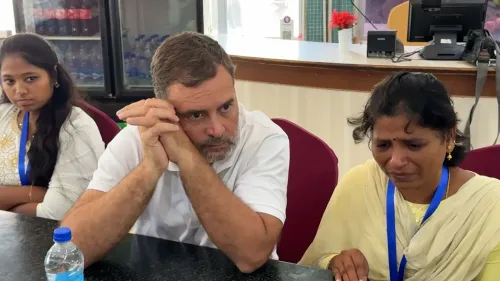
Gandhi has become the chief practitioner of what may be the most demanding variant: the Eternal Discontent Asana. Progress announced by the government is questioned; reversals are criticised; stagnation is condemned. The discipline has been sustained across multiple election cycles with remarkable consistency. In this school of political yoga, contentment is not the goal — continuity of critique is.
The posture also carries a triple burden: convincing the country that he represents a credible alternative to Prime Minister Narendra Modi, reassuring Indian National Congress (Congress) workers that victory is within reach, and persuading alliance partners that he can lead. Gandhi has been attempting all three simultaneously.
Coalition Contortions and Strategic Meditation
Samajwadi Party chief Akhilesh Yadav has perfected a related discipline: the Coalition Contortion Asana, or what might more charitably be called the Alliance Stretch. Ideological muscles are extended well beyond their natural limits without quite tearing. Yesterday's rival becomes today's ally; today's ally becomes tomorrow's negotiating counterpart. Yoga teaches flexibility — and coalition politics has been an intensive course in exactly that.
Aam Aadmi Party (AAP) convenor Arvind Kejriwal once embodied the Rapid Motion Asana — campaigning, governing, protesting, debating, accusing, and defending, often simultaneously. Following a run of electoral setbacks, he appears to have shifted into a more demanding discipline: Strategic Meditation. The challenge is to remain politically relevant while speaking considerably less. Anyone who has attempted sustained meditation knows how difficult silence can be to maintain.
Mamata's Defiant Reality and Uddhav's Shrinking Circle
All India Trinamool Congress (TMC) chief Mamata Banerjee had long embodied the Defiant Reality Asana — a careful balance between acceptance and resistance, held even as the ground shifted. For years she appeared politically indestructible, persuading supporters that Bengal politics revolved entirely around her. Then came 2026: her government fell, the party suffered its biggest setback in memory, and she herself lost her seat. Politics, like yoga, has a habit of testing those who grow too comfortable in a position.
Shiv Sena (UBT) chief Uddhav Thackeray has meanwhile become the undisputed practitioner of the Shrinking Circle Asana — continuing to claim ownership of a political tradition even as organisations, elected representatives, party symbols, and flags have gradually moved elsewhere. His government collapsed, the Shiv Sena split, the party symbol became a subject of prolonged legal and political dispute, and parliamentary colleagues have since chosen different paths. He appears, critics argue, to be held in place by what might be called Illusion Yoga — insisting on an authentic legacy that the courts and the electorate have complicated.
The INDIA Bloc Pranayama — and the Voter's Final Asana
Collectively, the Opposition's most recognisable contribution to political yoga remains the INDIA bloc Pranayama. The exercise opens with a deep inhalation of unity. Participants then hold their breath through seat-sharing negotiations. A long exhalation follows when disagreements surface. The cycle repeats reliably before every major election.
The ruling side has its own breathing rhythm: inhale electoral victories, exhale confidence — often in quantities generous enough to prompt discussions about contests still years away.
The most striking feature of Indian political yoga, perhaps, is that every practitioner believes they are following a distinct philosophy while performing movements that look, from a distance, remarkably similar.
Through all of it, voters go quietly about their lives — and every election season, they deliver the only asana that truly matters. It is the voter alone who knows how to pull the mat from under the most assured practitioner and restore the balance of power.
Point of View
While a ruling establishment so fluent in confidence risks mistaking momentum for mandate. The 2026 Bengal result is the sharpest reminder that no asana, however practised, is permanent. The voter, as always, is the only practitioner whose posture actually changes anything.
NationPress
19 Sept 2026
Frequently Asked Questions
What is the 'Victory Asana' attributed to the BJP in Indian politics?
The Victory Asana refers to the BJP's sustained posture of electoral confidence, built over a decade of wins at the Centre and in states. The term is used to describe how the party projects certainty regardless of political circumstances, most recently demonstrated in its West Bengal result.
What is Rahul Gandhi's 'Eternal Discontent Asana'?
It is a satirical label for Rahul Gandhi's consistent practice of opposition — questioning government progress, criticising reversals, and condemning inaction, sustained across multiple election cycles. The posture also requires him to simultaneously position himself as an alternative to PM Modi, reassure Congress workers, and hold alliance partners together.
What happened to Mamata Banerjee in 2026 that tested her political posture?
In 2026, Mamata Banerjee's government fell, her party suffered its biggest electoral setback, and she personally lost her seat — a dramatic reversal for a leader who had long appeared politically indestructible in West Bengal.
What is the 'INDIA bloc Pranayama' described in this piece?
It is a satirical description of the Opposition's INDIA alliance breathing cycle: a deep inhalation of unity at formation, a held breath through difficult seat-sharing talks, and a long exhalation when disagreements emerge — a pattern that repeats before every major election.
Why is the voter described as the ultimate 'yoga master' in Indian politics?
The piece argues that while parties perfect their own political postures, it is the voter alone who can disrupt any of them — by delivering unexpected results that topple even the most confident practitioners, as seen repeatedly in Indian electoral history.