Will the Indian Rupee Make a Strong Comeback in the Second Half of Next Fiscal?
Click to start listening
Synopsis
In the face of geopolitical uncertainties and the delay in the India-US trade deal, the Indian rupee has taken a hit. However, an SBI report suggests that a strong recovery is on the horizon for the second half of the upcoming fiscal year. Will the rupee rebound amidst these challenges? Read on to find out.
Key Takeaways
- Geopolitical uncertainties are influencing the rupee's value.
- The rupee is expected to recover in the second half of the fiscal year.
- Recent depreciation is primarily due to FPI outflows.
- The rupee has recently shown signs of strong recovery.
- Tariffs imposed by the US are impacting the rupee's stability.
New Delhi, Dec 17 (NationPress) According to a report from SBI Research, the primary factor contributing to the rupee's decline against the US dollar has been the geopolitical uncertainties stemming from the delayed India-US trade agreement. However, the report forecasts that the rupee is poised for a significant rebound in the latter half of the upcoming fiscal year.
The trade statistics from India reflect a remarkable capacity to navigate through extended periods of uncertainty, increased protectionism, and labor supply shocks.
Dr. Soumya Kanti Ghosh, Group Chief Economic Advisor at SBI, mentioned, "Although the geopolitical risk index has decreased since April 2025, its current average value for April-October 2025 remains significantly higher than the decadal average. This indicates the substantial pressure global uncertainties are placing on the Indian Rupee (INR)."
He further noted that their empirical analysis aligns with the observation that "the rupee is currently in a depreciating trend and is anticipated to emerge from it soon."
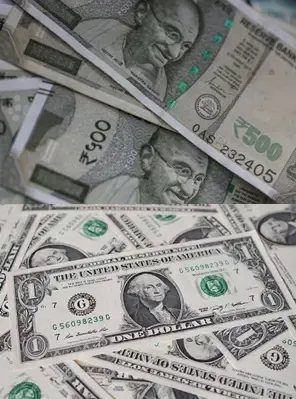
After surpassing the psychologically significant threshold of 90 per US dollar, the rupee crossed the 91 mark on Tuesday.
Nonetheless, the rupee demonstrated a notable recovery on Wednesday, trading at approximately 90.25 during the day, aided by the cooling of crude oil prices, which improved market sentiment.
The SBI report reveals that the current decline represents the fastest drop in the rupee's value, falling to 5 per USD in a remarkably short span of time. Within the last year, the rupee has plummeted from 85 to 90 per dollar.
This downturn appears to be predominantly influenced by Foreign Portfolio Investor (FPI) outflows, primarily from equities, following two years of robust inflows, alongside uncertainties surrounding the US-India trade agreement.
Since April 2, 2025, when the US implemented extensive tariff increases across various economies, the Indian rupee has depreciated by 5.7% against the USD—one of the steepest declines among major economies—despite intermittent phases of appreciation due to optimism regarding the US-India trade deal.
As noted in the SBI report, "While the INR is the most depreciated currency, it is not the most volatile. This underscores that the 50% tariff imposed on India is a significant factor behind the ongoing depreciation of the rupee."
Point of View
The trends surrounding the Indian rupee highlight the delicate balance of global economic influences and local market dynamics. As we monitor these developments, it’s crucial for stakeholders to remain informed about potential impacts on trade and investment.
NationPress
17/12/2025
Frequently Asked Questions
What factors are driving the rupee's decline?
The rupee's decline is primarily driven by geopolitical uncertainties linked to the delay in the India-US trade deal and significant foreign portfolio investor outflows.
When is the rupee expected to recover?
The SBI report indicates that a strong recovery for the rupee is anticipated in the second half of the upcoming fiscal year.
How much has the rupee depreciated recently?
Since April 2025, the Indian rupee has depreciated by approximately 5.7% against the US dollar.
What is the current trading status of the rupee?
As of Wednesday, the rupee has shown signs of recovery, trading around 90.25 per US dollar.
What role do tariffs play in the rupee's depreciation?
The 50% tariff imposed on India has been identified as a significant factor contributing to the current depreciation of the rupee.