Indian women peacekeepers: 160+ serving in UN missions, Major Barak wins top award
Synopsis
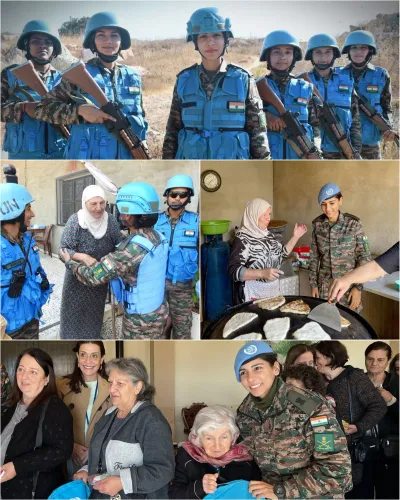
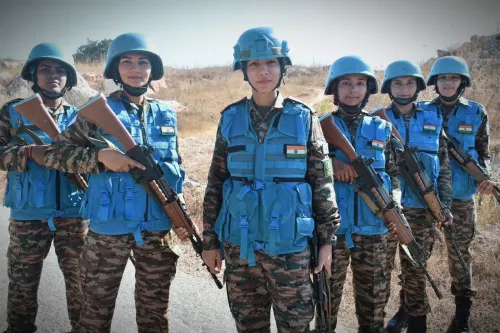
India's Permanent Representative to the UN told the Security Council that over 160 Indian women are currently serving in UN peacekeeping missions — and that India was the first nation to deploy an all-female unit to Liberia, inspiring thousands of local women to join policing. With Major Abhilasha Barak now winning the UN Gender Advocate Award, India's case for leading the global Women, Peace and Security agenda has rarely been stronger.
Key Takeaways
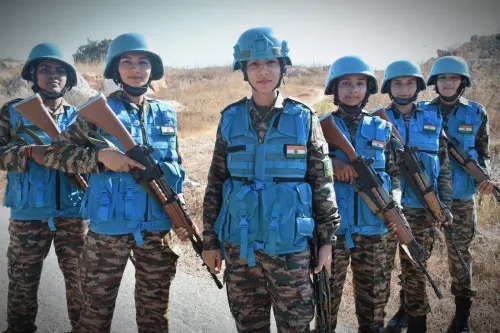
More than 160 Indian women peacekeepers are currently deployed across UN missions worldwide, as of June 2025 .
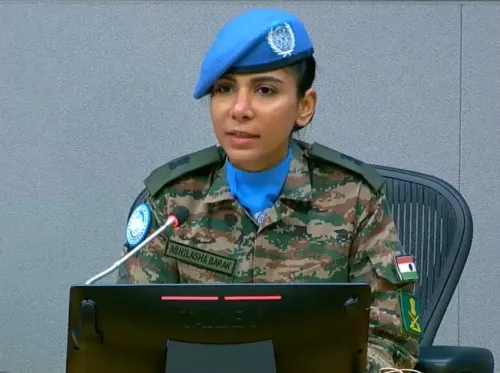
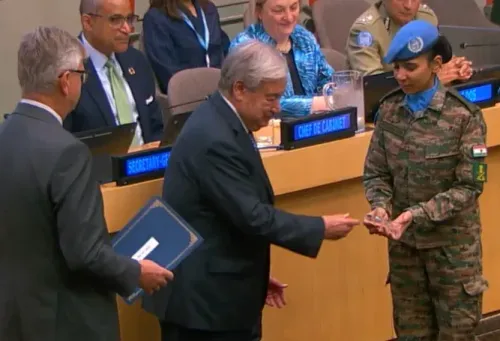
Major Abhilasha Barak of the Indian Army received the UN Peacekeeper's Gender Advocate Award this month — the third Indian woman to do so.
India was the first country to deploy an all-female unit to the UN Mission in Liberia , inspiring thousands of Liberian women to join national policing.
India's Centre for UN Peacekeeping in New Delhi trained women military officers from 15 countries last year and hosted a conference for peacekeepers from 35 countries .
UN Women Executive Director Sima Bahous stated that including women in peace processes reduces violence and improves the durability of peace agreements.
India's Women's Reservation Act of 2023 extends one-third seat reservation to Parliament, cited by envoy Harish as part of India's domestic empowerment record.
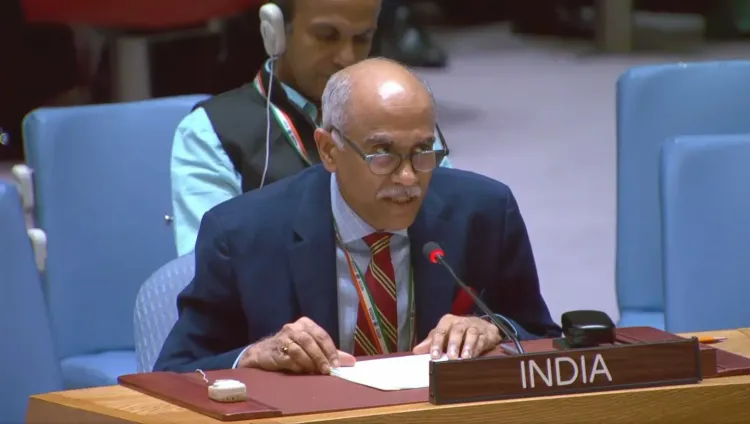
More than 160 Indian women peacekeepers are currently deployed across various United Nations missions worldwide, serving as frontline symbols of female agency in conflict zones, India's Permanent Representative to the UN, P. Harish, told the UN Security Council on Wednesday, 18 June. Speaking during a Council debate on Women, Peace and Security, Harish underscored that India's contribution to gender-inclusive peacekeeping is both historic and ongoing.
Major Barak and the Gender Advocate Award
Indian Army Major Abhilasha Barak was this month awarded the UN Peacekeeper's Gender Advocate Award, becoming the third Indian woman to receive the honour. Harish cited her recognition — alongside the two previous Indian women awardees — as outstanding illustrations of the transformative impact women peacekeepers have in conflict-affected communities. The award recognises uniformed personnel who advance gender equality within UN peace operations.
India's Landmark Contributions to UN Peacekeeping
India holds a pioneering distinction in the history of UN peacekeeping: it was the first country to deploy an all-female unit to the United Nations Mission in Liberia (UNMIL), a move that reportedly inspired thousands of Liberian women to join their national police force. Building on that legacy, India established the Centre for UN Peacekeeping in New Delhi to train women military officers from across the globe.
Last year, participants from 15 countries attended the UN Women Military Officers Course hosted at the centre, while women peacekeepers from 35 countries convened for the Conference for Women Peacekeepers from the Global South — reflecting India's growing role as a capacity-building hub for gender-sensitive peacekeeping.
Why Women Peacekeepers Matter
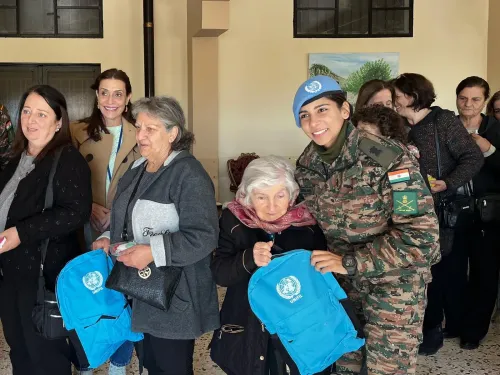
'They build trust in communities. They give hope to vulnerable populations, particularly women and children. They serve as visible symbols of women's agency in maintaining peace and security,' Harish told the Council. He added that women peacekeepers play a critical role in addressing gender-based violence and ensuring that peace processes incorporate the needs and perspectives of all segments of society — not just combatants or political elites.
This comes amid a broader global push under the Women, Peace and Security (WPS) agenda, anchored by a UN Security Council resolution adopted in 2000. Evidence gathered since then, according to UN Women Executive Director Sima Bahous, shows that including women in peace processes reduces violence, strengthens peacekeeping effectiveness, and improves the durability of peace agreements. 'Gender equality and women's empowerment is among the most powerful approaches to achieving peace,' Bahous said.
Voices from Civil Society
Kaavya Asoka, Executive Director of the NGO Working Group on Women, Peace and Security and an advocate for women's rights, warned that international norms are under strain. 'Every day, we see international law increasingly undermined in favour of narrow interests,' she said, cautioning that 'the cost of dismantling the norms we have collectively built will be far greater.' Asoka called on the Security Council to move beyond 'empty condemnation of attacks on civilians' and take concrete steps, including ending arms transfers to conflict parties.
India's Domestic Record on Women's Empowerment
Harish contextualised India's peacekeeping contributions within its domestic policy record. He cited the Constitutional reservation of one-third of seats in local self-governing bodies, which has brought more than one million women into decision-making roles, and the Women's Reservation Act of 2023, which extends the provision to Parliament. He also highlighted India's record of women in the highest offices — including President Droupadi Murmu, former Prime Minister Indira Gandhi, and former Lok Sabha Speakers Sumitra Mahajan and Meira Kumar. 'Women-led development is a model promoted by the Government of India to make women the driving force of India's economic growth,' Harish added. He noted, however, that peacekeeping efforts 'cannot ultimately yield lasting results unless women are genuinely empowered: politically, financially and socially.'
As the Security Council continues its review of the WPS agenda, India's dual role — as a major troop-contributing nation and a domestic champion of women's political representation — positions it as a key voice in shaping the next phase of gender-inclusive peacekeeping.
Point of View
It measurably changed recruitment patterns in a post-conflict state. But the envoy's pivot to domestic politics — citing the Women's Reservation Act and a list of high-office holders — risks conflating international peacekeeping leadership with electoral optics. The harder question the Security Council must answer is structural: despite 25 years of the WPS agenda and a resolution adopted in 2000, women remain largely absent from formal peace negotiations. Kaavya Asoka's call to end arms transfers is the kind of concrete ask that tends to get buried under applause for award ceremonies. India's credibility on this agenda will ultimately be measured not by the number of women deployed, but by whether it uses its Security Council voice to push for those harder structural reforms.
NationPress
21 Sept 2026
Frequently Asked Questions
How many Indian women are currently serving in UN peacekeeping missions?
More than 160 Indian women peacekeepers are currently deployed across various UN missions worldwide, according to India's Permanent Representative to the UN, P. Harish, speaking at the Security Council on 18 June 2025. India is one of the largest contributors of women peacekeepers globally.
Who is Major Abhilasha Barak and what award did she receive?
Major Abhilasha Barak is an Indian Army officer who was awarded the UN Peacekeeper's Gender Advocate Award in June 2025, making her the third Indian woman to receive the honour. The award recognises uniformed personnel who advance gender equality within UN peace operations.
What is India's historic contribution to UN peacekeeping for women?
India was the first country to deploy an all-female unit to the United Nations Mission in Liberia (UNMIL), which reportedly inspired thousands of Liberian women to join their national police force. India also set up the Centre for UN Peacekeeping in New Delhi to train women military officers from across the world.
What is the Women, Peace and Security agenda at the UN?
The Women, Peace and Security (WPS) agenda is anchored by a UN Security Council resolution adopted in 2000, calling for women's empowerment and meaningful inclusion in peace processes. Evidence gathered since then shows these measures reduce violence, strengthen peacekeeping, and improve the durability of peace agreements, according to UN Women Executive Director Sima Bahous.
What did civil society advocates call for at the Security Council debate?
Kaavya Asoka, Executive Director of the NGO Working Group on Women, Peace and Security, urged the Security Council to go beyond symbolic condemnation of attacks on civilians and take concrete steps such as ending arms transfers to conflict parties. She warned that undermining internationally agreed norms would carry a far greater long-term cost.