India pitches Security, Connectivity, Opportunity at SCO trade meet in Dushanbe
Synopsis
At the 25th SCO trade ministers' meet in Dushanbe, India went beyond diplomatic boilerplate — pressing for a concrete 2026–2030 action plan, MSME-friendly cross-border payments, and supply-chain diversification in critical minerals and green hydrogen. The three-pillar Modi doctrine of Security, Connectivity, and Opportunity is now India's formal SCO trade playbook.
Key Takeaways
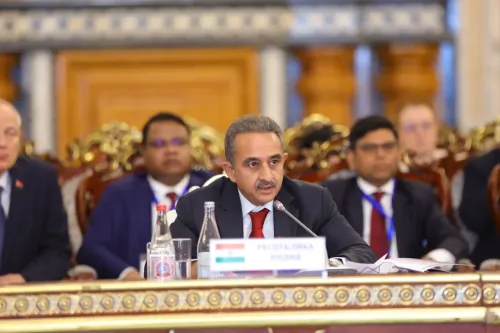
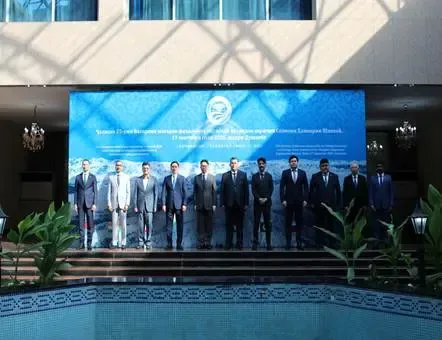
India represented by Additional Secretary (Commerce) Yashvir Singh at the 25th SCO trade ministers' meeting in Dushanbe, Tajikistan on 18 September 2026 .
India invoked PM Modi's three-pillar framework — Security, Connectivity, and Opportunity — as its core trade vision for the SCO.
New Delhi called for cooperation in agriculture, critical minerals, pharmaceuticals, manufacturing, electronics, renewable energy, and green hydrogen .
Ministers adopted an Action Plan for 2026–2030 on multilateral trade cooperation, pending approval by the SCO Council of Heads of Government .
India specifically advocated for digital payments, cross-border finance, and trade facilitation tools to support MSMEs and start-ups .
The next SCO trade ministerial is scheduled for 2027 in Uzbekistan .
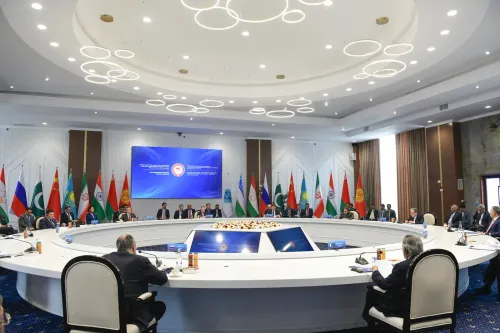
India on 18 September 2026 put forward its three-pillar framework of 'Security, Connectivity, and Opportunity' as the cornerstone of regional trade cooperation at the 25th Ministerial Meeting of the Shanghai Cooperation Organisation (SCO) on foreign economic and trade activities, held in Dushanbe, Tajikistan. The intervention, made on India's behalf by Additional Secretary (Commerce) Yashvir Singh, called for translating the SCO's vast economic potential into concrete outcomes through deeper intra-bloc trade, lower trade costs, and resilient supply chains.
India's Core Intervention at the SCO
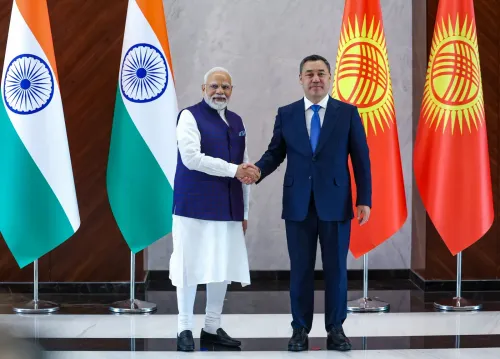
Singh anchored India's remarks in the vision articulated by Prime Minister Narendra Modi at the SCO Summit in Bishkek, invoking the three pillars — Security, Connectivity, and Opportunity — as economically indispensable. India stressed that supply-chain resilience, efficient multimodal connectivity, and expanded market access for businesses are not merely aspirational goals but structural prerequisites for meaningful intra-SCO trade growth.
India also underlined the transformative role of trade facilitation and digitalisation, specifically calling for simplified customs procedures, paperless trade, and the electronic exchange of trade documents alongside reduced transit times — measures that could significantly cut the cost and time of cross-border commerce within the bloc.
Key Sectors and Strategic Priorities
New Delhi called on SCO member states to jointly diversify and strengthen supply chains in sectors identified as strategic: agriculture, critical minerals, pharmaceuticals, manufacturing, and electronics. India separately highlighted the potential for deeper cooperation in energy security, renewable energy, and green hydrogen — areas of growing geopolitical and economic significance for the region.
Notably, India placed particular emphasis on enabling MSMEs and start-ups to participate in regional and global trade, advocating for improved digital payments infrastructure, cross-border payment systems, and accessible trade finance. This reflects a broader domestic policy push to internationalise India's small-business ecosystem through multilateral frameworks.
Outcomes and Agreements Adopted
The ministerial meeting, held on Thursday, produced several concrete outputs. Ministers adopted the 'Statement of the Ministers of the SCO Member States Responsible for Foreign Economic and Foreign Trade Activity' and agreed on an Action Plan for 2026–2030 for implementing the Programme of Multilateral Trade and Economic Cooperation — subject to final approval by the SCO Council of Heads of Government.
The ministers also approved the 'Regulations on the Special Working Group on the Development of the Creative Economy', signalling an expansion of the SCO's economic agenda beyond traditional trade and infrastructure. Additionally, they took note of activities reported by the SCO Business Council and the SCO Consortium of Economic Analytical Centres, hosted by the Tajik side.
What Comes Next
The next SCO trade ministers' meeting is scheduled for 2027 in Uzbekistan, giving member states roughly a year to make progress on the newly adopted action plan. The approval of the 2026–2030 roadmap by heads of government will be a key milestone to watch, as it will determine how binding and resource-backed the commitments become. India's active positioning at this forum signals its intent to shape the SCO's economic agenda as its regional trade ambitions deepen.
Point of View
Who tend to anchor trade discussions around infrastructure and energy dominance. But the real test is execution: the SCO's track record on converting ministerial action plans into measurable trade outcomes is thin. With India's intra-SCO trade volumes still well below potential and geopolitical fault lines — particularly with Pakistan and China — complicating seamless connectivity, the three-pillar framework risks remaining aspirational unless India pushes hard for binding implementation timelines at the heads-of-government approval stage. The 2026–2030 action plan, if ratified with clear benchmarks, could be a genuine inflection point; without them, it is another well-worded document.
NationPress
18 Sept 2026
Frequently Asked Questions
What did India propose at the SCO trade ministers' meeting in Dushanbe?
India proposed a three-pillar trade framework of 'Security, Connectivity, and Opportunity' at the 25th SCO Ministerial Meeting on foreign economic and trade activities in Dushanbe on 18 September 2026. It called for supply-chain resilience, digital trade facilitation, MSME inclusion, and cooperation in sectors such as critical minerals, pharmaceuticals, and green hydrogen.
What is the SCO Action Plan for 2026–2030?
It is a roadmap for implementing multilateral trade and economic cooperation among SCO member states, agreed upon at the Dushanbe ministerial meeting. The plan must be formally approved by the SCO Council of Heads of Government before it takes effect.
Who represented India at the Dushanbe SCO meeting?
Additional Secretary (Commerce) Yashvir Singh represented India at the meeting, delivering the country's intervention that referenced PM Modi's vision from the SCO Summit in Bishkek.
Why did India focus on MSMEs at an SCO trade forum?
India stressed that smaller businesses need better digital payment systems, cross-border finance, and trade facilitation tools to participate in regional and global value chains. This reflects India's broader policy push to internationalise its MSME sector through multilateral frameworks.
When and where will the next SCO trade ministers' meeting be held?
The next SCO ministerial meeting on foreign economic and trade activities is scheduled for 2027 in Uzbekistan, according to the decision taken at the Dushanbe meeting.