How Has PM Modi's Budget Transformed India from Fragile to Flourishing?
Synopsis
Discover how Prime Minister Modi's leadership has reshaped India's economic narrative. From being labeled as part of the 'Fragile Five' to securing a position among the world's leading economies, the latest budget symbolizes a nation on the rise. Explore the transformative reforms and ambitious plans paving the way for India's future.
Key Takeaways
India’s GDP is projected to reach $4.51 trillion by 2026.
Significant reforms have strengthened economic foundations.
The Budget prioritizes growth while maintaining fiscal discipline.
Capital expenditure is set at a record Rs 12.2 lakh crore.
Focus on youth and emerging sectors supports inclusive growth.
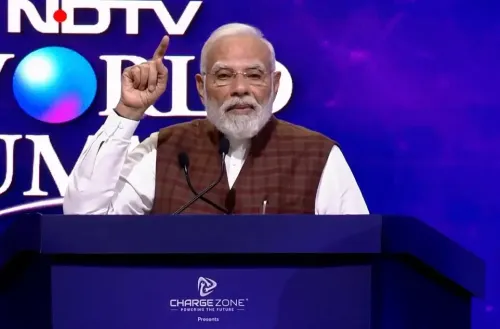
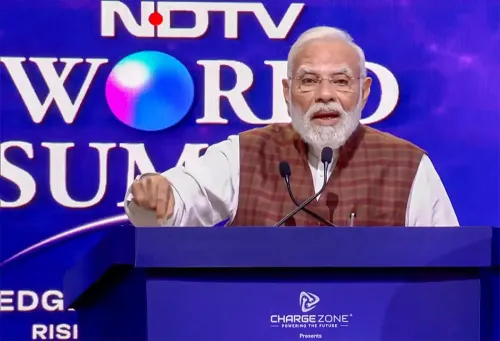
Chennai, Feb 2 (NationPress) Tamil Nadu BJP spokesperson and prominent figure A.N.S. Prasad asserted that the Union Budget for 2026-27 stands as a formidable testament to India's significant economic evolution under the assertive guidance of Prime Minister Narendra Modi, signaling the nation's transition from vulnerability to global dominance.
Reflecting on the circumstances of 2013, Prasad highlighted that India was then mockingly categorized as part of the “Fragile Five,” a time riddled with policy stagnation, corruption controversies, escalating fiscal deficits, and diminished investor trust under the Congress-UPA administration.
“Fast forward a decade, that narrative has been decisively altered,” he remarked, pointing out that India is now securely among the globe’s top five economies, with a clear trajectory for further advancement.
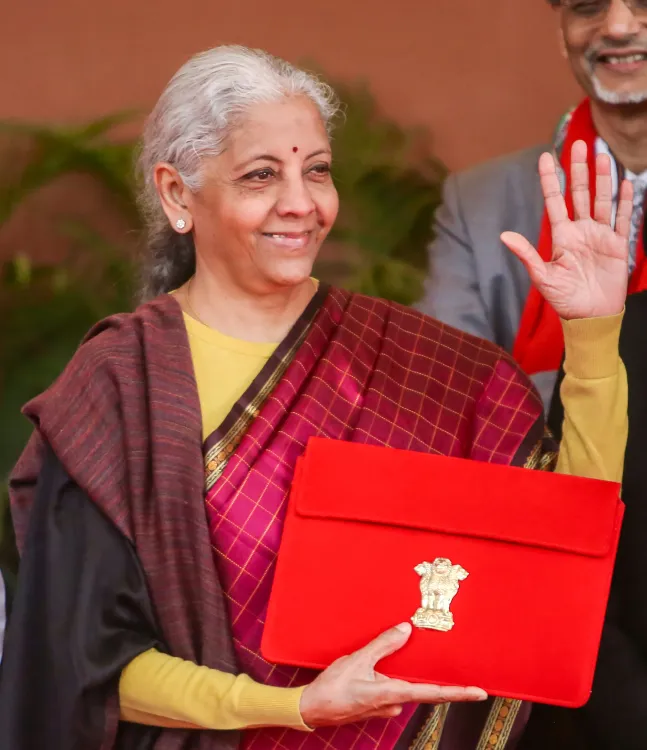
Discussing Finance Minister Nirmala Sitharaman’s Union Budget for 2026-27, Prasad noted that the phrase ‘From Fragile Five to Top Five’ perfectly encapsulates this transformation.
Quoting the IMF’s World Economic Outlook (October 2025), he emphasized that India’s nominal GDP is set to reach approximately $4.51 trillion in 2026, placing it fourth on the global stage.
“India has already surpassed Japan and is on course to outpace Germany, fueled by consistent growth exceeding 6-7 percent, strong domestic demand, and restored international confidence in India’s economic management,” he explained.
Prasad credited this advancement to a decade of transformative reforms under the Modi administration, which includes GST, the Insolvency and Bankruptcy Code, Make in India, Digital India, and Aatmanirbhar Bharat, all backed by an unparalleled infrastructure initiative. These strategies, he asserted, have rebuilt economic foundations, bolstered manufacturing, and converted fragility into resilience.
Highlighting pivotal aspects of the Budget, Prasad noted that it embodies the essence of the Modi Model—prioritizing growth without imposing additional tax burdens on the populace while upholding fiscal responsibility.
Capital investment has been escalated to an unprecedented Rs 12.2 lakh crore to stimulate infrastructure, manufacturing, and job creation, even as the fiscal deficit has been lowered to 4.3 percent of GDP.
He also underscored the Budget’s robust focus on youth empowerment and the vision of Viksit Bharat@2047, with targeted support for emerging sectors like semiconductors, electronics, green energy, biopharma, rare earths, and advanced manufacturing clusters.
Ongoing emphasis on MSMEs, energy security, legacy industries, and sustainable urban development guarantees inclusive and balanced growth.
“This Budget is more than just a financial document,” Prasad stated.
“It symbolizes India’s confidence and ambition. The Modi-Nirmala collaboration has transformed drift into direction and weakness into strength. India is no longer in pursuit of global validation—it is actively shaping its future. The journey from Top Five to Top Three has undoubtedly commenced,” he concluded.
Point of View
It is crucial to recognize the significant strides made by India under the Modi administration. The Union Budget not only reflects economic recovery but also a strategic vision for sustainable growth. It is essential for the nation to remain steadfast in its approach, ensuring inclusive progress while navigating global challenges.
NationPress
22 Sept 2026
Frequently Asked Questions
What is the significance of the Union Budget 2026-27?
The Union Budget 2026-27 represents India's remarkable economic transformation under Prime Minister Modi's leadership, marking a shift from vulnerability to global prominence.
How has India improved its economic standing since 2013?
Since 2013, India has transitioned from being labeled as part of the 'Fragile Five' to becoming one of the top five economies globally, showcasing strong growth and restored investor confidence.
What reforms contributed to India's economic growth?
Key reforms include GST, the Insolvency and Bankruptcy Code, Make in India, Digital India, and Aatmanirbhar Bharat, all supported by significant infrastructure investments.
What are the key focuses of the 2026-27 Budget?
The Budget emphasizes capital expenditure, youth empowerment, and support for emerging sectors, ensuring sustainable and inclusive development.
What is the vision for India by 2047?
The vision of Viksit Bharat@2047 aims to position India as a developed nation with robust infrastructure and sustained economic growth.