RBI: Cash in circulation rising despite India's digital payments boom
Synopsis
India's digital payments revolution hasn't dented cash demand — it has run alongside it. With 176 billion banknotes in circulation and double-digit growth in currency supply, the RBI is grappling with a paradox that complicates everything from production planning to monetary sovereignty. Deputy Governor Murmu's Jakarta speech is a rare public admission that the cash-versus-digital story is far more complex than the fintech narrative suggests.
Key Takeaways
RBI Deputy Governor Shirish Chandra Murmu flagged that cash in circulation is growing at double-digit rates even as digital payments adoption rises.
There are currently 176 billion banknotes in circulation in India across six denominations .
The RBI produces 28–30 billion banknotes annually and disposes of roughly 21 billion pieces per year.
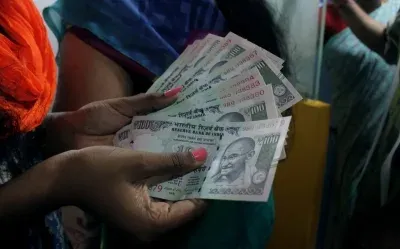
Cash demand remains strongest in rural and semi-urban areas , among low-income groups , older populations , and small businesses .
The RBI is exploring polymer notes for lower denominations and surface coatings to extend banknote durability.
Murmu made the remarks at a Bank Indonesia event in Jakarta on 13 August .
Reserve Bank of India (RBI) Deputy Governor Shirish Chandra Murmu on 13 August flagged a striking paradox at the heart of India's payments landscape: even as digital transactions have surged over the past decade, the volume of cash in circulation has continued to climb, particularly among rural households, low-income groups, older populations, and small businesses.
The Cash-Digital Paradox
Speaking at an event organised by Bank Indonesia in Jakarta, Murmu noted that currency in circulation is growing at double-digit rates even as cash's share of individual transactions shrinks. 'That combination makes future demand harder to predict, which complicates our planning for production and distribution capacity,' he said. The observation underscores that digital adoption and cash demand are not a zero-sum equation — at least not yet in India's diverse economy.
The Scale of India's Cash Economy
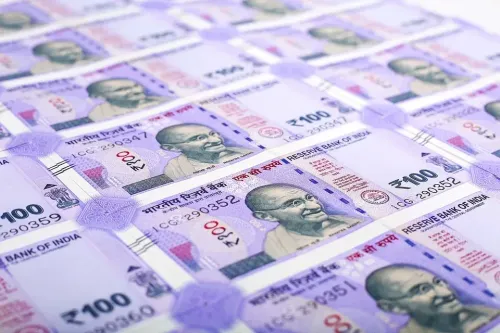
The numbers illustrate the sheer magnitude of the RBI's cash management task. The central bank currently has 176 billion banknotes in circulation across the country. Between 28 and 30 billion banknotes are produced annually across six denominations, while roughly 21 billion pieces are disposed of each year. For context, approximately 56 billion US dollar bills and 30 billion euro banknotes were in global circulation at the end of last year. Murmu acknowledged that India's higher count is partly a function of its denomination mix, which is weighted toward lower-value notes. 'Even so, the volume gives you a sense of the scale of the logistics we manage every day,' he said.
Why Cash Still Matters
Murmu framed the continued relevance of cash not merely as an operational challenge but as a matter of monetary sovereignty. 'Cash remains a significant mode of payment in the Indian economy, and preserving trust in it — through clean notes, secure logistics, and a currency ecosystem people can rely on — is central to preserving monetary sovereignty itself,' he remarked. He added that this is a goal shared by all central banks, regardless of where their economies land on the cash-versus-digital spectrum. Notably, the persistence of cash demand in semi-urban and rural India reflects structural factors: limited smartphone penetration, connectivity gaps, and a preference for tangible currency among older demographics and informal traders.
Innovation in Currency Management
To address durability and sustainability concerns, the RBI is exploring surface coatings on banknote substrates and the introduction of polymer notes for lower denominations. The regulator is also working to reduce the carbon footprint of the cash cycle by optimising its distribution network and improving how it handles banknote briquettes at the disposal stage. These steps signal a longer-term rethink of how India's cash infrastructure is built and maintained, even as digital rails continue to expand in parallel.
What This Means Going Forward
The RBI's candid acknowledgement that cash demand is difficult to forecast has direct implications for monetary planning, logistics investment, and financial inclusion policy. As India's payments ecosystem grows more layered — with UPI, CBDC pilots, and legacy cash coexisting — the central bank's challenge is not choosing between cash and digital, but managing both at scale simultaneously. The next phase of currency policy will likely hinge on how well the RBI can model demand in a bifurcated economy.
Point of View
Alongside explosive digital transaction volumes, means India is not substituting cash but layering digital on top of it. That has serious implications: the RBI must simultaneously invest in physical currency infrastructure and digital rails, doubling the policy burden. The focus on polymer notes and greener disposal is welcome, but the harder question — how to model cash demand in a bifurcated economy — remains unanswered. Until the RBI can forecast demand more precisely, it risks either overproducing notes (a fiscal drag) or underproducing them (a trust and liquidity risk in the hinterland).
NationPress
18 Aug 2026
Frequently Asked Questions
Why is cash in circulation in India still rising despite the growth of digital payments?
Cash in circulation continues to grow because digital payments and physical currency are not substitutes for large segments of the population. Rural households, low-income groups, older citizens, and small businesses continue to rely on cash, keeping demand elevated even as urban digital transactions surge.
How many banknotes are currently in circulation in India?
As of the RBI Deputy Governor's speech on 13 August, there are 176 billion banknotes in circulation in India. The central bank produces 28 to 30 billion notes annually across six denominations and disposes of roughly 21 billion pieces each year.
What did RBI Deputy Governor Shirish Chandra Murmu say about cash and monetary sovereignty?
Murmu said that preserving trust in cash — through clean notes, secure logistics, and a reliable currency ecosystem — is central to preserving monetary sovereignty itself. He made these remarks at a Bank Indonesia event in Jakarta on 13 August.
Is the RBI planning to introduce polymer banknotes in India?
Yes, the RBI is exploring polymer notes for lower denominations as part of efforts to extend banknote durability. It is also looking at surface coatings on substrates and working to reduce the carbon footprint of its cash distribution and disposal operations.
How does India's cash volume compare with the US and Europe?
India has 176 billion banknotes in circulation, compared with approximately 56 billion US dollar bills and 30 billion euro banknotes at the end of last year. The higher Indian count is partly explained by a denomination mix weighted toward lower-value notes, which means more pieces are needed for the same transaction value.