Nagaland joins National Gas Grid as ONGC, IGGL commission Dergaon-Dimapur Pipeline

Synopsis
For the first time in its history, Nagaland is connected to India's National Gas Grid — a milestone achieved on 18 August when ONGC and IGGL commissioned the Dergaon-Dimapur Pipeline. The move unlocks 1.10 lakh SCM of gas per day from ONGC's Jorhat Asset and is projected to generate ₹300 crore in annual economic value while cutting LNG imports.
Key Takeaways
Nagaland connected to India's National Gas Grid for the first time on 18 August via the Dergaon-Dimapur Pipeline .
ONGC and IGGL also commissioned gas evacuation facilities at Khoraghat GGS-1 in Golaghat district, Assam .
The infrastructure will unlock nearly 1.10 lakh SCM of natural gas per day from ONGC's Jorhat Asset .
Projected annual economic value: approximately ₹300 crore , with equivalent reduction in LNG imports .
ONGC is developing additional hook-up facilities at Jantapathar and Kasomarigaon to expand regional connectivity further.
The milestone advances the government's 'One Nation, One Gas Grid' and Viksit Bharat 2047 objectives.
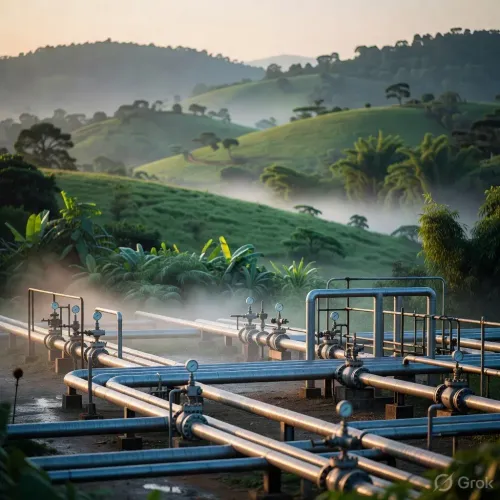
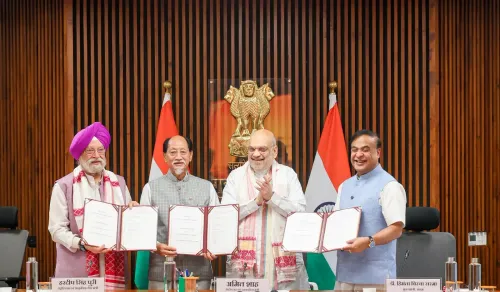
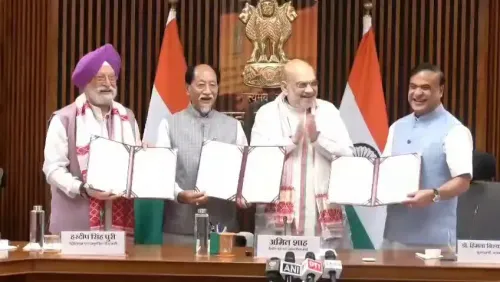
Nagaland has been connected to India's National Gas Grid for the first time after Oil and Natural Gas Corporation (ONGC) and Indradhanush Gas Grid Limited (IGGL) on Tuesday, 18 August commissioned the Dergaon-Dimapur Pipeline and gas evacuation facilities at Khoraghat GGS-1 in Golaghat district, Assam. The milestone marks a historic integration of the Northeast into India's emerging gas-based economy.
What Was Commissioned
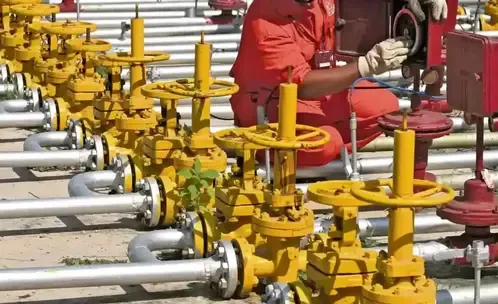
The gas evacuation facility at Khoraghat GGS-1 will enable surplus associated natural gas from the Upper Assam Shelf to be processed and channelled through the North East Gas Grid (NEGG), developed by IGGL. Alongside, the successful injection of natural gas into the Dergaon-Dimapur Pipeline formally brought Nagaland into the national gas network — a first for the state.
Notably, this also marks the first-time integration of a regional gas source from the Northeast with the National Gas Grid, enabling the evacuation and monetisation of gas produced from ONGC's Jorhat Asset in Assam.
Scale and Economic Impact
The new infrastructure will facilitate the utilisation of nearly 1.10 lakh Standard Cubic Metres (SCM) of natural gas per day from ONGC's Jorhat Asset. According to officials, the project is expected to reduce LNG imports by an equivalent quantity and generate an estimated economic value of around ₹300 crore annually.
Improved gas availability is expected to benefit households, industries, the transport sector, and power generation across Assam and the wider Northeast, while also reducing gas flaring from producing fields.
Upcoming Expansions
ONGC is also developing hook-up facilities at Jantapathar and Kasomarigaon to connect additional producing fields of its Jorhat Asset with the NEGG. These projects are designed to further increase gas availability and reduce flaring across the region.
National Policy Context
The development has been achieved with support from the Ministry of Petroleum and Natural Gas, and aligns with the government's stated vision of 'One Nation, One Gas Grid' and the broader Viksit Bharat 2047 framework. By enabling indigenous gas resources from the Northeast to flow into the national network, IGGL is positioned as a central enabler of India's transition toward a cleaner and more integrated energy ecosystem.
This comes amid a sustained push to develop the Northeast as a key growth engine — and the Dergaon-Dimapur Pipeline represents one of the most concrete infrastructure steps in that direction to date.
Point of View
And that depends on how quickly city gas distribution is rolled out in the state. The Northeast has seen several 'historic firsts' in energy connectivity that stalled at the transmission layer; execution beyond the trunk pipeline will determine whether this milestone translates into tangible energy access.
NationPress
3 Oct 2026
Frequently Asked Questions
How has Nagaland been connected to the National Gas Grid?
Nagaland was connected to India's National Gas Grid on 18 August through the commissioning of the Dergaon-Dimapur Pipeline by ONGC and IGGL. The pipeline enables natural gas from ONGC's Jorhat Asset in Assam to flow into the North East Gas Grid and onward to the national network.
What is the Khoraghat GGS-1 facility and why does it matter?
Khoraghat GGS-1 is a gas evacuation facility located in Golaghat district, Assam, commissioned by ONGC on 18 August. It processes and evacuates surplus associated natural gas from the Upper Assam Shelf into the North East Gas Grid, enabling monetisation of gas that would otherwise be flared.
What is the economic impact of the Dergaon-Dimapur Pipeline?
The pipeline is expected to generate approximately ₹300 crore in annual economic value and reduce LNG imports by an equivalent quantity. It will unlock nearly 1.10 lakh Standard Cubic Metres of natural gas per day from ONGC's Jorhat Asset.
What further expansions are planned for the Northeast gas network?
ONGC is developing hook-up facilities at Jantapathar and Kasomarigaon to connect additional producing fields of its Jorhat Asset with the North East Gas Grid. These projects aim to increase gas availability, reduce flaring, and deepen the region's gas-based economy.
How does this development relate to the 'One Nation, One Gas Grid' vision?
The commissioning of the Dergaon-Dimapur Pipeline directly advances the government's 'One Nation, One Gas Grid' policy by integrating the Northeast — previously outside the national gas network — into a unified national energy infrastructure. It also aligns with the Viksit Bharat 2047 framework for energy security and clean energy transition.