Assam-Nagaland Sign MoU on Joint Oil & Gas Exploration
Synopsis
Assam and Nagaland signed a landmark MoU on 11 June 2026 for joint oil and natural gas exploration with shared revenue, as announced by CM Himanta Biswa Sarma. The agreement taps the North East's hydrocarbon potential and strengthens India's energy security amid global market volatility.
Key Takeaways
Assam and Nagaland signed an MoU on 11 June 2026 for joint facilitation of oil and natural gas exploration and extraction.
Revenue from hydrocarbon extraction will be shared between both states , with benefits intended to flow to the nation at large.
CM Himanta Biswa Sarma highlighted the agreement's importance for India's energy security amid global market volatility.
Assam is India's oldest oil-producing state, with commercial oil first discovered at Digboi in 1889 .
Article 371A of the Constitution grants Nagaland special protections over its land and natural resources, making this MoU constitutionally significant.
The deal could serve as a template for inter-state resource cooperation across the North East .
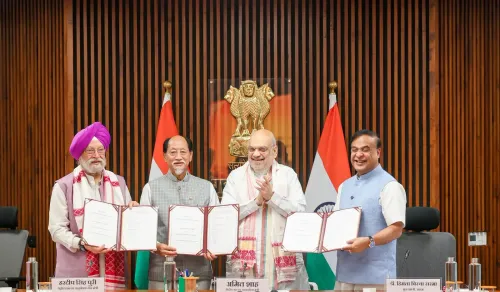
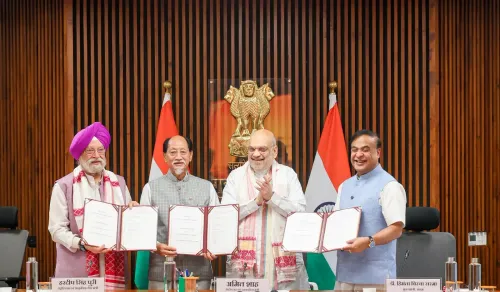
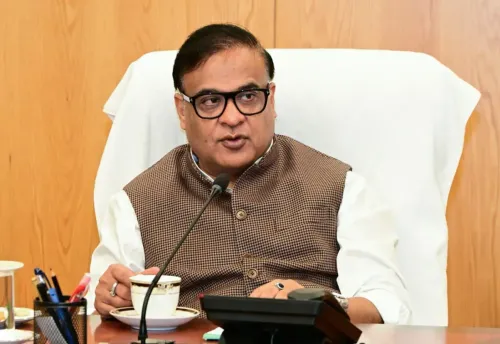
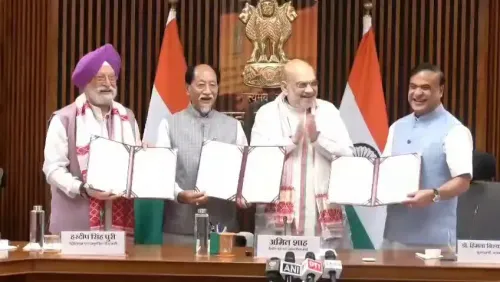
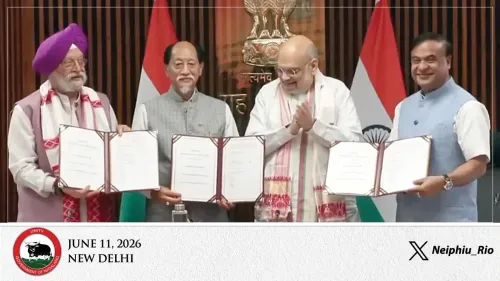
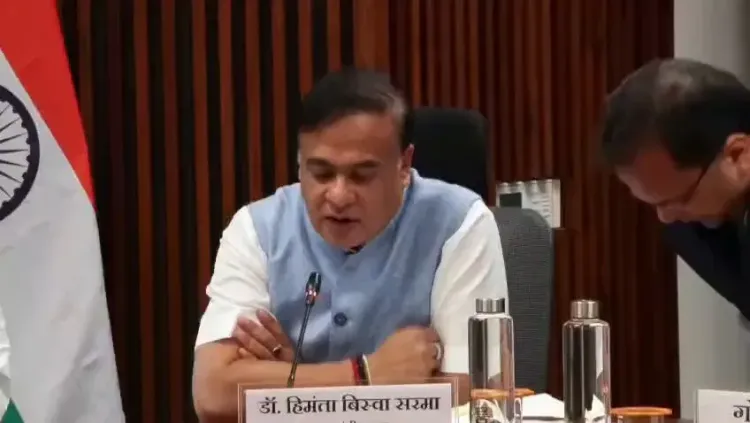
The Chief Minister's Office of Assam announced on 11 June 2026 that Chief Minister Dr. Himanta Biswa Sarma presided over the signing of a landmark inter-state agreement between Assam and Nagaland for joint facilitation of oil and natural gas exploration, with both states agreeing to share proceeds from hydrocarbon extraction.
Context
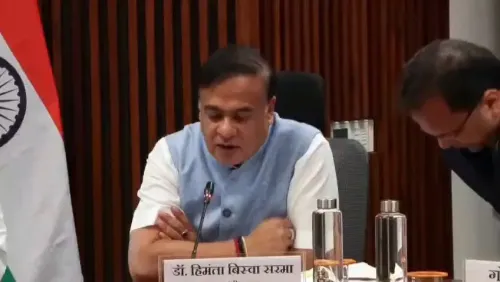
Addressing the signing ceremony, CM Himanta Biswa Sarma underscored that the North East region holds immense hydrocarbon potential. The MoU commits both states to jointly facilitate exploration and extraction while sharing the revenue, ensuring that 'both states and the nation' benefit from the arrangement. The Chief Minister also noted that the agreement 'marks a new chapter of cooperation, unlocking economic opportunities and fostering shared prosperity across the North East.'
The signing comes at a moment of heightened volatility in global energy markets, lending the agreement strategic weight beyond its immediate economic value. Assam is India's oldest oil-producing state — commercial oil was first struck at Digboi in 1889 — and continues to host operations by major national hydrocarbon firms. Nagaland also holds significant hydrocarbon reserves that have remained largely untapped.
Policy Backdrop
Nagaland's resource landscape carries a distinct constitutional dimension. Article 371A, inserted in 1963, requires the concurrence of the Nagaland Legislative Assembly on matters relating to land and natural resources, including petroleum. Any joint exploration framework must therefore navigate these special provisions, making the MoU a legally significant instrument rather than a routine administrative agreement.
Successive central governments have encouraged inter-state resource cooperation across the North East as a strategy to unlock reserves while addressing long-standing border and autonomy sensitivities. The Assam–Nagaland MoU continues this pattern, converting a historically complex relationship into a structured joint economic arrangement. India's broader push to reduce import dependence on crude oil gives the agreement an added layer of national-interest justification.
Stakeholders and Impact
The most immediate beneficiaries are the governments of Assam and Nagaland, which stand to gain shared royalty and revenue streams from any commercially viable discovery. Communities in hydrocarbon-bearing districts of both states could see infrastructure investment and employment if exploration progresses to production.
Hydrocarbon sector firms — including national entities already operating in the Assam basin — are expected to be key implementation partners. Environmental bodies and local self-government institutions in Nagaland, where customary land rights are constitutionally protected, will also have a stake in how exploration licences and environmental clearances are structured.
What's Next
The immediate watch-points are the identification and issuance of joint exploration blocks, the formation of a revenue-sharing mechanism between the two state governments, and the securing of any required environmental and local approvals. Analysts will track whether the MoU translates into formal block awards to operators during 2026–27.
If the framework succeeds, it could serve as a template for other pairs of North Eastern states that share resource-rich but administratively contested terrain, reinforcing the region's emerging role in India's domestic energy strategy.
Point of View
The agreement reinforces his positioning as a regional integrator who can deliver tangible economic outcomes. The constitutional complexity of Article 371A means the MoU's real test lies in implementation: whether exploration blocks are actually awarded and whether revenue-sharing terms hold when commercial discoveries materialise. At a broader level, the deal reflects India's sustained effort to reduce crude import dependence by activating domestic reserves in geologically promising but politically sensitive terrain.
NationPress
24 Sept 2026
Frequently Asked Questions
What is the Assam Nagaland MoU on oil and gas about?
The Assam–Nagaland MoU, signed on 11 June 2026, is an inter-state agreement for the joint facilitation of oil and natural gas exploration and extraction, with revenues shared between both states.
Who signed the Assam Nagaland oil and gas MoU?
The MoU was signed in the presence of Assam Chief Minister Dr. Himanta Biswa Sarma, representing a formal agreement between the governments of Assam and Nagaland.
Why is Nagaland's oil and gas exploration complicated?
Article 371A of the Indian Constitution, inserted in 1963, requires the Nagaland Legislative Assembly's concurrence on matters relating to land and natural resources including petroleum, adding a constitutional layer to any exploration activity.
How does this MoU help India's energy security?
By facilitating exploration of untapped hydrocarbon reserves in the North East, the agreement aims to boost domestic oil and gas production, reducing India's dependence on imported crude, especially important during periods of global energy price volatility.
What happens next after the Assam Nagaland MoU signing?
The key next steps include identifying joint exploration blocks, establishing a formal revenue-sharing mechanism, and obtaining necessary environmental and local approvals, with outcomes expected to become clearer during 2026–27.