CM Rio, Amit Shah Sign Oil MoU for Assam-Nagaland Border
Synopsis
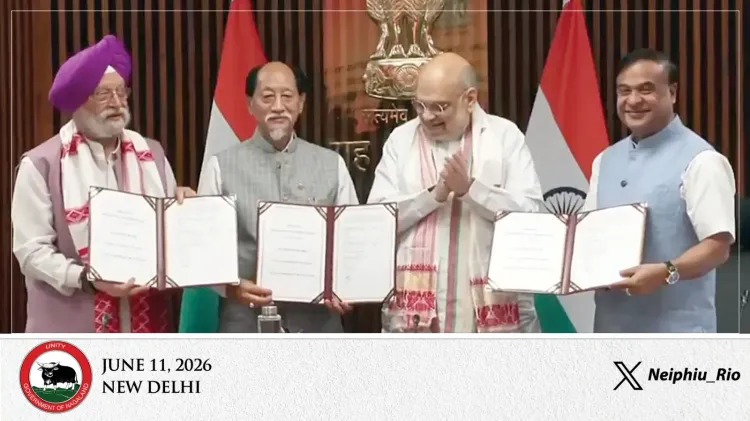
Nagaland CM Neiphiu Rio, alongside Union HM Amit Shah and Petroleum Minister Hardeep Singh Puri, signed a tripartite MoU on mineral oil operations in the Assam-Nagaland boundary areas on 11 June 2026, ending decades of jurisdictional deadlock over hydrocarbon-rich border zones.
Key Takeaways
A Tripartite MoU for 'Mineral Oil Operations in the Assam Nagaland Boundary Areas' was signed on 11 June 2026 .
The agreement is between the Government of India , Assam Government , and Nagaland Government .
Union Home Minister Amit Shah and Union Petroleum Minister Hardeep Singh Puri were present at the signing.
The Assam-Nagaland boundary dispute dates to Nagaland's statehood in 1963 and has long blocked resource development.
The MoU creates a legal framework for petroleum exploration in previously disputed border zones.
Revenue-sharing formulas and exploration block rollout are the key next steps to watch.
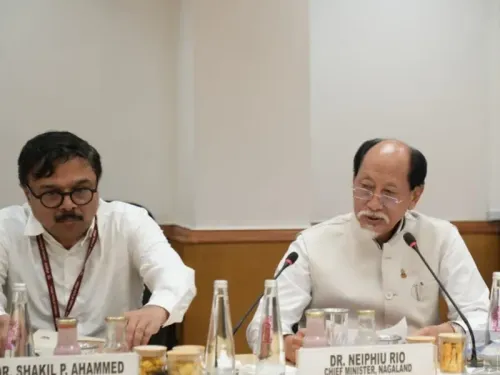
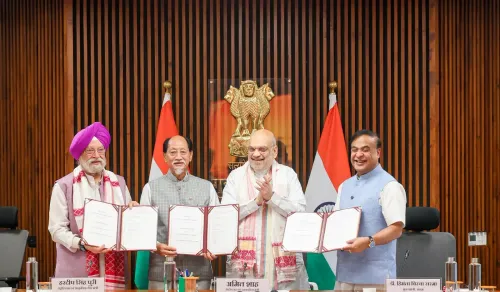
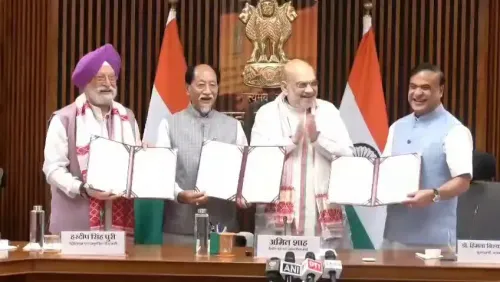
Nagaland Chief Minister Neiphiu Rio announced on Thursday, 11 June 2026 that a landmark Tripartite Memorandum of Understanding for 'Mineral Oil Operations in the Assam Nagaland Boundary Areas' was signed between the Government of India, the Assam Government, and the Nagaland Government, marking what he called 'a historic day.'
Context
The MoU was signed in the presence of Union Home Minister Amit Shah and Union Minister of Petroleum and Natural Gas Hardeep Singh Puri, signalling the Centre's direct involvement in resolving a long-standing resource impasse. Chief Minister Rio described the occasion as historic, reflecting the significance attached to the agreement by all three signatories.
The Assam-Nagaland boundary has been a site of dispute since Nagaland's formation as a state in 1963, with the contested zones known to contain hydrocarbon-bearing terrain. Periodic tensions over these resource-rich pockets — including areas around Merapani — have historically impeded both development and exploration activity in the region.
Policy Backdrop
Central mediation efforts over the Assam-Nagaland boundary stretch back decades, with Supreme Court proceedings and successive rounds of negotiation in the 2000s and 2010s seeking to reduce conflict and create a framework for shared development. The tripartite MoU represents the conversion of that long dispute into a jointly managed economic arrangement.
This approach fits within a broader pattern of Northeast India policy under the current Union government, which has sought to transform protracted inter-state disagreements into cooperative resource frameworks. Facilitating such agreements through senior ministerial presence — Home Minister Shah and Petroleum Minister Puri both attending — underscores the political weight the Centre assigns to the initiative.
Stakeholders and Impact
Communities living along the Assam-Nagaland border stand to benefit most directly, as unresolved boundary tensions have long disrupted livelihoods and blocked infrastructure investment in the region. Petroleum exploration firms will also watch the MoU closely, as it creates a legal framework for operating in areas previously rendered inaccessible by jurisdictional uncertainty.
Both state governments now have a formal basis to negotiate revenue-sharing and operational rights over mineral oil resources in the boundary zone, a development that could meaningfully augment the fiscal positions of two states that have historically depended on central transfers. Border communities, who have borne the brunt of periodic inter-state friction, may see improved security and economic conditions as exploration activity begins.
What's Next
Attention will now shift to the operational rollout of exploration blocks and the specific revenue-sharing formulas to be agreed upon by the three parties. Any follow-up steps on formal boundary demarcation — a process distinct from the resource MoU — will be closely tracked by both state governments and affected communities.
The agreement sets a precedent for resolving similar resource disputes elsewhere in the Northeast through tripartite central facilitation, and its implementation will be a test of whether cooperative frameworks can hold where adversarial boundary claims have persisted for over six decades.
Point of View
With senior ministerial attendance signalling that the Centre views this as a flagship deliverable. For CM Rio, the agreement is a political win that demonstrates Nagaland's ability to secure resource rights through negotiation rather than litigation. The involvement of the Home Ministry alongside the Petroleum Ministry is telling: it frames the deal as simultaneously a security stabilisation measure and an economic development initiative. If implementation proceeds smoothly, the model could be replicated for other contested boundary zones in the region.
NationPress
25 Sept 2026
Frequently Asked Questions
What is the Assam Nagaland boundary mineral oil MoU?
It is a Tripartite Memorandum of Understanding signed on 11 June 2026 between the Government of India, Assam Government, and Nagaland Government to govern mineral oil operations in the disputed Assam-Nagaland boundary areas.
Who signed the Assam Nagaland oil MoU?
The MoU was signed by representatives of the Government of India, the Assam Government, and the Nagaland Government, in the presence of Union Home Minister Amit Shah and Union Petroleum Minister Hardeep Singh Puri.
Why is the Assam Nagaland boundary disputed?
The boundary dispute dates to Nagaland's formation as a state in 1963. The contested zones include resource-rich areas with hydrocarbon potential, leading to periodic tensions that have blocked development and exploration.
What does the MoU mean for border communities?
The agreement creates a legal framework for petroleum exploration in previously disputed zones, which could bring investment, employment, and improved infrastructure to communities along the Assam-Nagaland border.
What happens after the MoU is signed?
The next steps include the operational rollout of exploration blocks, finalisation of revenue-sharing formulas between the three parties, and potential follow-up work on formal boundary demarcation.