Assam-Nagaland hydrocarbon pact signed: 1,000 sq km border belt unlocked
Synopsis
A tripartite pact signed in New Delhi on 11 June unlocks over 1,000 sq km of the Assam-Nagaland border belt for hydrocarbon and mineral exploration — a region that has sat commercially dormant for decades due to inter-state disputes. With Amit Shah, Hardeep Singh Puri, and both chief ministers at the table, this is as much a political breakthrough as an energy one.
Key Takeaways
A tripartite agreement between the Centre, Assam , and Nagaland was signed on 11 June in New Delhi .
The accord unlocks more than 1,000 square kilometres of border territory for hydrocarbon and mineral exploration.
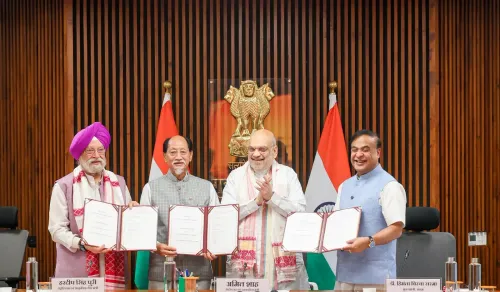
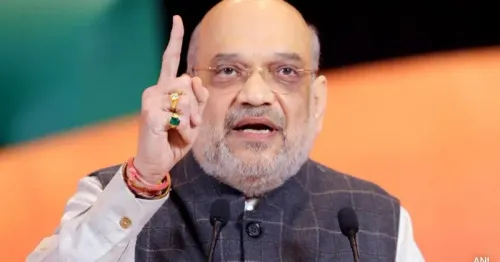
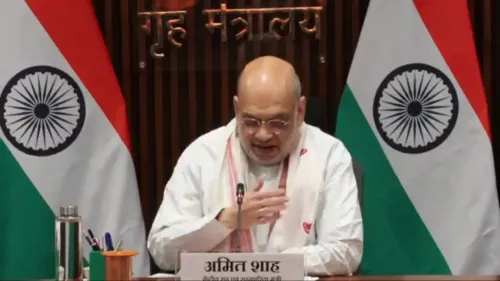
The pact was signed in the presence of Home Minister Amit Shah , Petroleum Minister Hardeep Singh Puri , and both state chief ministers.
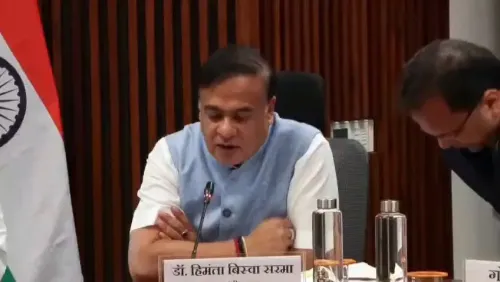
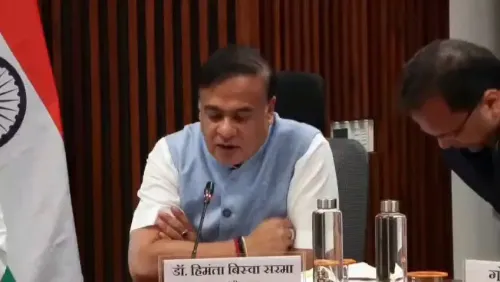
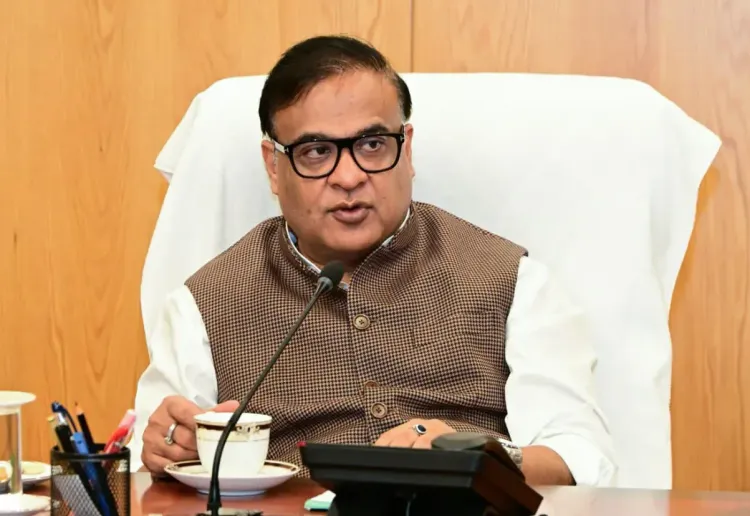
Assam CM Himanta Biswa Sarma called it a 'decisive breakthrough' and the start of a 'new era' for the Ashtalakshmi (Northeast) region.
The initiative is aimed at strengthening India's energy self-reliance and attracting fresh investment into the Northeast.
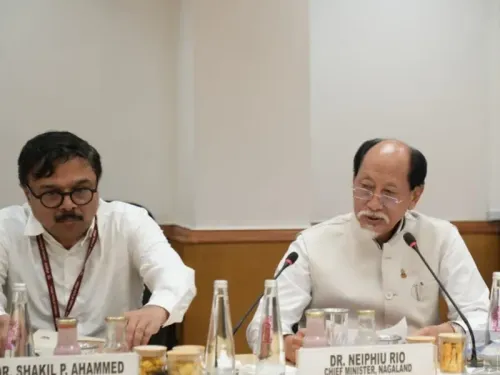
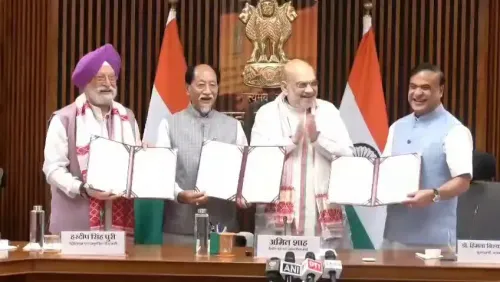
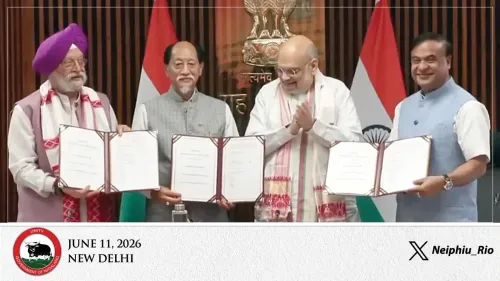
A tripartite agreement to enable exploration and extraction of hydrocarbons and other mineral resources along the Assam-Nagaland inter-state border was signed on Thursday, 11 June in New Delhi, in the presence of Union Home Minister Amit Shah, Union Petroleum and Natural Gas Minister Hardeep Singh Puri, Assam Chief Minister Himanta Biswa Sarma, and Nagaland Chief Minister Neiphiu Rio. The accord, executed under the guidance of Prime Minister Narendra Modi, unlocks more than 1,000 square kilometres of resource-rich borderland believed to hold significant hydrocarbon and mineral reserves.
What the Agreement Covers
The pact formally clears the path for exploration and production activities in a stretch of territory that has remained largely untapped despite its considerable energy potential. Officials said the three-way arrangement — between the Centre, Assam, and Nagaland — addresses long-standing jurisdictional and administrative challenges that had previously stalled resource development in the region.
The agreement is also being read as a demonstration of cooperative federalism, with the two state governments and the Union government aligning on a shared economic agenda for a contested border zone.
What the Leaders Said
Chief Minister Sarma described the accord as 'a decisive breakthrough' in harnessing the region's natural resources and advancing India's goal of energy self-sufficiency. He said the pact opens up over 1,000 sq km of land for energy exploration and will contribute significantly to India's long-term energy requirements.
Sarma further characterised the development as the beginning of a 'new era' for the Ashtalakshmi region — the collective term for the eight Northeastern states — expressing confidence that the initiative would accelerate growth, generate employment, and contribute to regional prosperity. He credited the Modi government's approach of resolving 'complex and decades-old issues through dialogue and coordination.'
Strategic Significance for the Northeast
According to officials, the Centre views the Northeast as a key pillar of India's energy strategy and broader economic growth agenda. The latest initiative aligns with ongoing government efforts to reduce dependence on imported energy by expanding domestic exploration and production capacity.
Notably, the Assam-Nagaland border belt has historically been a zone of inter-state tension, making this tripartite arrangement significant beyond its energy dimensions. The region's hydrocarbon potential has been acknowledged for decades, but unresolved boundary disputes and administrative overlap had kept it commercially dormant.
Expected Impact
The agreement is expected to attract fresh investments into the Northeast, generate employment opportunities in the border districts, and provide new momentum to India's energy self-reliance push. Industry observers note that successful exploration in this belt could also open adjacent areas of the region to further prospecting.
With sectoral follow-through now dependent on exploration timelines and regulatory clearances, the real measure of the accord's impact will emerge over the coming years.
Point of View
And the fact that both chief ministers sat alongside the Home Minister to sign an economic cooperation pact is itself a political signal. But unlocking territory is not the same as extracting value — exploration timelines in frontier belts routinely stretch beyond a decade, and investment appetite for Northeast hydrocarbons has historically been cautious. The 'energy self-reliance' framing is a recurring theme in government announcements; the harder question is whether this accord comes with a binding exploration schedule and environmental clearance roadmap, or whether it remains a framework agreement waiting for operational teeth.
NationPress
19 Sept 2026
Frequently Asked Questions
What is the tripartite hydrocarbon agreement signed on 11 June?
It is a three-way accord between the Union government, Assam, and Nagaland, signed on 11 June in New Delhi, to enable exploration and extraction of hydrocarbons and minerals across more than 1,000 sq km of the Assam-Nagaland border belt. The agreement resolves long-standing jurisdictional barriers that had kept the region commercially dormant.
Who signed the Assam-Nagaland hydrocarbon pact?
The agreement was signed in the presence of Union Home Minister Amit Shah, Union Petroleum and Natural Gas Minister Hardeep Singh Puri, Assam Chief Minister Himanta Biswa Sarma, and Nagaland Chief Minister Neiphiu Rio, under the guidance of Prime Minister Narendra Modi.
Why has this border belt remained unexplored until now?
The Assam-Nagaland border has been a zone of long-standing inter-state dispute, with unresolved boundary issues and administrative overlap preventing coordinated resource development. The tripartite accord is designed to cut through these jurisdictional barriers by bringing both states and the Centre into a shared framework.
How does this agreement support India's energy security?
By opening more than 1,000 sq km of resource-rich territory to domestic exploration and production, the pact is expected to reduce India's dependence on imported hydrocarbons. Officials have described the Northeast as a key pillar of the country's energy strategy, and successful exploration here could unlock further prospecting in adjacent areas.
What does this mean for the Northeast region?
Beyond energy, the accord is seen as an economic catalyst for the border districts of Assam and Nagaland, with the potential to attract investment and generate employment. Assam CM Sarma described it as the start of a 'new era' for the Ashtalakshmi region, referring to all eight Northeastern states.