Assam, Nagaland Sign MoU for 1,000 Sq Km Oil Exploration
Synopsis
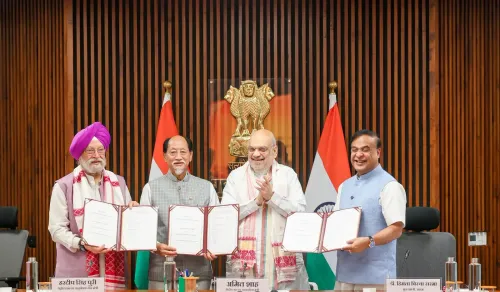
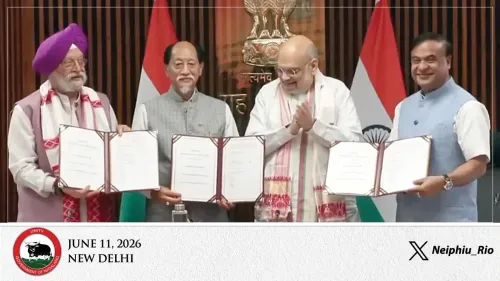
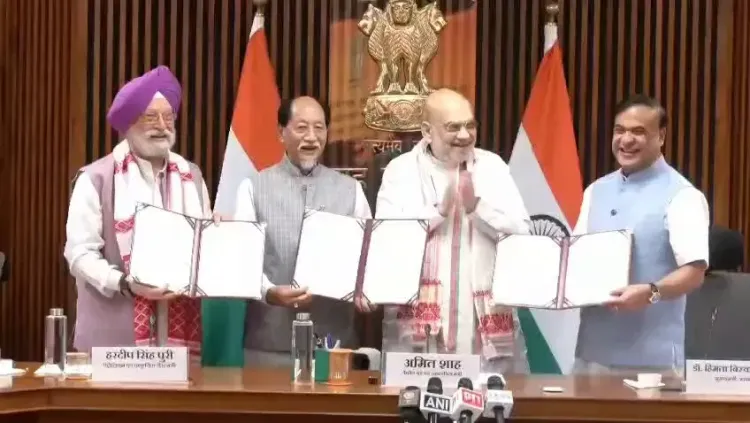
Assam and Nagaland signed a landmark MoU on 11 June 2026 to jointly explore oil and minerals across a 1,000 sq km border region, with Union Ministers Amit Shah and Hardeep Singh Puri present. The agreement marks a significant step for North East India's energy potential and inter-state cooperation.
Key Takeaways
Assam and Nagaland signed an MoU on 11 June 2026 for joint oil and mineral exploration in a 1,000 sq km inter-state boundary region.
Union Home Minister Amit Shah and Union Petroleum Minister Hardeep Singh Puri were present at the signing ceremony, signalling strong central government backing.
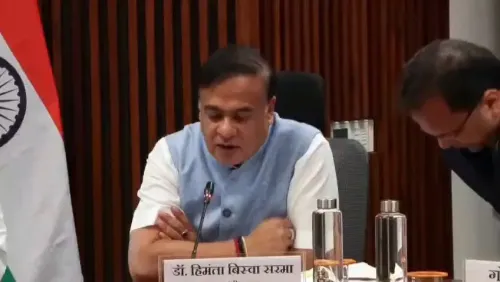
Chief Ministers Dr Himanta Biswa Sarma (Assam) and Neiphiu Rio (Nagaland) witnessed the MoU, making it a joint commitment at the highest state level.
The Assam-Nagaland border area has historically been disputed, making the agreement a diplomatic milestone alongside its economic significance.
The North East has been an oil-producing region since the Digboi discovery in 1889 , yet large frontier areas remain under-explored.
Next steps are expected to include joint working groups, seismic surveys, and the award of exploration contracts under India's Hydrocarbon Exploration and Licensing Policy (HELP) .
The Chief Minister's Office of Assam announced on 11 June 2026 that Assam and Nagaland have signed a landmark Memorandum of Understanding to initiate oil and mineral exploration across a 1,000 sq km boundary region shared by the two states, marking what officials described as a historic milestone for the North East and India's energy security.
Context
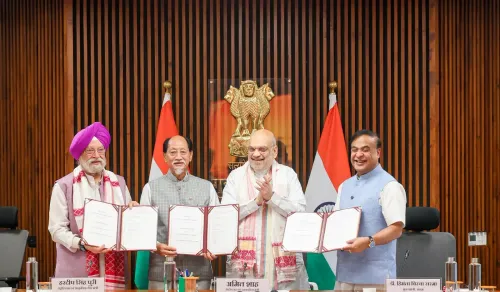
The MoU was signed in the presence of Union Home Minister Amit Shah and Union Minister for Petroleum and Natural Gas Hardeep Singh Puri. Assam Chief Minister Dr Himanta Biswa Sarma and Nagaland Chief Minister Neiphiu Rio witnessed the ceremony, lending the signing the weight of both state and central government endorsement.
The agreement opens a stretch of the Assam-Nagaland border — a zone long marked by inter-state boundary disputes — for coordinated hydrocarbon and mineral prospecting. The post from the Chief Minister's Office described the occasion as 'historic', noting the presence of senior Union ministers as a signal of New Delhi's direct involvement.
Policy Backdrop
The North East holds a distinguished place in India's oil history: the Digboi field in Assam, discovered in 1889, was among the earliest commercial hydrocarbon discoveries in Asia. Despite this legacy, large swathes of the region remain under-explored owing to difficult terrain, infrastructure deficits, and unresolved inter-state boundary questions.
The Hydrocarbon Exploration and Licensing Policy (HELP), introduced in 2016, was designed to accelerate exploration in frontier and North Eastern basins by offering a more flexible revenue-sharing model and opening acreage to a wider set of bidders. The Assam-Nagaland MoU fits squarely within this policy push, representing a state-level operationalisation of central directives to unlock stranded reserves.
India's broader drive to expand domestic hydrocarbon output is rooted in reducing import dependence, which accounts for a substantial share of the country's crude oil requirements. The North East, with its proven but underutilised reserves, has been repeatedly identified as a priority frontier in national energy planning.
Stakeholders and Impact
The 1,000 sq km boundary region sits at the intersection of two states that have historically disagreed over their shared border, making the MoU as much a diplomatic achievement as an economic one. By formalising joint exploration, both governments signal a willingness to set aside territorial friction in favour of shared resource development.
Border communities in both states stand to benefit from the economic activity that exploration and eventual production typically generate — including employment, infrastructure upgrades, and royalty revenues. Oil and gas companies, both public-sector undertakings and private operators licensed under HELP, are the likely candidates to bid for or be assigned exploration blocks within the identified area.
The involvement of Amit Shah, who oversees North Eastern affairs through the Home Ministry, and Hardeep Singh Puri, who holds the petroleum portfolio, underscores the centre's role as guarantor and facilitator of the agreement — particularly important given the boundary sensitivities involved.
What's Next
The immediate steps following such an MoU typically include the formation of joint working groups, commissioning of seismic surveys to map subsurface geology, and the eventual award of Production Sharing Contracts or revenue-sharing agreements to exploration operators. The scale of the identified area — 1,000 sq km — suggests multiple blocks could be carved out for separate bidding rounds.
Whether the MoU translates swiftly into on-ground surveys will depend on logistical coordination between the two state governments, central agencies such as the Directorate General of Hydrocarbons, and the resolution of any residual boundary demarcation questions. The agreement's long-term significance lies in its potential to add new domestic reserves to India's hydrocarbon ledger at a time when energy self-reliance has become a stated national priority.
Point of View
Signalling that New Delhi views North Eastern energy unlocking as a strategic priority rather than a routine administrative matter. This agreement fits a broader pattern of the central government using economic incentives to ease inter-state tensions in the region, a model that has been applied to infrastructure corridors and border trade as well. The real test will come when seismic surveys begin and boundary demarcation questions inevitably resurface in a more concrete form.
NationPress
20 Sept 2026
Frequently Asked Questions
What is the Assam-Nagaland MoU about?
The MoU signed on 11 June 2026 commits Assam and Nagaland to jointly explore oil and minerals across a 1,000 sq km area in their shared boundary region, with central government support from the Home and Petroleum ministries.
Who signed the MoU between Assam and Nagaland?
The MoU was signed by representatives of the Assam and Nagaland state governments, witnessed by Chief Ministers Dr Himanta Biswa Sarma and Neiphiu Rio, and in the presence of Union Ministers Amit Shah and Hardeep Singh Puri.
Why is the Assam-Nagaland border area significant for oil exploration?
The boundary region between Assam and Nagaland is believed to hold untapped hydrocarbon and mineral potential. The North East has been an oil-producing zone since 1889, but inter-state boundary disputes and difficult terrain have historically slowed exploration in frontier areas.
What happens after the MoU is signed?
Typically, joint working groups are formed, seismic surveys are commissioned to assess subsurface geology, and Production Sharing or revenue-sharing contracts are eventually awarded to exploration operators under India's Hydrocarbon Exploration and Licensing Policy.
What is India's Hydrocarbon Exploration and Licensing Policy (HELP)?
HELP, introduced in 2016, is a policy framework designed to accelerate oil and gas exploration in frontier and North Eastern basins by offering flexible revenue-sharing terms and opening acreage to a broader range of bidders, both public-sector and private.